Bag and Size Limits in Australia: How the Rules Work and Where to Check
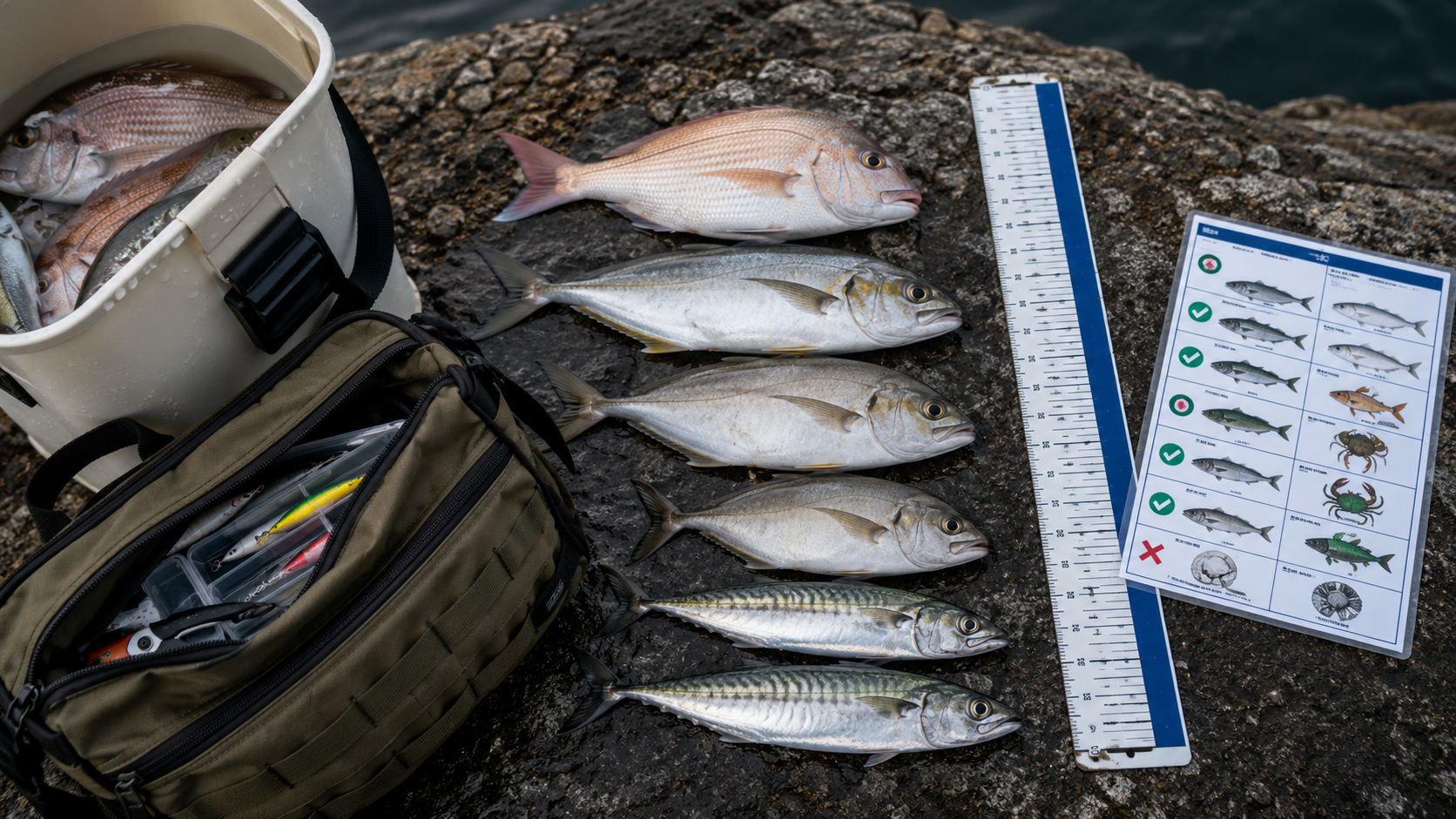
Why bag and size limits matter on the water
Bag and size limits are the backbone of recreational fishing management across Australia. They set how many fish you may keep in a day or trip, and the minimum (and sometimes maximum) length at which a fish can be retained. For anglers around Sydney and further afield, following these rules protects breeding stock of popular species such as bream, flathead, mulloway, tailor, kingfish, mangrove jack, spanish mackerel, barra and Murray cod, and keeps fisheries open for the long term.
Limits are not guesswork. State and territory fisheries agencies review stock assessments, catch data and local conditions, then publish rules that can change with seasons, regions or temporary closures. What was legal last spring may not be legal this autumn. Always treat official government sources as the final word, not a mate’s memory or an old tackle-shop poster.
How the rules are structured
Most jurisdictions use a mix of the following controls:
- Minimum legal length — measured in millimetres or centimetres along a defined method (usually total length or fork length). Undersize fish must be returned carefully.
- Maximum legal length — used for some species so large breeding fish stay in the water.
- Daily bag limit — the number of a species one person may take in a 24-hour period.
- Possession limit — how many you may have in your control at once, including in the esky, at camp or in the vehicle, which can differ from the daily bag.
- Boat or combined limits — caps that apply when several people fish from one vessel.
- Closed seasons and spatial closures — times or places where take is banned or restricted, often around spawning.
Measurement must be done properly. Carry a rigid measure marked in mm or cm, lay the fish straight, and follow the agency’s diagram for snout-to-tail or fork measurement. Soft plastics, leaders and terminal tackle left in a fish’s mouth do not change the legal length — the fish itself is what counts.
State-by-state thinking, not one national list
Australia does not run a single nationwide bag-and-size table for recreational fishers. New South Wales rules that apply on Sydney Harbour, the Hawkesbury or the coastal reefs can differ from Queensland, Victoria, South Australia, Western Australia, Tasmania and the Northern Territory. Inland freshwater rules for Murray cod and other natives are often separate from saltwater tables. Border rivers, shared estuaries and offshore zones can add extra detail.
When you travel, plan the loadout and the cooler around the destination’s rules, not your home ramp. A legal flathead or mulloway length in one state may be undersize in another. Barra and mangrove jack fisheries in the north have their own size bands and seasonal patterns tied to the wet and dry seasons, while southern tailor, bream and kingfish rules track different stock pressures.
Where to check current limits before you leave home
Use primary sources only:
- Your state or territory fisheries department website and official recreational fishing guide.
- Licensed fisheries apps or SMS services published by the same agency, where available.
- Printed guides from the agency for remote trips where phone coverage drops out — check the edition date.
- Local fisheries offices or compliance contacts listed on the government site if a rule is unclear.
Search by species and by waterway. Estuary bream limits may sit beside different offshore kingfish or spanish mackerel rules. Note whether lengths are total length or fork length, whether rays and sharks have separate schedules, and whether fillet or trunk possession rules apply on the way home.
At Aussie Tackle Box we focus on gear and practical prep — rods, reels, lines, soft plastics and storage that help you release undersize fish quickly — but we do not replace the regulator. Rules, fines and licence conditions are set by government, not by tackle brands or blogs.
Practical habits that keep you legal
Build a simple pre-trip checklist:
- Confirm licence or fee requirements for the state you will fish.
- Look up bag, possession and size limits for every target species on your list.
- Check seasonal closures and marine park zoning for your ramp, beach or kayak launch.
- Pack a brag mat or ruler marked in mm/cm, long-nose pliers, line cutters and a knotless net to reduce handling harm.
- Decide in advance which fish you will keep so you stop once the bag is filled.
- Store retained fish so compliance officers can identify species and count numbers if asked.
If you fish from a kayak or small craft out of the Sydney region, keep the measure and a waterproof copy of key limits in a dry bag. On shared boats, agree who is keeping which fish so the group does not exceed boat or personal limits by accident.
Release technique when a fish is undersize or over the bag
Legal fishing includes clean releases. Use appropriate line class and terminal tackle so you can land fish without long fights that exhaust them. Pinch barbs where lawful and practical, support the fish’s body, minimise time out of the water, and avoid hot deck surfaces in summer. For toothy species such as tailor, spanish mackerel or mangrove jack, long-nose tools help remove hooks without crushing gills. Deep-hooked fish that are legal to keep are often better retained within the bag than released with severe injury; undersize fish should still be released as carefully as possible.
Gear choices that support compliance
Accurate measuring, quick unhooking and organised storage matter as much as lure colour. A labelled tackle system separates spare hooks and leaders from the brag mat. Soft plastics and single-hook rigs can make release easier on bream and flathead than heavy treble-laden hardbodies when you are fishing catch-and-release stretches. Sounders and simple marine electronics help you mark structure so you spend less time prospecting in closed zones you did not intend to enter — always cross-check park maps, not only the GPS cursor.
For species rigs, match hook size to typical legal lengths in your waters so small fish are less often deep-hooked. That is good practice for mulloway and kingfish sessions where juveniles mix with keepers, and for Murray cod trips where slot limits may apply inland.
Safety, courtesy and reporting
Bag limits sit alongside safety and biosecurity duties: lifejackets on small craft, weather checks, and cleaning gear between catchments so you do not move pests or weeds. If you see suspected illegal fishing, use the official fisheries reporting channels listed by your state agency rather than confronting anyone on the water.
For local questions about gear set-ups that suit legal-size fish in the Sydney area, Aussie Tackle Box can point you toward sensible rod, reel and terminal tackle choices during Mon–Fri: 09:00 – 17:00 (AEST) on +61275903570 or via [email protected]. For the limits themselves, open the current government guide every time — that habit is the real licence to enjoy Australian fishing seasons year after year.
Navigation
See also
FAQ