Graphite vs Fibreglass vs Composite Blanks in Australian Saltwater
Why blank material matters on the Aussie coast
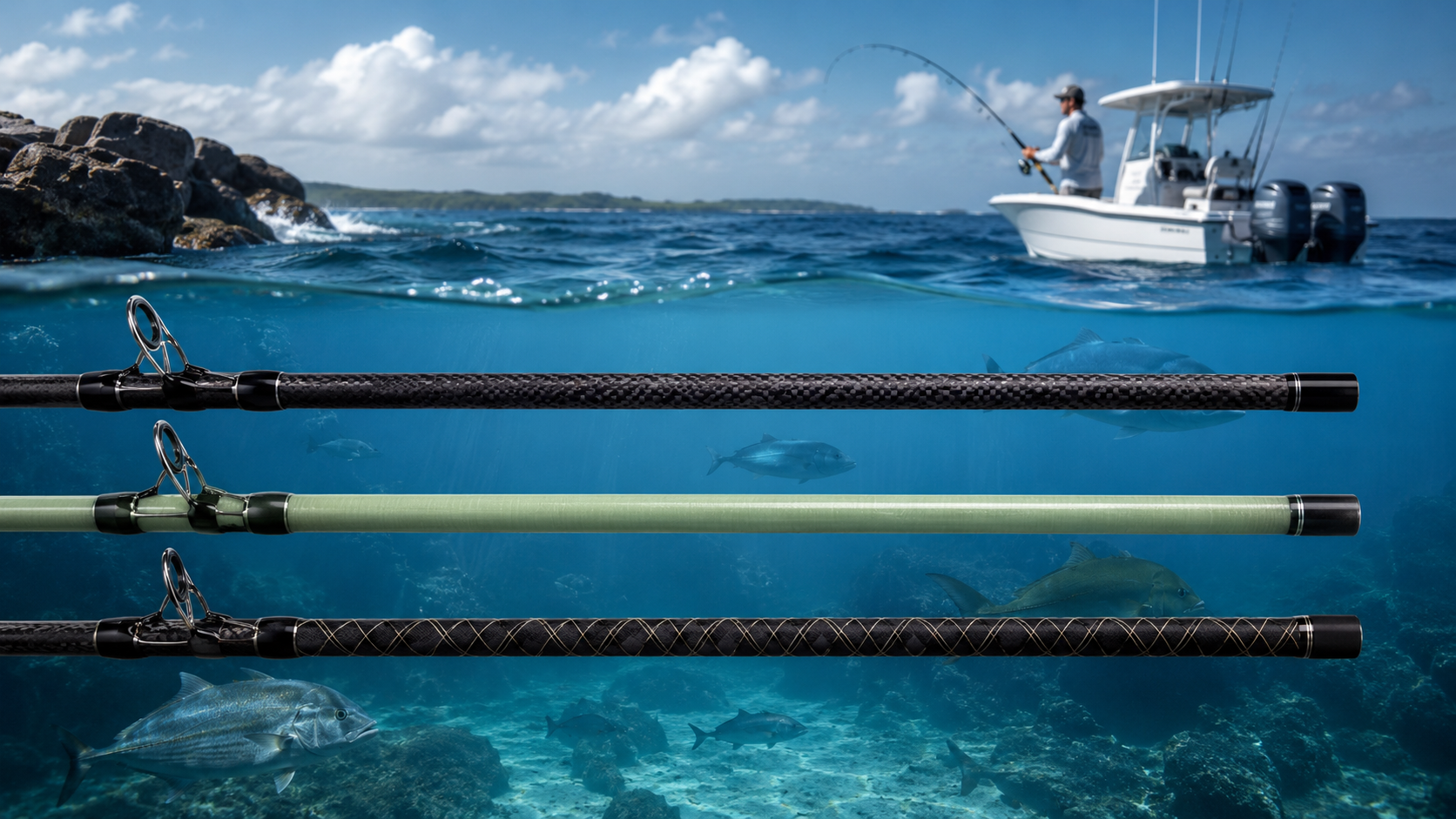
Choosing a rod blank is not just about brand stickers. In Australian saltwater—from Sydney Harbour rock walls to coastal reefs and estuary flats—the blank decides how quickly you feel a soft bite, how much shock a hard-running fish can dump into the tip, and how the rod survives sand, spray and a long summer session. Most recreational rods sold for local use fall into three families: graphite (carbon), fibreglass, and composite blends that mix both. Matching that material to species, boat or kayak style, and the way you cast will save you more frustration than any single lure colour ever will.
Aussie Tackle Box puts blank choice in plain terms so you can build a kit that suits Sydney conditions and the wider east-coast mix of bream, flathead, mulloway, tailor, kingfish, mangrove jack and seasonal spanish mackerel runs.
Graphite blanks: feel, cast distance and weight
Graphite blanks are light, crisp and sensitive. High-modulus carbon transmits vibration well, so you notice a bream mouthing a soft plastic or a flathead lifting a jighead off the sand. That same stiffness helps load a light lure for longer casts across windy harbour reaches. For kayak anglers and small-craft fishers who cast all day, lower swing weight reduces fatigue.
Trade-offs show up under abuse. Pure high-modulus graphite can be brittle if a blank is high-sticked, slammed in a rod holder, or crushed under a hatch lid. Salt crystals left in guides and reel seats also punish fine carbon over time if you skip freshwater rinses. Graphite shines for:
- Estuary soft-plastics for bream and flathead on light spin outfits
- Surface and soft-bait work for kingfish where bite detection matters
- Long casts with light metals or plastics for tailor along beaches and walls
- All-day casting from a kayak or tinny when every gram counts
Look at rated line class in kilograms, lure weight in grams, and action (fast tip versus moderate) rather than marketing modulus numbers alone. A well-built mid-modulus graphite rod often outlasts a fragile ultra-high-modulus stick in real saltwater use.
Fibreglass blanks: forgiveness and grunt
Fibreglass is heavier and slower to recover, but it bends deep and shrugs off knocks. That parabolic load is ideal when a mulloway surges near structure, a barra smashes a lure in snaggy water, or a spanish mackerel lights up after a high-speed troll. Glass also suits live-bait and baitfishing styles where you want the rod to absorb head shakes instead of pulling hooks.
You give up some cast distance with ultra-light lures and some fingertip feel on tiny takes. For many boat and land-based bait setups, that is a fair swap. Fibreglass or glass-heavy sticks are strong candidates when you:
- Fish live baits or large soft plastics for mulloway around bridges and drop-offs
- Troll skirts or diving lures for spanish mackerel and other speedsters
- Need a tough deck rod that copes with rod holders, kids learning to fish, or rough storage
- Work heavy cover where a fish may bury you and the blank must not spike load suddenly
Length in metres and a clear kg line rating still matter. A longer glass rod can help keep line clear of gunwales; a shorter one is easier in tight kayak cockpits.
Composite blanks: blending feel with durability
Composite blanks layer graphite and fibreglass (sometimes with other fibres) so the tip stays lively while the lower blank stays tough. Many Australian saltwater spin and overhead rods aimed at mixed estuary-to-inshore work are composites for exactly that reason. You get better bite detection than full glass, more impact tolerance than brittle pure graphite, and a progressive bend that helps keep hooks in tailor, kingfish and mangrove jack during long runs.
Composites are a practical default if you want one or two rods to cover several jobs rather than a specialised quiver. Typical sweet spots include:
- General-purpose 2–4 kg and 3–6 kg estuary spin rods for bream, flathead and school mulloway
- Inshore spin or light overhead setups for kingfish on plastics and stickbaits
- Travel or small-craft rods that see mixed storage and varied techniques across a season
When you compare models, read the blank description, action and power together. “Composite” alone does not tell you the graphite-to-glass balance—moderate-fast actions with a solid lower section usually signal a useful saltwater mix.
Matching blanks to species and Sydney-style scenarios
Think in scenarios, not just species names. Summer and early autumn estuary sessions around Sydney often mean light graphite or graphite-rich composites for soft plastics on bream and flathead. Winter and shoulder-season mulloway work on baits or larger plastics may favour composite or glass-leaning blanks that cushion surges near pylons. Spring and summer kingfish schools reward sensitive graphite tips for plastics, yet many anglers still prefer a composite mid-cal that will not fold permanently if a fish dives under the hull.
Further north, mangrove jack and barra demand blanks that load deep under sudden strikes; glass and robust composites reduce pulled hooks. Seasonal spanish mackerel trolling and high-speed spin reward durable glass or composite sticks rated for the lure mass in grams and the shock of a screaming first run. Murray cod is a freshwater icon, but the same blank logic applies on impoundments: tough composites and glass handle timber and heavy lures, while fine graphite is better reserved for open-water feel techniques.
Practical buying and care checklist
Use this short list before you commit to a blank type:
- Write down target species, average lure weight in grams, and line class in kg.
- Note platform: rock ledge, beach, kayak, trailer boat or harbour wall—storage knocks favour glass or composite.
- Decide whether bite feel (graphite) or hook-up forgiveness (glass/composite) is the higher priority.
- Check length in metres for casting room versus close-quarters control.
- Plan care: rinse with fresh water after every salt trip, dry guides, loosen reel seats, and avoid high-sticking any carbon-rich blank.
Terminal tackle and line still have to match the blank. A crisp graphite tip will not fix oversized leaders or dull hooks, and a soft glass rod will not apologise for drag set too tight. Build the system as a whole: blank action, reel drag smoothness, line stretch and leader abrasion resistance.
Building a small, honest quiver
Most recreational anglers do not need a dozen rods. A sensible saltwater starting set for mixed Australian use is often one light graphite or graphite-led composite for estuary plastics, one mid-power composite for inshore kingfish, tailor and general boat work, and one tougher glass or glass-rich stick for bait, trolling or heavier structure fishing. Add specialty lengths only when a technique truly demands them.
If you are unsure, favour a quality composite in the line class you actually fish most weeks. You can refine toward pure graphite or pure glass once you know whether you are losing fish to poor feel or to sudden hook-pulls. For local questions about fit-out, storage on small craft, or how blanks sit with your reels and soft plastics, contact Aussie Tackle Box on +61275903570 or [email protected] during Mon–Fri: 09:00 – 17:00 (AEST). We focus on clear gear guidance for Australian conditions—not hype.
Blank material is a tool choice. Graphite delivers feel and casting efficiency, fibreglass delivers forgiveness and toughness, and composites aim for the middle path that suits a lot of real saltwater days. Match the blank to your water, your species and how hard you treat your gear, and the rest of the tackle box becomes easier to get right.
Navigation
See also
FAQ