Rod Length, Taper and Action Explained: How They Change Casting Distance and Hook-Up Rates
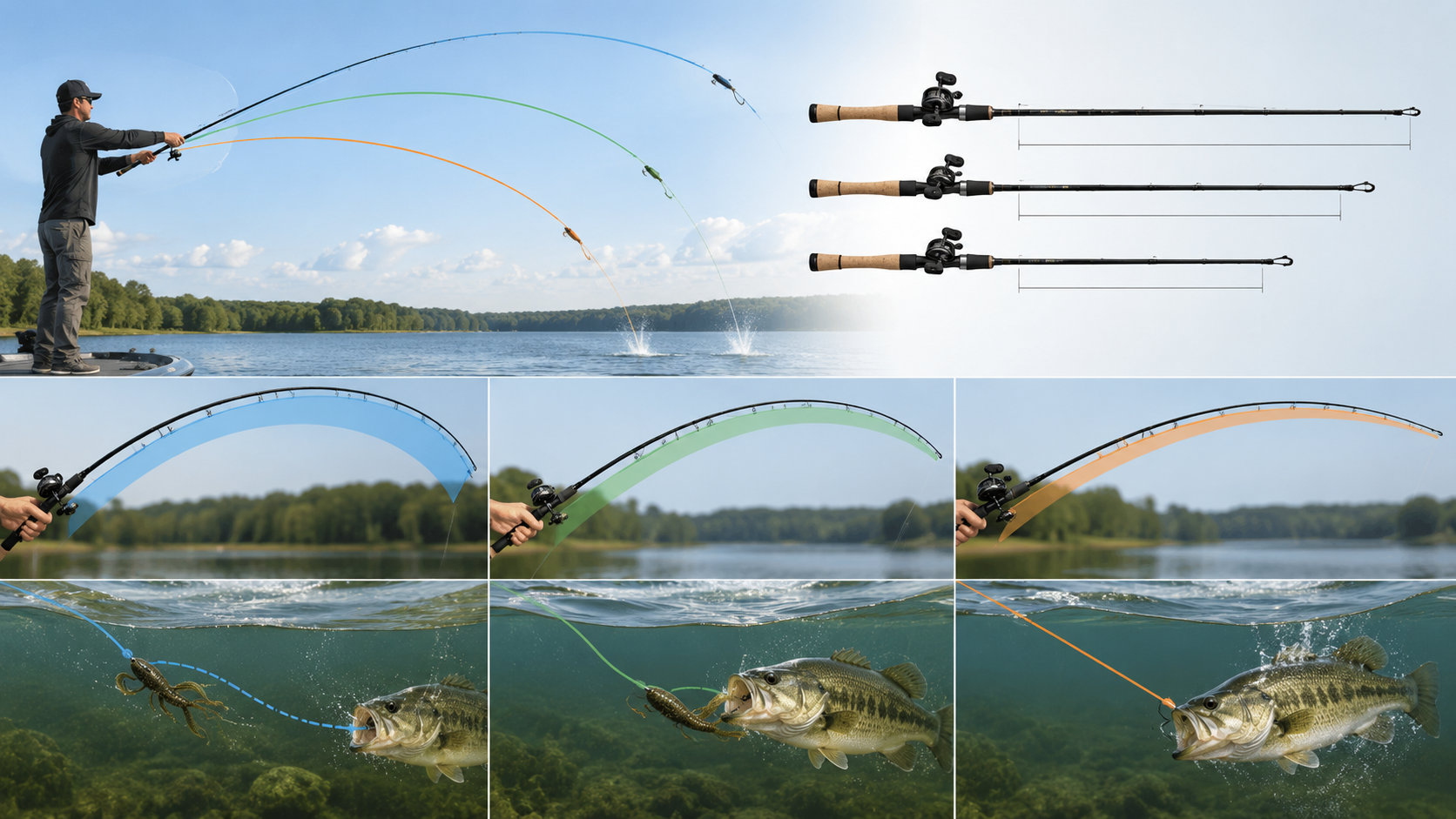
Why length, taper and action matter on Aussie water
Choosing a fishing rod is not only about brand or looks. Length, taper and action decide how far you cast, how cleanly a lure tracks, and whether you convert bites from bream, flathead, mulloway, tailor, barra, Murray cod, kingfish, mangrove jack and Spanish mackerel. Around Sydney and across the wider coast, the same blank can feel brilliant in a kayak yet clumsy on a rock ledge. This guide from Aussie Tackle Box breaks the specs into practical choices so you can match gear to species, craft and conditions without guesswork.
Use metric thinking throughout: rod lengths in feet and inches are still printed on many blanks, but think in metres and centimetres when you picture casting arcs, kayak storage and rod-holder spacing. Pair the blank with line in kilograms breaking strain and lures in grams so the whole outfit stays balanced.
Rod length: leverage, distance and control
Length is the easiest spec to see and the one that most obviously changes casting distance. A longer rod increases tip speed through a full cast, which helps light soft plastics and small hardbodies reach further across windy estuary mouths. A shorter rod loads quicker in tight quarters and gives sharper control when you are working structure.
- About 1.68–1.83 m (roughly 5'6"–6'): kayak and small-craft work, tight mangrove edges, close-quarters barra and mangrove jack. Easy to store and swing under low cover.
- About 1.98–2.13 m (roughly 6'6"–7'): the everyday estuary and bay length for bream, flathead, tailor and light mulloway. A strong all-rounder for shore and tinny use near Sydney.
- About 2.28–2.74 m (roughly 7'6"–9'): beach, rock and longer surf or headland casts; also useful when you need to keep line higher over wash or weed beds.
- Over ~2.74 m: specialised surf or wharf work where distance and line clearance beat close-in accuracy.
Longer is not automatically better. Extra length multiplies fish-fighting leverage against you on heavy kingfish or Spanish mackerel, and it can make precise skips under pontoons harder. Match length to where you stand: seated kayak anglers often prefer the shorter end; standing deck or rock anglers can use more stick.
Taper: where the blank bends
Taper describes how diameter and stiffness change from butt to tip. In plain terms it answers: does the rod bend mainly in the tip, through the mid, or deep into the butt?
- Fast taper: bend concentrated toward the tip. Quick recovery, sharp lure twitches, strong backbone for driving hooks into firm-mouthed fish such as kingfish and mangrove jack.
- Moderate taper: bend shared through the middle. Forgiving on light leaders, helpful when flathead or bream mouth a soft plastic and turn.
- Slow or through taper: deep, even bend. Classic for some bait presentations and for cushioning surges on long runs, though less common in modern lure rods.
Taper works with action labels on the blank. A “fast” sticker usually implies a faster taper, but two fast rods can still feel different if one has a softer tip section. When you shop, load the tip gently with the tag end of some line and watch where the curve starts—that visual check beats marketing words alone.
Action and power: timing the hook-set
Action is how quickly the blank returns and where it flexes under load. Power (light, medium, medium-heavy, heavy) is how much force it takes to bend it. Confusing the two leads to poor hook-up rates.
Fast action with adequate power helps when you need an immediate strike on single-hook soft plastics for mulloway or on stickbaits for pelagics. Moderate action can improve hook-up rates on treble-hook hardbodies for tailor and Spanish mackerel because the bend keeps tension while the fish shakes. Too stiff a tip on light bream gear rips small hooks free; too soft a tip on barra or Murray cod gear delays penetration on thick jaw plates.
- Pick power for the heaviest fish and cover you honestly expect, plus a margin for snags.
- Pick action for the lure style: fast for plastics and jigs, moderate for diving hardbodies and many surface lures.
- Confirm the lure weight window in grams and line class in kg printed on the blank—stay inside that window for casting distance and blank life.
How these specs change casting distance
Distance comes from rod load, tip speed, release timing and line diameter. Length and taper are the blank’s contribution.
A longer, correctly loaded fast-taper rod throws light 3–8 g plastics further than a short moderate rod of the same power, provided your timing matches the recovery speed. If you overload a light tip with a 28 g metal for tailor, the blank collapses, recovery slows and distance drops. If you underload a heavy offshore stick with a 7 g grub, the blank never stores energy and the cast dies.
Practical checks before a session out of Sydney:
- Match sinker or lure mass in grams to the blank’s cast rating.
- Use thin, smooth braid in a sensible kg class so the guides do not chatter.
- Open your casting arc only as far as the bank, kayak seat or rock platform allows—length only helps if you can finish the stroke.
Hook-up rates by species and rig
Hook-ups fail when the rod either rips the lure away or never firms the point. Tune length, taper and action to the bite.
- Bream and flathead: lighter power, moderate-fast tips, lengths around 1.98–2.13 m. Soft plastics and light hardbodies need a tip that yields on the first tick, then firms through the mid on the sweep.
- Mulloway and kingfish: medium to medium-heavy, faster taper, enough length to pick up slack line quickly after a drop or cast. Backbone matters once the fish kicks for structure.
- Tailor and Spanish mackerel: moderate elements help keep trebles pinned during head shakes at the boat; pair with suitable trace and do not high-stick a short, overly stiff rod.
- Barra and mangrove jack: stronger power, fast recovery for single-hook presentations around timber; shorter lengths shine in tight snags.
- Murray cod: heavier power and deliberate actions that drive large singles home, with length chosen for boat deck space and bankside swing room inland.
Strike style should match the blank. A long, sweeping hook-set suits softer estuary tips and circle-hook bait rigs. A short, sharp lift suits fast plastics rods when the bite is a solid thump.
Kayak and small-craft fit-outs
On kayaks and tinnies, length collides with storage tubes, hatch lids and paddle stroke. Many Sydney harbour and coastal lake anglers settle on 1.83–2.13 m spinning outfits for mixed estuary work. Check that the rod sits clear of the paddle and that the butt is not so long it spears the console or your lifejacket when you hook up.
Faster taper helps when you cast seated and cannot use a huge body swing. Keep a slightly shorter, tougher stick ready for kingfish or jack country where fish aim for pylons within seconds.
Seasonal notes for the southern hemisphere
Summer and early autumn often mean warmer shallows, surface activity and longer evening sessions—light, crisp tips excel for bream and flathead on plastics. Autumn can bring stronger tailor and pelagic runs along the coast; moderate-fast outfits that still cast metals and stickbaits become useful. Winter pushes many anglers toward deeper edges and slower presentations for mulloway and flathead, where feel in the tip matters more than raw length. Spring wakes bait and predators again; keep one longer casting rod and one close-quarters rod so you can change without rebuilding the whole tackle box.
Quick selection checklist
- List the main species and the average lure weight in grams you actually throw.
- Choose length for platform: kayak, boat deck, beach or rocks.
- Choose power for fish size and cover; choose action for lure type.
- Study taper by flexing the blank; prefer faster recovery for singles and jigs, more mid-bend for trebles.
- Balance reel size and line kg rating so the rod loads in the mid third of its cast range.
- Re-check fisheries rules and size limits for your state waters before you fish—gear choice does not replace legal compliance.
Care that protects action and taper
Salt, sand and UV quietly ruin the feel you paid for. Rinse guides and bindings in fresh water after coastal trips, dry the blank before storage, and avoid high-sticking a deep bend against a heavy fish at the side of the boat. Store rods straight, not leaning in a hot car where resin and wraps can soften. If a tip section is crushed or a guide ring is grooved, replace parts early—damaged guides shred line and fake a “soft” action that is really friction.
For more outfit planning with Aussie Tackle Box, think in systems: rod specs, reel drag in kilograms of pressure you can actually set smoothly, leader strength, and terminal tackle sized to the species. If you need help matching a blank to local harbour and coastal patterns, contact [email protected] or call +61275903570 during Mon–Fri: 09:00 – 17:00 (AEST). Clear length, taper and action choices will lift both casting metres and the percentage of bites you boat.

Navigation
See also
FAQ