Gear Ratios and Line Retrieve: Fast vs Slow Reels by Technique
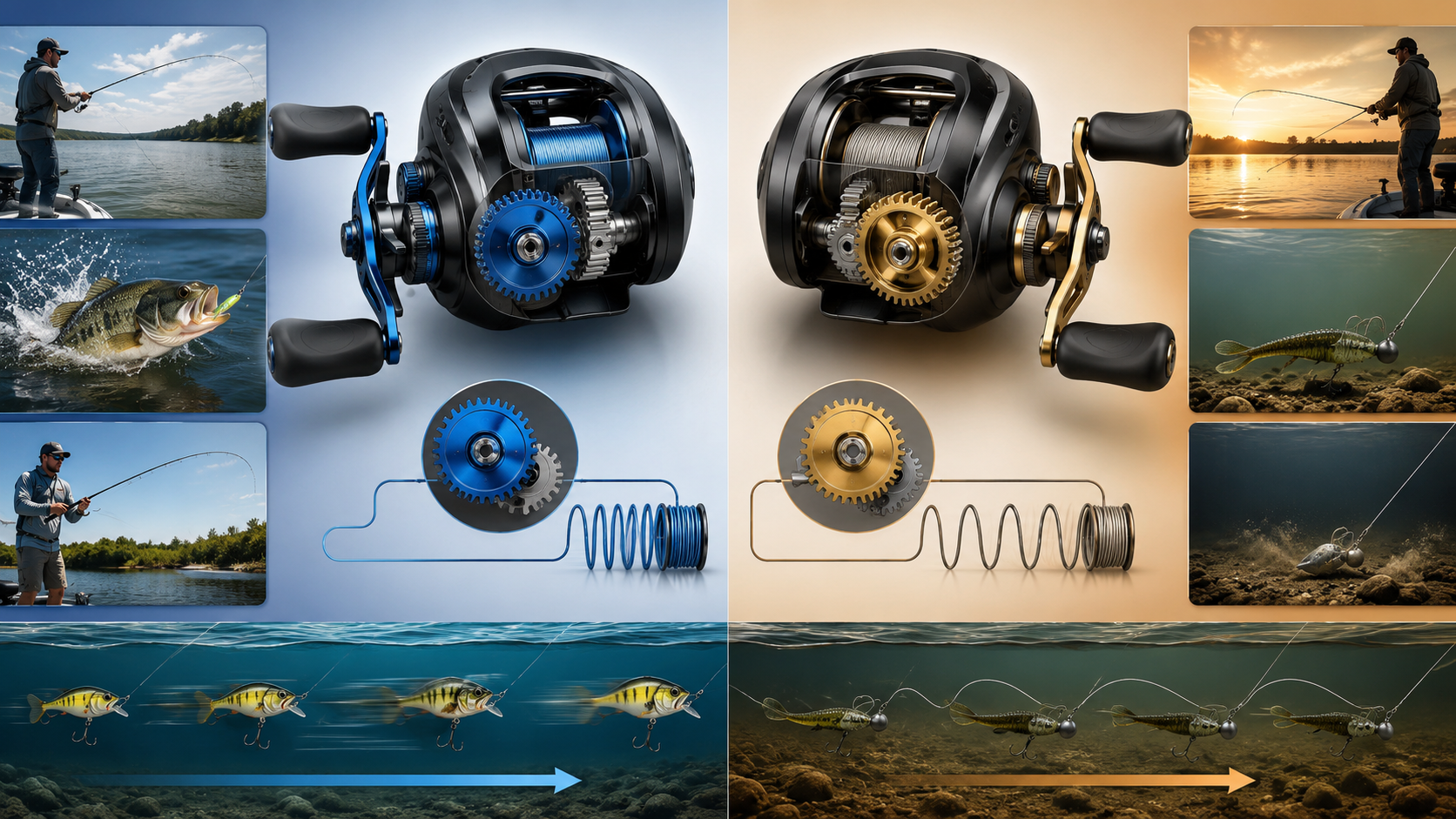
What gear ratio and line retrieve actually mean
On Aussie tackle boxes from Sydney wharves to offshore runs, the number stamped on a reel is easy to misread. A gear ratio such as 6.2:1 means the spool turns 6.2 times for every full turn of the handle. That figure alone does not tell you how fast lure or bait comes back. Line retrieve — usually listed in centimetres per handle turn — is the practical number. It depends on spool diameter as well as ratio, so a compact spin reel and a wide baitcaster with the “same” ratio can pick up very different lengths of line.
Aussie Tackle Box anglers should treat ratio as a starting point and retrieve rate as the decision tool. Faster retrieve helps when you must take slack quickly, keep a surface lure alive, or lift a jig off structure before a fish dives. Slower retrieve suits deep cranking, heavy soft plastics worked along the bottom, and big-game overheads where torque and control matter more than speed.
Reading the numbers on spin, baitcast and overhead reels
Spin reels common in estuary kits often sit around 5.0:1 to 6.2:1 for all-round work, with high-speed models from roughly 6.2:1 upward when you need rapid line pickup on long casts. Baitcasters used for barra, mangrove jack and snag country frequently span similar ground, but lower ratios give more winding power when a fish is buried in timber. Overhead and lever-drag style reels for kingfish, spanish mackerel and deeper work may look “slow” on paper yet still move a lot of line per turn because the spool is large.
- Low ratio (about 4.5:1–5.4:1): more torque, steadier pressure, ideal for deep divers, heavy jigs worked methodically, and fish that surge hard near cover.
- Mid ratio (about 5.5:1–6.4:1): the everyday choice for flathead plastics, bream and estuary mixed bags, light trolling and general beach or rock spinning.
- High ratio (about 6.5:1 and above): quick slack recovery, topwater and stickbait work, vertical jigging when you need the lure back up the water column fast, and long-cast tailor or salmon sessions in wind.
Always check the centimetres-per-turn figure in the specs. Two reels both marked 7.0:1 can differ by several centimetres of line each crank if spool diameters differ. Match braid diameter and spool fill to the manufacturer’s guidance so the published retrieve rate stays realistic.
Matching speed to technique and species
Estuary soft plastics and light spin
For bream, flathead and school mulloway on soft plastics, a mid-speed spin reel keeps you in touch without ripping the lure through the strike zone. Slow-rolling a paddle-tail along sandy gutters or hopping a curl-tail near weed edges often works better when you are not forced into a frantic wind. Use a higher-ratio spin outfit when fishing long wharves or windy open flats so you can pick up belly in the line between hops and set the hook cleanly.
Topwater, stickbaits and surface chaos
Surface walking baits for barra in the build-up and wet season north, or stickbaits for kingfish and tailor closer to Sydney, reward high retrieve rates. You need spare speed to twitch, pause and then snatch slack before the next walk-the-dog sequence. A fast baitcast or spin reel also helps when a fish boils short and you must reposition the lure without winding the face off the plug on every turn.
Crankbaits, vibes and deeper presentations
Deep-diving hardbodies and heavier vibes for murray cod, jack and mulloway load the rod tip. Lower to mid ratios reduce forearm fatigue and keep the bill or blade tracking true. If your only reel is high-speed, shorten the crank stroke and slow your handle cadence rather than fighting the gearing — the lure still needs time in the zone.
Jigging and high-energy pelagics
Vertical jigging for kingfish and spanish mackerel often pairs a high-speed overhead or sturdy spin reel with braid so you can work the metal on the lift and still regain line when the fish runs toward the boat. Slow-pitch styles may prefer a more moderate ratio with a longer handle for leverage. In both cases, smooth drag and correct line capacity matter as much as the stamped ratio.
Seasonal and regional notes for Australian waters
Southern hemisphere seasons change where and how you fish. Summer heat around Sydney pushes early starts and evening topwater; fast reels shine when tailor and pelagics are harassing bait on the surface. Autumn often brings cleaner estuary water and solid flathead and bream sessions on mid-speed spin gear. Winter favours slower presentations, deeper edges and patient retrieves for mulloway and cod country inland. Spring sees fish moving with warming shallows — keep one mid-ratio and one faster outfit ready so you can swap without retying your whole kit.
State rules, size limits and closures differ. Before you load the car, confirm local fisheries regulations for the waters you will fish and carry only legal gear configurations for that state. Aussie Tackle Box content is general guidance for recreational anglers, not a substitute for the official rule book.
Practical setup tips without overspending
You do not need a different reel for every lure. Many Sydney-based anglers cover most techniques with two spin reels (mid and high speed) and one baitcast or overhead matched to heavier line. Spool with quality braid suited to the rod’s casting weight, add a suitable leader for abrasion around rocks and oyster racks, and note the actual centimetres of line you move per turn when the spool is correctly filled — a quick measure with a ruler on the first cast day removes guesswork.
- Mark rod butts or reel stems with the ratio and measured cm/turn so you grab the right outfit in low light.
- Service drag washers and check handle knobs before long trips; high-speed gears magnify any roughness.
- Store reels dry, back off drags after the session, and rinse salt with fresh water — gear care keeps retrieve smooth season after season.
- For kayak and small-craft fit-outs, favour compact frames with the retrieve speed you actually use; unnecessary bulk steals space from tackle storage.
If you are unsure whether to prioritise torque or pickup speed for a new technique, start mid-ratio, fish a full session, and only step up or down when the lure action or fish behaviour clearly demands it. For broader context on spin, baitcast and overhead choices across Aussie styles, keep exploring the reels guides on Aussie Tackle Box and match line, leader and terminal tackle to the species and structure you face.
Questions about fitting reels to rods and storage systems for local waters? Contact Aussie Tackle Box on +61275903570 or [email protected] during Mon–Fri: 09:00 – 17:00 (AEST). We focus on clear, practical tackle guidance for recreational fishing across Australia.

Navigation
See also
FAQ