Spinning Reel Sizes Explained: 1000 to 20000 and What Each Suits
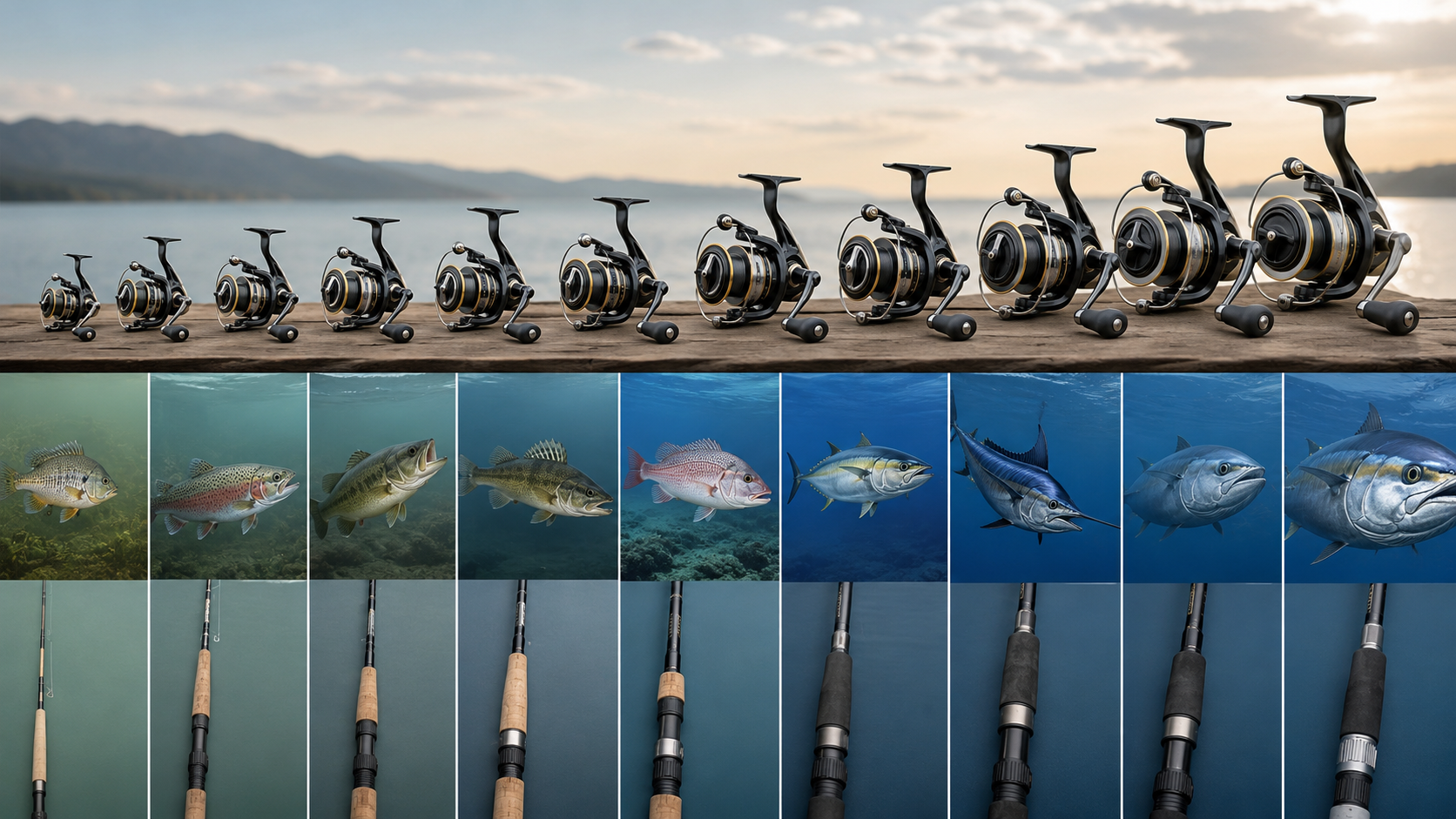
Why reel size numbers matter on Aussie water
Spinning reel size codes such as 1000, 2500, 4000 and 8000 are a quick way to match drag, spool capacity and overall bulk to the fish and the country you fish. Brands do not share one universal standard, yet the scale still works as a practical shopping language for recreational anglers around Sydney and across the states. Smaller numbers suit light estuary work on bream and flathead. Mid sizes cover tailor, mangrove jack and school mulloway. Large reels handle kingfish, Spanish mackerel and heavy beach or rock sessions where long casts and serious drag matter.
Think in systems, not isolated parts. Reel size should sit with rod power, line class in kilograms, leader strength and the lure or bait weight you actually throw. A 2500 on a soft-tip bream stick feels balanced. The same reel on a heavy jewie stick will feel under-gunned and may heat the drag. Aussie Tackle Box focuses on that balance so you buy once and fish more.
How manufacturers number spinning reels
Most popular series step roughly like this: 1000–2000 light, 2500–3000 light–medium, 4000–5000 medium, 6000–8000 medium–heavy, 10000–14000 heavy, and 18000–20000 extra heavy or specialised long-cast and high-capacity roles. Exact spool volume, max drag in kilograms and gear ratio still differ by model, so always read the side plate specs rather than the number alone.
- Body and rotor mass: smaller frames reduce fatigue on all-day soft-plastic sessions.
- Spool capacity: more metres of braid for cliffs, beaches and bluewater drops.
- Drag surface and max drag: larger reels usually shed heat better on long runs from mulloway or kingfish.
- Handle length and knob size: bigger reels favour power-winching; small reels favour quick lure work.
Size 1000 to 2000: ultra-light and light estuary
These reels pair with light graphite rods around 1.8–2.1 m and braid in the 2–6 kg class with fine fluorocarbon leaders. They shine for bream around oyster racks, wharves and lake edges, plus small flathead on lightly weighted soft plastics. Cast weight is typically a few grams up to about 12 g, so 1–3 inch plastics, tiny hardbodies and micro metals stay pleasant to work.
In southern waters through autumn and winter, when bream push shallow on cooler mornings, a 1000–2000 keeps the outfit sensitive. Do not expect them to stop a solid mangrove jack in snags or a metre-plus mulloway. Keep drag smooth and conservative, and use the rod and sound structure management rather than raw stall power.
Size 2500 to 3000: the all-round estuary and bay workhorse
If you only own one spinning reel for harbour and lake fishing near Sydney, a quality 2500 or 3000 is the usual sweet spot. Line ratings commonly sit around 4–8 kg braid. That covers flathead drifts, tailor blitzes on metals, light mulloway plastics after dark, and mixed sessions where bream and bigger bycatch share the same ramp.
Match them to rods in the light–medium to medium range, often 2.0–2.3 m, with cast ratings that accept 5–20 g heads or small vibes. For kayak anglers, this size still packs light in a crate yet holds enough braid for longer casts across flats. Freshwater crossover is strong too: the same outfit handles many Murray cod presentations on lighter imitations in rivers and impoundments when you are not throwing oversized swimbaits.
Size 4000 to 5000: beaches, rocks, jacks and school kings
Step up when wind, distance or fish size climbs. A 4000–5000 spool carries more metres of 6–12 kg braid and usually offers higher max drag. Typical jobs include surf gutters for tailor and flathead, headland work, mangrove jack around timber up north, and school kingfish on plastics or lightly weighted baits in harbour deep holes.
Rods often run 2.2–2.9 m depending on cast needs. Soft plastics in the 4–6 inch class, mid-size stickbaits and medium metal slugs suit this band. In spring and summer along the east coast, when bait schools thicken and predators feed hard, this size gives you casting reach without the bulk of a full offshore reel.
Size 6000 to 8000: heavy shore, bay kings and mackerel
These reels are built for longer fights and heavier leaders. Think solid kingfish, Spanish mackerel on denser coasts and reefs, bigger mulloway from beaches and rocks, and barra in snaggy tropical systems when you need authority. Braid classes often land in the 10–20 kg area depending on the exact model and spool depth.
Expect more weight in the hand. Balance them on medium–heavy to heavy spin rods with strong butt sections. Use quality swivels and abrasion-resistant leaders, and check drag washers before peak season. For small-craft fit-outs, a 6000–8000 can be the top-end outfit stored in a rod rack while lighter 2500s cover the flats.
Size 10000 to 20000: high capacity, long cast and big drag
Once you pass 10000 you are mainly buying spool capacity, line pickup and drag durability. Anglers use these for big surfcasts, heavy rock ledges, wide grounds and situations where a fish may peel a long first run. Ratings toward 14000–20000 appear on specialised long-cast and heavy spin outfits rather than everyday estuary kits.
They are poor choices for light bream plastics: tip feel drops and lure action suffers. Keep them for matched heavy rods, robust braid and species that justify the mass. Always confirm actual line capacity in metres for your chosen diameter, because a “20000” tag without enough line still fails on a screaming run.
Quick match guide by species and scenario
- Bream: 1000–2500, light braid, finesse plastics and small hardbodies.
- Flathead: 2500–4000, soft plastics and bait drifts on sand and mud.
- Tailor: 3000–5000, metals and diving minnows when schools show.
- Mulloway: 4000–8000 depending on venue size and snag risk.
- Mangrove jack: 4000–6000 with tough leaders around structure.
- Barramundi: 4000–6000 for many spin presentations; heavier if casting big flies of plastic into heavy cover.
- Murray cod: 3000–5000 for lighter spin; step heavier for large surface and deep wood.
- Kingfish: 5000–10000+ based on average size and current.
- Spanish mackerel: 6000–14000 class spin when trolling substitutes or casting high-speed lures from craft or high banks.
Line, leader and drag setup tips
Fill spools to the manufacturer’s rim guideline so casting stays smooth. On light reels, thin braid improves distance but still needs a shock leader for rocks and teeth. Set drag with a scale when you can: many estuary anglers start near one-quarter to one-third of the line’s breaking strain in kilograms, then adjust for hook size and rod bend. After sandy surf sessions, rinse with fresh water and dry the exterior; service schedules matter more once you fish regularly in salt.
Terminal tackle should scale with the reel. Tiny running sinkers and light gauges suit 1000–2500 outfits. Stronger swivels, heavier snells and abrasion leaders belong on 5000-plus kits. Storage systems that separate light and heavy spools stop you grabbing the wrong combo at dawn.
Choosing one reel versus a small set
Budget and boat space decide a lot. A practical two-reel kit for mixed Sydney harbour and coastal trips is a 2500–3000 plus a 5000–6000. Add a 1000–2000 only if finesse bream is a weekly habit, and add 8000-plus only if kings, heavy rocks or mackerel are regular targets. Try the reel on the rod before you commit: balance point near the reel seat usually feels best for long sessions.
Fisheries rules still come first. Size and bag limits, closures and gear restrictions change by state and season, so confirm current rules for your waterway before you fish. Pair sensible reel sizing with lifejackets on small craft, sun protection and safe footing on rocks. For broader rod matching and action notes while you build outfits, keep exploring the guides on Aussie Tackle Box and reach the team on +61275903570 or [email protected] during Mon–Fri: 09:00 – 17:00 (AEST) if you need help narrowing a size band.
Practical buying checklist
- List your top two species and venues for the next twelve months.
- Pick the lightest reel size that still holds enough braid and drag for those jobs.
- Match rod length and cast rating in grams to that reel’s comfort zone.
- Choose braid and leader in kilograms, not guesswork from old mono habits.
- Plan rinse, bag storage and spare spools so salt and sand do not shorten service life.
Reel size numbers are a map, not a myth. Start with how and where you fish around Australia, then step through 1000 to 20000 with clear eyes on capacity, balance and the local species that actually bend your rod. That approach keeps Aussie tackle boxes lighter, more useful and ready for the next tide.

Navigation
See also
FAQ