Micro Jigs, Slow Pitch and Knife Jigs Compared for Inshore Reef
Why jig style matters on Sydney inshore reef
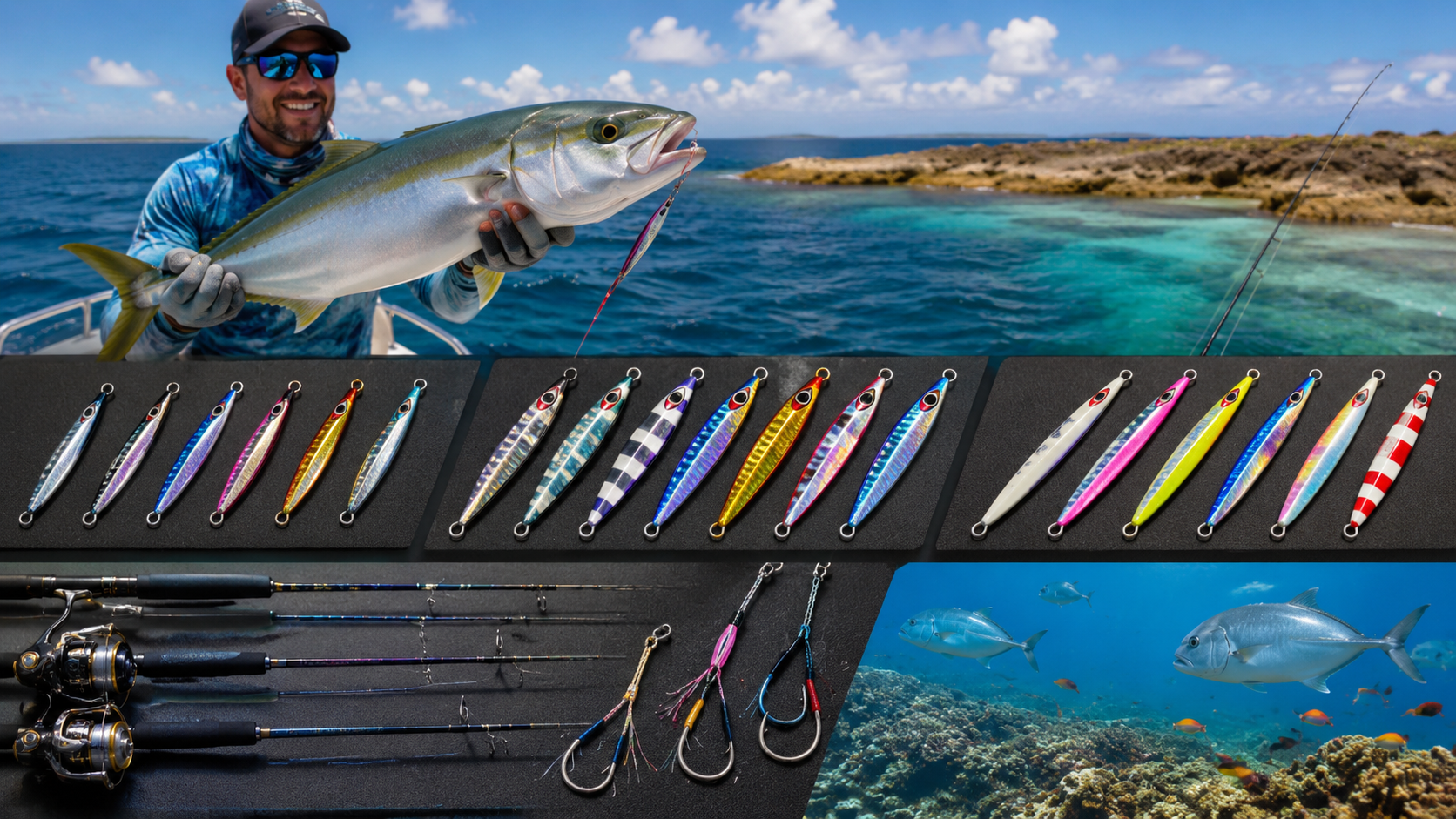
Inshore reef around Sydney rewards anglers who match jig profile, fall rate and rod action to depth, current and the species on the chew. Micro jigs, slow-pitch jigs and knife jigs all catch fish, yet they behave differently in the water column. Choosing the right style helps you stay connected to kingfish, tailor and the odd mulloway without overgunning light reef structure or burning through a session with the wrong sink rate.
Aussie Tackle Box puts the three styles side by side so you can build a simple, repeatable system for harbour edges, coastal bommies and shallow reef patches worked from a kayak or small craft. Use metric weights, keep terminal tackle tidy, and treat every drop as a controlled experiment rather than a random cast-and-hope.
Micro jigs: short strokes, high contact
Micro jigs are compact metal or hybrid profiles, commonly in the 5 g to 40 g range for true inshore work. They shine when bait is small, water is relatively clear and fish are holding mid-water or just off the bottom in 5 m to 25 m. Short, sharp rod lifts keep the jig flickering without leaping metres out of the strike zone.
- Best roles: probing bait schools, working pressure edges, and picking off active tailor or smaller kingfish when a big knife jig looks out of place.
- Retrieve feel: high contact, quick direction changes, and frequent pauses so the jig flutters on a semi-tight line.
- Line and leader: light braid in the 4 kg to 8 kg class with a fluorocarbon leader matched to abrasion risk on oyster and rock.
- Hook set-up: assist hooks sized to the jig; keep them sharp and check after every solid hit on reef.
Micro jigs reward a soft-tipped, fast-recovery rod that loads in the tip yet still sets small assists cleanly. If you are still sorting rod power and taper for light metal, cross-check your blank against a clear selection framework before you buy another stick for the same job.
Slow-pitch jigs: controlled fall and long hang time
Slow-pitch jigs are built to glide, kick and hang. Weights for inshore reef often sit from about 40 g to 120 g depending on depth and drift speed. The method is less about frantic pumping and more about cadence: lift, give slack or a controlled free-spool moment, then catch the jig as it planes and flutters back through the strike window.
- Drop to the zone, then engage and lift the rod in a smooth arc rather than a violent snatch.
- Allow the jig to fall on a managed line so the profile can swim sideways instead of nose-diving lifelessly.
- Repeat a rhythm that keeps the metal in the bottom third of the column when fish are glued to structure.
- Pause longer when the sounder shows arches lifting; many eats come on the hang, not the lift.
Slow pitch suits kingfish that inspect rather than smash, and it remains useful when current is moderate and you can hold a near-vertical presentation. Pair it with a rod that has a progressive bend, a reel with a reliable drag, and braid you trust for stretch-free feedback. Autumn and winter sessions on deeper harbour edges often favour this slower, more deliberate tempo when water cools and fish conserve energy.
Knife jigs: speed, flash and long draws
Knife jigs are long, slender metals designed to cut water, rise quickly and flutter on the drop. Inshore sizes might run from roughly 30 g to 150 g when you need to hold depth in wind or tide. They excel for covering water, calling fish up with flash, and working larger kingfish that respond to a strong upward draw followed by a wounded fall.
- Strengths: rapid depth changes, strong silhouette in lower light, and the ability to stay deep when micro jigs get swept out of the zone.
- Watch-outs: easier to snag in broken low reef if you free-spool carelessly; keep assists clear of the bottom on the pause.
- Cadence options: long lifts for aggressive fish, or shorter pumps with longer falls when the bite is shy.
A firmer rod butt helps move a knife jig with authority, while a sensitive tip still telegraphs light taps. If your only outfit is a soft soft-plastic rod, you will struggle to impart a clean knife-jig action in anything more than a gentle drift.
Head-to-head comparison for reef days
Think in terms of depth, current, bait size and fish mood rather than brand slogans.
- Micro jigs win in shallow to mid depths, light gear scenarios and when baitfish are tiny. They are forgiving for kayak anglers who need quick resets between gusts.
- Slow-pitch jigs win when you can stay near vertical, want maximum hang time, and are targeting fish that track a gliding profile. They reward patience and sounder literacy.
- Knife jigs win when you must cut current, cover a wider vertical band, or trigger reaction strikes from larger kingfish with speed and flash.
Carry at least two styles on a typical Sydney reef run. Start with the jig that matches the drift: if you cannot hold bottom contact without excessive weight, step toward a denser knife profile; if fish mark high and shy, drop to a micro and shorten the stroke. Southern hemisphere summer often brings warmer surface layers and faster bait movement, while cooler months can push a slower pitch closer to structure.
Rod, reel and terminal match-ups
Jig type only works if the rod loads correctly. Micro work likes lighter casting or light jig spin outfits with crisp tips. Slow pitch prefers a blank that bends deeper into the mid-section so the jig kicks on a short stroke. Knife jigs need enough backbone to move metal without turning every lift into a full-body heave.
Keep leaders practical: long enough for abrasion resistance on reef, short enough to manage at the side of a kayak. Swivels should be quality split-ring or solid rings rated above your drag. Assist hooks must track straight; replace any that rust or roll after a session. Rinse reels with fresh water after salt use, dry them, and back off drags in storage so washers last.
Species notes and simple safety
Kingfish are the headline target for these presentations on inshore reef, yet tailor will smash smaller metals and mulloway may intercept a slow, deep fall near low light. Flathead are less of a classic metal target here, and barra or mangrove jack sit outside typical Sydney reef patterning, so do not force the wrong species story onto local water.
Check current state fisheries rules before you launch, including size and bag limits and any area closures. Wear a lifejacket on small craft, tell someone your plan, and watch wind against tide on harbour mouths. Phone signal is handy for weather updates; keep +61275903570 and [email protected] saved if you need to reach Aussie Tackle Box during Mon–Fri: 09:00 – 17:00 (AEST) for general gear guidance, and always prioritise on-water safety over one extra drop.
A practical session plan
Arrive with a shortlist, not a full tackle shop. Rig one micro outfit, one slow-pitch or light knife outfit, and a small box of spare assists, rings and leaders. Sound the reef, note bait depth, then start with the jig that reaches the marks without excessive weight. Change one variable at a time: weight, cadence or pause length. Log what worked in spring colour versus a grey winter chop so your next trip starts smarter.
Used this way, micro jigs, slow-pitch jigs and knife jigs stop being fashion labels and become clear tools. Match profile to conditions, keep gear maintained, and fish the reef with intent.
Navigation
See also
FAQ