Suspending vs Floating vs Sinking Hardbodies for Winter Bream
Why hardbody type matters in a Sydney winter
Winter bream around Sydney slow down as water cools through June, July and August. They still feed, but they hold tighter to structure, sit lower in the water column and refuse lures that race past their strike zone. Choosing between suspending, floating and sinking hardbodies is less about brand hype and more about matching depth, current and how long you can keep a lure in front of a fish. On Aussie Tackle Box we treat these three classes as tools for different winter jobs, not as a single “best lure” contest.
Local black bream and yellowfin bream both respond to small hardbodies when the retrieve is deliberate. Pair that with sound local knowledge of bridge pylons, rock walls, oyster leases and deeper holes in the harbour and coastal lakes, and you can fish productively even on short grey days. Always check current state fisheries rules before you go; bag and size limits and closed areas change, and Aussie Tackle Box is a gear guide, not a substitute for official notices.
Floating hardbodies: when surface-to-mid control wins
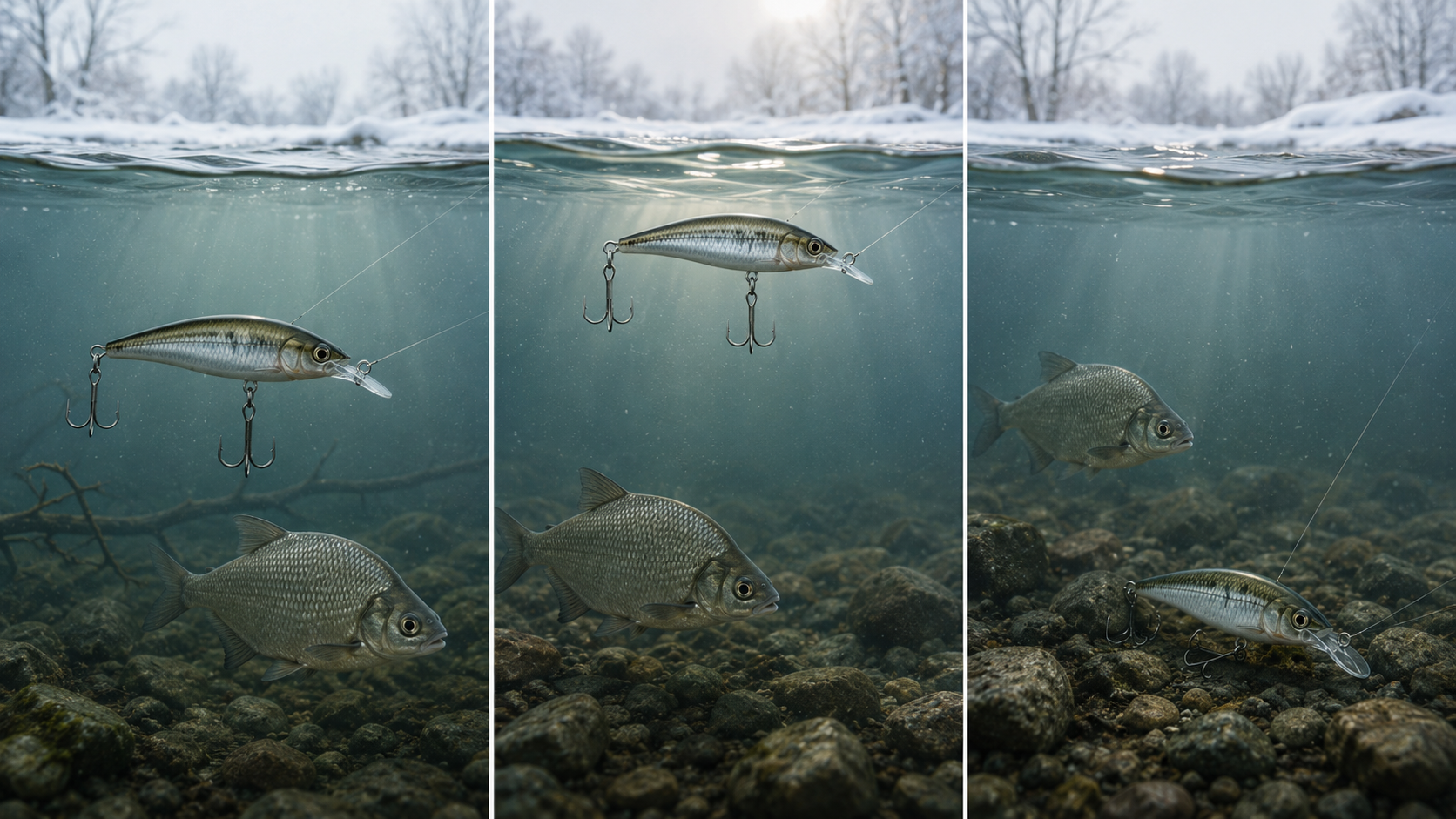
Floating hardbodies rest on the surface at rest and dive on the retrieve. Dive depth is set by lip size and angle, line diameter and retrieve speed. In winter they shine when bream are relating to shallow edges that still hold bait: sun-warmed rock bars late morning, draining drains on the last of the run-out, and weed edges in 0.5–1.5 m of water.
How to fish them in cold water
- Use a slow roll with long pauses so the lure floats up toward the surface and hangs near cover.
- Cast past the target and start the dive early so the lure reaches working depth before it hits the strike zone.
- Downsize to 40–60 mm bodies when the water is clear and the fish are shy.
- Favour natural baitfish and small crustacean colours on bright days; slightly darker or muted tones help under heavy cloud.
Floating models are forgiving for anglers learning depth control because a pause lifts the lure clear of snags. The trade-off is that in a stiff winter westerly or strong run, the float-up can pull the lure out of the zone too quickly if you pause for too long.
Suspending hardbodies: the winter workhorse
Suspending hardbodies are balanced to hold depth when you stop winding. In practice, “suspend” often means a very slow rise or sink depending on water temperature, salinity and the diameter of your leader. For winter bream they are often the most useful class because cold fish want the lure to stay put while they decide.
Practical setup notes
- Match leader diameter carefully: thicker fluorocarbon can lift a marginal suspender; lighter leader can make the same lure sink slowly.
- Work 1–3 m of water along walls, pontoons and drop-offs with a twitch–twitch–pause cadence, extending pauses to several seconds when bites are soft.
- Watch the line for ticks and small jumps on the pause; winter takes are often lazy inhalations rather than aggressive smashes.
- Keep trebles sharp and consider slightly lighter gauge hooks so a short strike still pins the fish without killing the suspend action.
If a lure that “should” suspend starts to rise in very cold water, a tiny amount of Blu-Tack under the chin or on a hook shank can fine-tune balance. Add mass in tiny steps and test in the margins before you fish tight timber or rock. Do not overload the lure so far that it becomes a clumsy sinker.
Sinking hardbodies and lipless styles: reaching deeper winter holds
Sinking hardbodies and compact vibe-style or metal-adjacent profiles get down when bream abandon the edges for deeper basins, channel lips and harbour holes. True sinking minnows count down on a controlled drop; denser bodies hold a line through current better than a floater ever will.
- Cast up-current or across, engage the bail, and count the lure down in one-second steps until you brush the zone you want.
- Use a slow lift-and-fall or short hops so the lure stays near bottom without ploughing mud constantly.
- In wind, a sinking body helps you keep contact when a floater would skate and blow off course.
- Step up line abrasion awareness around rock and oyster; inspect leaders often after contact.
Sinking lures punish a rushed retrieve. If you wind too fast you climb out of the strike window and collect weed. They also snag more readily, so angle your rod and free-spool a little on the drop when fishing tight structure, then resume contact once the lure is clear.
Choosing by depth, current and sky
A simple winter decision path keeps tackle choice honest:
- Shallow sunlit edges, light current: floating hardbody, long pauses, small profile.
- Vertical walls, pontoons, 1–3 m with picky fish: suspending hardbody, extended dead-sticking.
- Wind, deeper holes, stronger run: sinking hardbody or compact vibe profile with a countedown.
Carry one of each class in overlapping lengths rather than ten colours of the same floater. Winter sessions around Sydney are often short weather windows; changing lure density beats endlessly swapping hues when the fish have simply moved down 1 m.
Rod, line and terminal basics for hardbody bream
A light spin outfit in the 1–3 kg or 2–4 kg range with a responsive tip helps you telegraph soft winter bites and work small bibs without ripping the lure free. Thin braided mainline improves cast length and bite detection; a fluorocarbon leader in a sensible light class balances abrasion resistance against lure action. Keep splits and rings in good order so small hardbodies track straight. Replace rusty trebles before a session—corrosion kills hook-up rate faster than lure choice does.
Storage matters on small craft and kayaks: keep hardbodies in shallow trays so bibs and hooks do not tangle, and rinse gear after salty harbour sessions. Freshwater wash, dry, and light oil on rings extend the life of both floating and suspending models that you will lean on again next July.
Species crossover and honest expectations
The same winter discipline helps when a session mixes bream with the chance of flathead on adjacent sand edges, or when you are exploring similar hardbody ideas for estuary tailor on baitfish patterns. Techniques transfer; exact lure size and retrieve still need to match the fish in front of you. Mulloway and mangrove jack are different conversations in deeper or more tropical water, and barra or murray cod systems call for heavier hardware than light bream hardbodies. Stay inside the brief of the water you are fishing.
Safety, rules and local courtesy
Winter rock shelves and wet pontoons are slippery. Wear appropriate footwear, tell someone your plan, and respect wind warnings on open harbour water. If you fish from a kayak or small craft, fit basic safety gear and keep casts clear of other anglers. Confirm size and bag limits and any seasonal closures through official state channels before you keep fish. Aussie Tackle Box focuses on tackle thinking and practical rigging for recreational anglers—pair it with current regulations and common sense on the water.
For more gear-oriented reading on hardbodies, metals and related estuary tools, explore the wider lure guides on this site and build a compact winter kit you actually understand. Questions about general tackle topics can go to [email protected] during Mon–Fri: 09:00 – 17:00 (AEST), or call +61275903570 if you need to reach the Sydney team about site content—not for emergency or official fisheries advice.
Master the difference between float, suspend and sink, slow your retrieve when the water cools, and let pauses do more of the work. That is the core of productive winter bream hardbody fishing in southern Australian conditions.
Navigation
See also
FAQ