Carbon vs Felt Drag Washers and Why Sealed Reels Matter on the Rocks
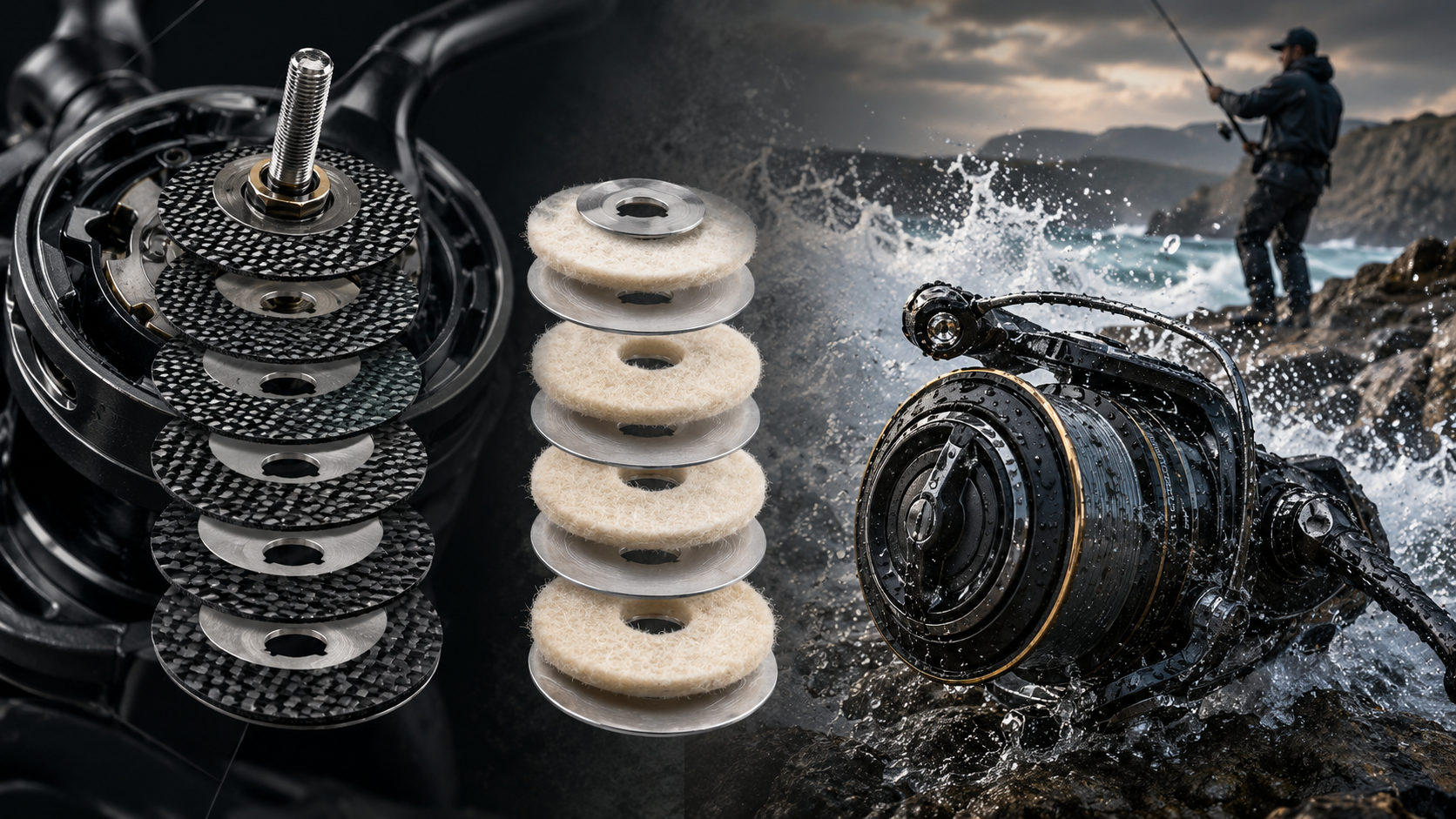
Why drag choice changes rock sessions around Sydney
On the open rock ledges near Sydney, your reel is not only fighting fish. It is fighting salt spray, grit from basalt and sandstone, and sudden pressure from tailor, kingfish, mulloway and the odd spanish mackerel that shows in warmer months. The drag stack is the heart of that fight. Choosing between carbon and felt washers, and deciding how sealed the reel body needs to be, decides whether you land fish cleanly or spend the evening stripping a seized spool.
Aussie Tackle Box puts practical gear choices first so recreational anglers can match spin, baitcast and overhead set-ups to real Australian rock conditions rather than catalogue slogans.
Felt drag washers: smooth start, higher maintenance
Felt washers have been common in mid-range spin and overhead reels for years. They compress easily, so the drag often feels progressive at light settings. That can suit bream and flathead work in calmer corners, or light tailor spinning when you want a soft take-up on thin braid.
On the rocks the weaknesses show quickly:
- Felt absorbs salt water and swells, which can make the drag sticky after a wet session.
- Fine grit embeds in the fibres and creates uneven pressure under load.
- Drying felt with heat or leaving it wet overnight shortens service life.
- Heavy kingfish or mulloway runs can glaze the surface if the stack overheats.
If you keep a felt-drag reel for rock work, rinse lightly with fresh water after every trip, back the drag right off for travel, and service the stack more often than you would a sealed carbon unit. Never blast the drag star or rear knob with a high-pressure hose.
Carbon drag washers: heat tolerance and wet consistency
Carbon fibre and carbon composite washers are now the default on many quality spin and overhead reels aimed at saltwater. They shed water better than felt, hold a more stable curve when wet, and tolerate the heat built up during long runs from kingfish, mangrove jack in warmer northern trips, or big tailor along the washes.
Practical points for Australian rock anglers:
- Carbon usually needs less break-in than fresh felt, but a few firm pulls on a glove or a scale still help seat the stack.
- Wet carbon often stays closer to the dry setting than wet felt, which matters when spray is constant.
- Carbon can feel slightly more abrupt at very light settings; pair it with quality braid and a short fluorocarbon leader so you are not forced into ultra-fine drag clicks for bream-sized fish on the same reel you use for kingfish.
- Keep a thin film of the manufacturer-recommended drag grease only where the manual allows. Too much grease on carbon can glaze the faces and cause slip under peak load.
For mixed rock programmes out of Sydney—summer tailor and kingfish, autumn mulloway after dark, winter drummer and luderick on heavier spin or overhead gear—carbon stacks generally give more predictable lock-up when a fish turns toward the white water.
What “sealed” really means on the stones
Marketing language around sealed reels varies. For rock fishing you care about three zones: the drag chamber, the roller bearing or line roller, and the side-plate or rotor bearings that face spray. A reel that only has a rubber skirt on the spool lip is not the same as one with sealed bearings, labyrinth covers and a protected drag well.
Why sealing matters on Australian rocks:
- Side wash pushes salty mist straight into open rotor gaps on spin reels.
- Grit from boots and bags falls onto exposed drag stars and baitcaster bridges.
- Overnight moisture in a wet bag corrodes unsealed bearings long before the frame looks tired.
- A seized one-way clutch mid-fight is more than an inconvenience when you are standing on a wet ledge with swell rising.
Sealed does not mean maintenance-free. Rinse with low-pressure fresh water, dry the exterior, back off the drag, and book a full service on the interval your conditions demand. After heavy spray days, a light external wipe and a check of the line roller should be routine before the next dawn session.
Matching reel type to rock jobs
Spin reels
Sealed carbon-drag spin reels in the 3000–5000 class cover most rock spinning for tailor, salmon and modest kingfish around Sydney. Step toward larger sealed bodies when you cast bigger stickbaits or fish heavier soft plastics for mulloway. Look for a smooth line roller and a spool lip that does not catch braid when the wind comes up.
Baitcast reels
Baitcasters see less open-ocean rock use than spin, but sealed low-profile or round baitcasters earn a place for controlled presentations along calmer rock walls and harbour edges. Carbon drags help when a mangrove jack or solid flathead bolts for structure. Keep the level-wind and brake area clear of grit; sealing helps, careful bag storage helps more.
Overhead reels
Traditional overheads still shine for live-bait and heavier bottom work where you want thumb control on the spool. A carbon stack with decent side-plate sealing handles long mulloway and kingfish runs better than an open felt design soaked in spray. Check star-drag threads for salt build-up after every wet trip.
Set-up checks before you step on the ledge
- Set drag with a simple spring scale when you can: aim for a release that protects your lightest leader without free-spooling under moderate load.
- Inspect washers only if you know the reel’s service pattern; forcing a sealed drag apart on the rocks usually ends badly.
- Confirm the anti-reverse engages instantly—critical when a fish surges as you lift over a step.
- Match line capacity to the species plan: thin braid for distance on tailor, tougher leaders where rock abrasion is constant.
- Carry a spare spool or a second sealed outfit if the session mixes light spinning with heavier kingfish work.
Care routine that actually extends reel life
After rock sessions, rinse lightly, never soak. Wipe the frame, pay attention to the drag knob and line roller, then dry in shade. Store with the drag loosened so washers are not compressed for weeks. In humid Sydney summers, include a silica sachet in the reel pouch if gear sits in a closed box. Schedule internal services more often if you fish white water weekly rather than a few times each season.
Felt-drag reels can still serve sheltered or light-duty roles if you accept shorter service intervals. For regular ocean rocks, sealed bodies with carbon washers are the more forgiving path when spray, grit and fast fish arrive together.
Species notes and sensible expectations
Tailor and salmon punish drag faces with repeated short runs and spray. Kingfish test heat and consistency. Mulloway lean hard and find reef edges. Barra and mangrove jack matter more on warmer trips away from Sydney, but the same sealed-carbon logic applies when structure and humidity rise. Murray cod is a freshwater story; keep those reels on separate maintenance cycles so river mud does not share bearings with ocean salt.
Fisheries rules, bag limits and rock-access advice change by state and season. Check the current state rules before you fish, wear appropriate footwear and flotation where conditions demand it, and never let a tackle preference override swell judgement. For broader gear planning across rods, lines and terminal tackle, Aussie Tackle Box keeps guides practical and local. Questions about fitting sealed spin or overhead outfits into a rock kit can go to [email protected] or +61275903570 during Mon–Fri: 09:00 – 17:00 (AEST).
Choose carbon when wet consistency and heat matter, keep felt only where you will service it often, and treat sealing as protection for the parts you cannot wipe on the ledge. That combination lands more fish and retires fewer reels before their time.

Navigation
See also
FAQ