Barramundi Baitcast Setups for Snags, Bars and Wet Season Runoff
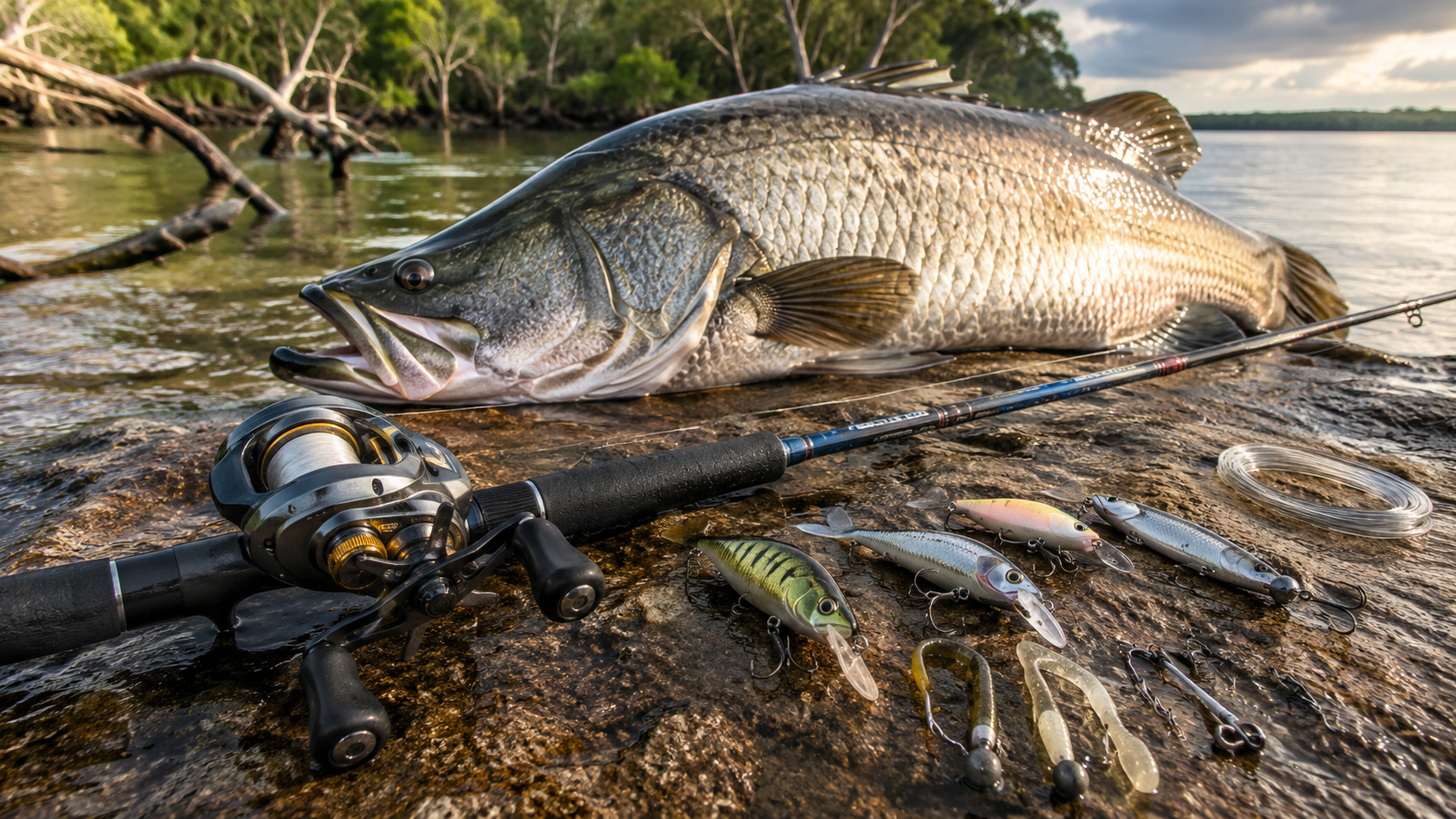
Why baitcast still rules barra country
Barramundi push hard into timber, rock bars and muddy flood edges. A well-balanced baitcast outfit gives you thumb control on the cast, quick line pickup when a fish turns for cover, and the grunt to short-stroke a big barra away from structure. On Aussie Tackle Box we treat baitcast as a working tool for Australian anglers chasing barra through the build-up, wet season and early dry—not a tournament gimmick. Whether you fish from a tinnie, kayak or the bank near a tidal creek mouth, the same principles apply: accurate presentations, abrasion-resistant leaders and enough backbone to win the first five seconds of the fight.
Southern hemisphere seasons matter here. Peak wet-season runoff in the north often runs from roughly December through March, with the build-up heating water and bait beforehand. Bars and drains fire when dirty freshwater fans over salt, and snags hold fish when levels stabilise. Match your setup to that cycle rather than copying a generic “barra combo” label.
Core baitcast outfit: rod, reel and line
For snags and tight timber, a baitcast rod in the 1.7–2.1 m range with a moderate-fast action and a solid tip section is easier to cast accurately than an ultra-fast stick. Look for a rating that comfortably handles 5–12 kg braid and lures from about 10–40 g. A slightly longer rod helps when you are casting across a bar or working a bank from a small craft; a shorter rod shines when you are pitching under mangroves.
Pair it with a low-profile baitcast reel in a compact frame, smooth drag and a reliable braking system you can tune for wind and lure weight. Gear ratios around 6:1 to 8:1 cover most barra work: enough speed to burn a hardbody or lift a soft plastic off the bottom, without feeling frantic on a slow roll. Spool 20–40 lb braid (roughly 9–18 kg class) in a high-visibility colour so you can track line angle around timber. Always finish with a quality fluorocarbon or hard mono leader; for barra in snaggy water, leaders in the 30–60 lb range (about 14–27 kg) are common starting points, stepped up when fish are burying deep in oyster rock or thick wood.
- Snag pitch rod: shorter blank, strong butt, accurate underhand and sidearm casts into gaps.
- Bar and open-edge rod: a touch longer for distance and line control in current.
- Reel setup: brakes set so the lure lands softly without overrun; thumb ready for last-metre control.
- Line: tough braid with a clean join to leader; check the first metres often for fray.
Terminal tackle and lure classes for three barra zones
Snags and timber edges
Weedless or lightly snagged presentations keep you fishing instead of retying. Soft plastics on wide-gap worm hooks, lightly weighted or weightless, slide through branches. Weedless swimbaits and compact spinnerbaits also earn a place. Use a loop or improved clinch suited to your leader, trim tags short, and keep trebles or exposed points to a minimum when the wood is thick. Strike firmly, then gain line immediately—barra will try to turn you into the nearest stump.
Sand bars, rock bars and drop-offs
Here you can fish more conventional hardbodies, vibration lures and lightly dressed jigs. Cast upstream or up-current of the bar, let the lure swing or sink into the strike zone, and keep contact without dragging bottom constantly. Baitcast reels shine when you need to feather a cast onto a skinny bar without spooking fish in clear run-off edges after a flush of dirty water has settled.
Wet season runoff drains and colour changes
Runoff plumes concentrate bait. Cast along the dirty-clean line and into small drains dumping fresh over the tide. Slightly larger profile lures, noisy or vibration-heavy options, and soft plastics worked with a steady retrieve help barra home in when visibility is low. Rinse gear after sessions in muddy, brackish water; silt in a baitcast reel is a classic wet-season failure mode.
Species-aware rigging notes
Barramundi are the focus, but the same northern sessions often turn up mangrove jack in snags and the odd queenfish or threadfin on open bars. Keep leaders honest for jack teeth and abrasion, and carry a slightly heavier trace if you expect jack mixed through the timber. Down south, anglers on Aussie Tackle Box still apply the same baitcast discipline when targeting structure species such as murray cod in freshwater timber, or kingfish and tailor around coastal structure—control and abrasion resistance transfer even when the species list changes. Coastal lure boxes that also hold patterns for bream, flathead, mulloway and spanish mackerel should stay organised so barra leaders and heavy trebles do not tangle finer estuary gear.
- Pre-rig two rods if space allows: one weedless soft-plastic outfit, one hardbody or vib outfit.
- Retie leaders after any serious rub on rock or wood—do not wait for a break-off.
- Set drag firm enough to turn a fish, yet still slip before the hook tears or the knot fails.
- Practise pitching and skipping casts at home so the first cast into a prime snag is clean.
Kayak and small-craft fit-out tips
On a kayak or small tinnie, mount rod holders where a bent barra blank will not spear you or the deck hardware. Keep a short gaff or grip tool legal and safe for your fishery, a landing net with a soft mesh if you practise catch and release, and a dry bag for spare reels and phones. Marine electronics—even a simple sounder—help you stay on bar edges and channel lips when runoff stains the surface. Stow pliers, braid scissors and spare hooks in a sealed tray; wet-season rain finds every open pocket.
Care, safety and fisheries rules
Wash baitcast reels in fresh water after salt or muddy sessions, dry them, and service drags and bearings on a sensible schedule. Inspect hooks for corrosion; barra mouths and tropical water punish cheap points. Sun, hydration and stable footing on slippery banks matter as much as lure choice. Always check the current rules for the state or territory you are fishing: bag and size limits, closed seasons, possession rules and gear restrictions change, and barra fisheries are tightly managed in several jurisdictions. Sydney-based readers planning a northern run should confirm licences and local notices before they leave, and carry the right safety gear for the craft and waterway.
If you need help matching a barra baitcast build to travel weight or a mixed northern lure kit, contact Aussie Tackle Box on +61275903570 or [email protected] during Mon–Fri: 09:00 – 17:00 (AEST). Build the outfit for the snag, the bar and the dirty water line—and the barra will tell you when the balance is right.

Navigation
See also
FAQ