Best Value Rod and Reel Combos Under $200, $400 and $800 AUD
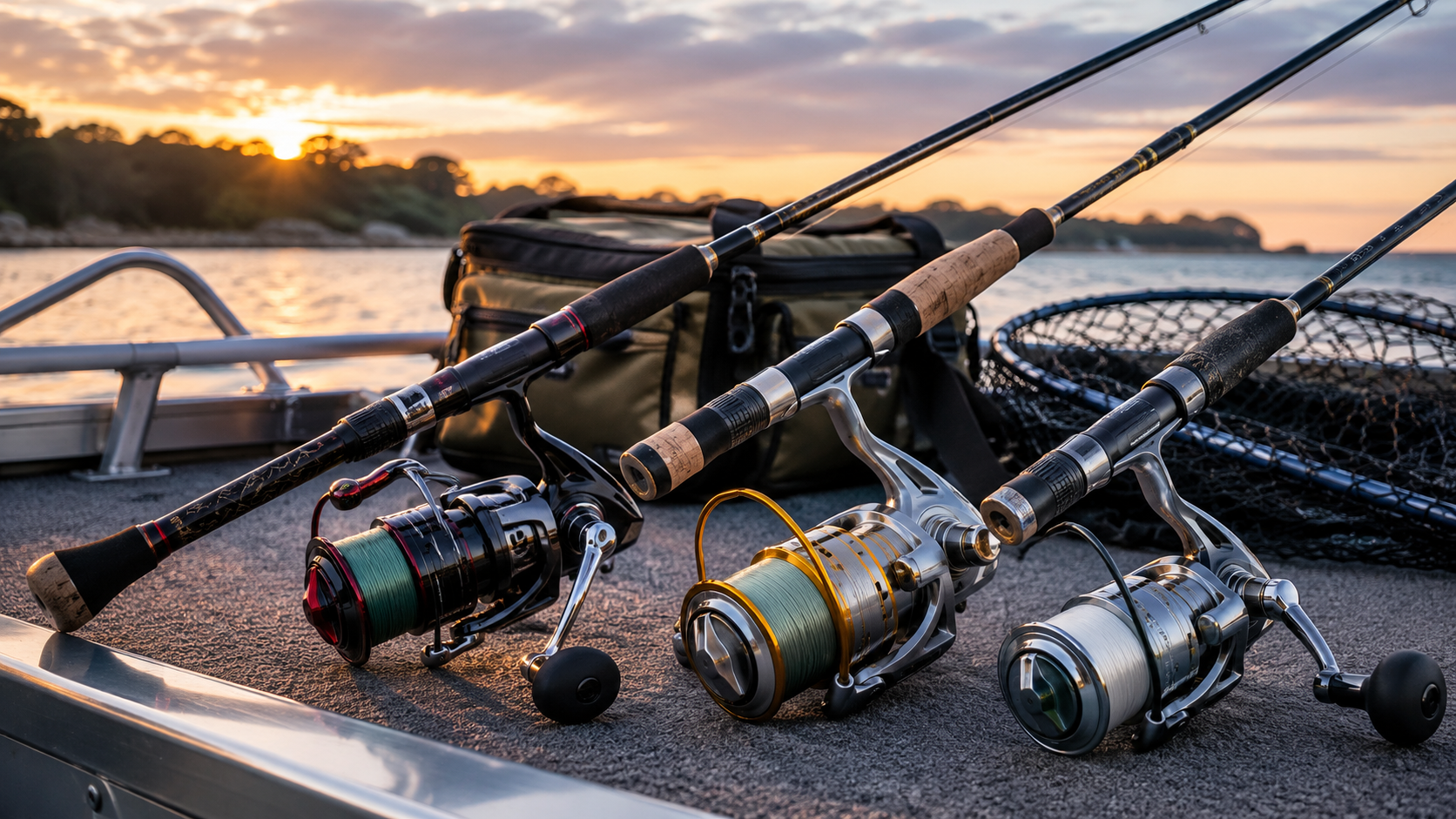
How to judge value before you spend
On Aussie Tackle Box, value means a balanced rod and reel that matches the species, water and casting style you actually use around Sydney and beyond—not the flashiest graphics on the blank. Work in AUD budgets, check drag smoothness, retrieve ratio, line capacity in metres, and whether spare spools or common drag washers are easy to source. Metric specs matter: rod length in metres or centimetres, lure rating in grams, and line class in kilograms help you avoid under-gunned or overbuilt kits.
Think seasonally for southern hemisphere patterns. Spring and summer often mean warmer shallows, prawn and baitfish pushes, and more surface or soft-plastic work for bream and flathead. Autumn can bring cleaner water and solid tailor runs along beaches and headlands. Winter sessions may favour deeper edges, slower presentations and heavier leaders for mulloway after dark. A combo that covers two of your main seasons will outlast a bargain that only shines one weekend a year.
Under $200 AUD: capable starter and backup kits
Under $200 AUD you are shopping for honest estuary and light inshore duty. Aim for a 2.1 m to 2.4 m spin rod rated roughly 3–12 g or 5–21 g, paired with a 2000–3000 size reel spooled with 4–8 kg braid and a short fluorocarbon leader. This band suits land-based wharves, rock walls, kayaks in calm water and small tinnies chasing bream, flathead and school tailor on light metals or soft plastics.
- Prioritise a reel with a sealed-enough body for spray, smooth enough drag for 1–3 kg fish, and at least a basic spare spool if the budget allows.
- Choose a moderate-fast action blank so soft plastics for flathead still load on short casts from a kayak or riverbank.
- Carry 10–20 kg leader options in the box so you can step up briefly for snaggy mangrove edges without buying a second outfit.
- Rinse with fresh water after every salt session and dry the drag knob area—gear care is what keeps sub-$200 kits alive.
Be realistic: this tier is not ideal for heavy rock ledges, big kingfish jigs or sustained barra sessions in thick cover. Use it as a primary light kit or a reliable spare when your main outfit is rigged for something else.
Under $400 AUD: the sweet spot for most Aussie anglers
Crossing toward $400 AUD usually buys better drag materials, tighter reel tolerances and a blank with clearer tip sensitivity. A strong all-round path is a 2.2–2.5 m rod in the 7–28 g or 10–40 g window with a 3000–4000 reel, 6–10 kg braid and leaders matched to structure. That covers deeper flathead drifts, tailor on metals, light mulloway work in rivers, and casual kingfish snelling around harbour markers when fish are not monsters.
Match the combo to common species
- Bream and flathead: lighter tip, accurate short casts, soft plastics in the 60–100 mm class and small hardbodies.
- Tailor and school pelagics: slightly stiffer mid-section, metals and slugs, abrasion-aware leader habits around tooth marks.
- Mulloway: smoother drag, longer casts with larger soft plastics or vibes, patience around bridges and drop-offs.
- Mangrove jack and barra (when you travel north): stronger leader discipline and a blank that still loads under heavy single-hook lures; keep expectations honest at this price if timber is thick.
- Murray cod (inland trips): consider a separate baitcast path later; many spin combos here are estuary-first, not heavy timber surface specialists.
Spend the extra dollars on drag consistency and rod recovery rather than unused max-drag numbers printed on the box. If you split time between kayak and shore, prefer a length you can overhead cast without hitting the hatch or other paddlers.
Under $800 AUD: specialist performance without going boutique
Up to $800 AUD you can either build one high-confidence inshore weapon or a deliberate two-outfit pair (for example light estuary plus medium beach or light reef). Look for refined guides, better balance in the hand during long sessions, and reels with improved sealing for Sydney harbour chop, coastal rock wash and trailer-boat spray.
Typical builds in this band include a refined 2.3–2.9 m spin setup for tailor, salmon and lighter kingfish work, or a compact PE-style inshore rod for soft plastics and light jigs aimed at kingfish, spanish mackerel on suitable days, and larger mulloway. Keep lure ratings honest in grams and do not overline the reel simply because the spool accepts more kilograms of monofilament equivalent.
- Define the primary job in one sentence (for example “harbour kingfish plastics from a small craft”).
- Pick rod length and lure gram range that match that job, then choose the reel size for balance—not ego.
- Spool quality braid in a known breaking strain, note actual metre capacity, and label the spool.
- Build a small leader kit (clear fluoro or mono) in stepped kg ratings for clean water versus structure.
- Test cast with your real lure weights before the first dawn session; retune knots and terminal tackle then.
Kayak, small-craft and storage considerations
Small-craft fit-outs punish poor balance. Shorter rods store easier in hatches, while longer blanks cast further from a seated position when you cannot take a big step. Use rod leashes where appropriate, keep loose sinkers in sealed trays, and favour tackle storage systems that lock when the hull bumps a wake. Marine electronics stay outside this budget article, but leave deck space and power planning in mind so your combo choice does not fight the rest of the rig.
Terminal tackle should stay simple: quality swivels only where needed, snelled or looped leaders you can replace in wind, and soft plastics or metals you already trust. A tidy box beats a crowded one when the bite shuts and you must change grams quickly.
Safety, fisheries rules and state-by-state loadouts
Value gear still has to be used inside the rules. Bag and size limits, closures, and gear restrictions change by state and sometimes by waterway. Before you load the car in Sydney, confirm current NSW rules for your target species, and if you trailer interstate recalculate leaders, hook types and bait rules for that jurisdiction. Carry a measuring device marked in centimetres, a release tool, and lifejackets that fit the people actually on board.
Rock and night mulloway sessions demand non-negotiable safety: stable footwear, weather checks, and a decision to leave when swell or traffic turns. No combo under any AUD cap is worth a risky stand on wet ledge slime.
Practical buying checklist
Bring your usual lure weights in grams to the shop or home test area. Flex the rod with the reel mounted. Wind the drag against a fixed scale if you can, or at least pull line smoothly by hand. Ask about spare parts pathways rather than slogans. At Aussie Tackle Box we focus on recreational loadouts you can maintain—rinse, dry, inspect guides, and replace line when it feels rough.
If you need help narrowing estuary versus beach direction for local conditions, contact Aussie Tackle Box on +61275903570 or [email protected] during Mon–Fri: 09:00 – 17:00 (AEST). Bring notes on species targets—bream, flathead, mulloway, tailor, barra, murray cod, kingfish, mangrove jack or spanish mackerel—and we can talk through which budget band fits the fishing you will actually do.

Navigation
See also
FAQ