Braid-to-Leader Knots Compared: FG, Slim Beauty, Uni and Albright
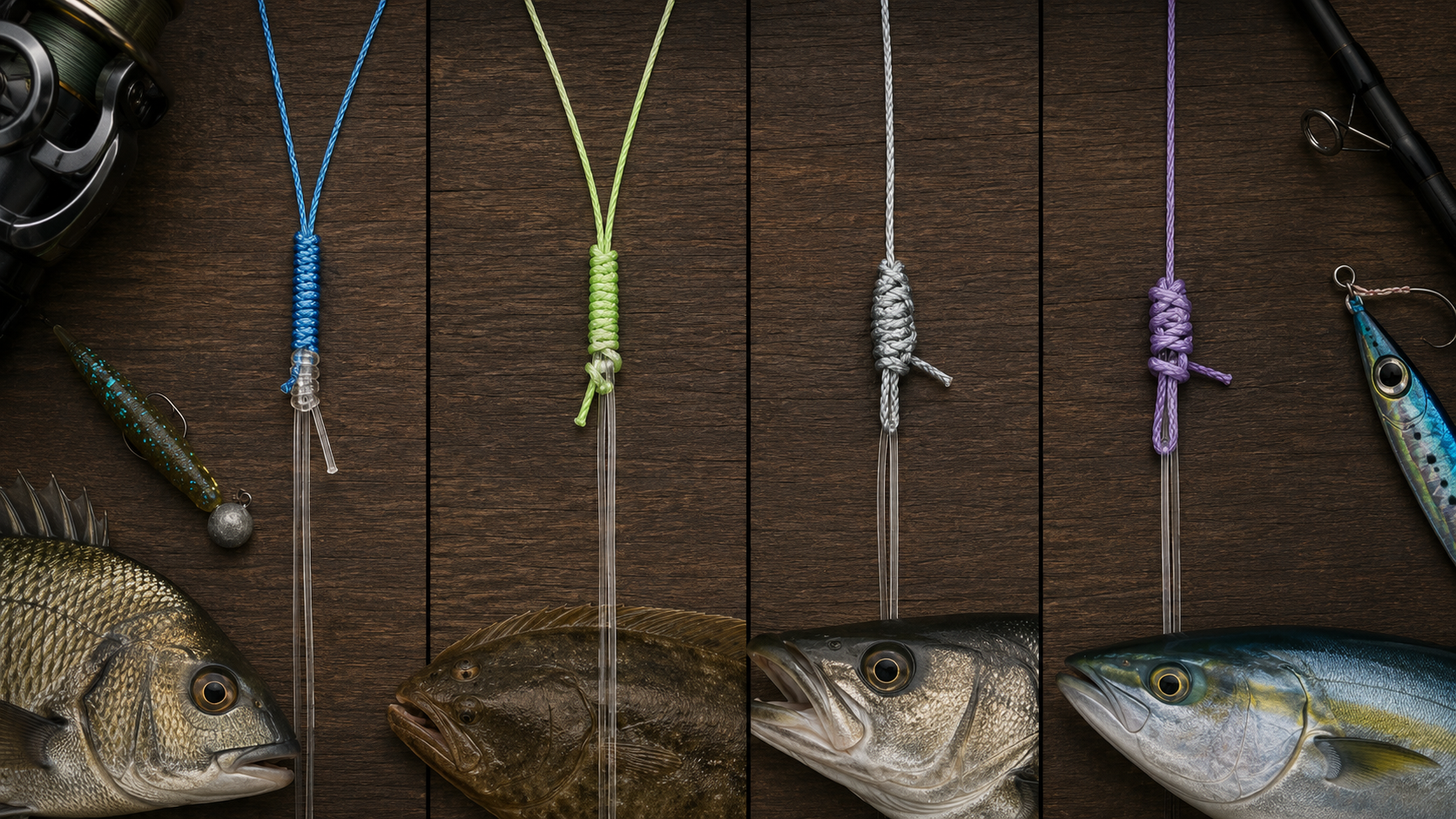
Why the braid-to-leader join matters
Most Australian sport fishing setups run thin braid mainline with a clear monofilament or fluorocarbon leader. The join has to stay slim enough to pass guides, hold under sudden loads from mulloway or kingfish, and stay reliable after repeated casts. On Aussie Tackle Box we treat the knot as part of the whole terminal system, not an afterthought. Get it wrong and you lose fish, fray expensive braid, or snag a bulky join in the tip guide when a tailor or flathead turns hard beside the boat.
In Sydney waters you will swap leaders often: light fluorocarbon for bream in the harbour, heavier mono for rocky headlands, and longer shock leaders when casting metals for spanish mackerel up the coast. A knot you can tie cleanly on a rocking kayak or wet rock ledge is worth more than a perfect bench test that falls apart in the wind.
What each knot is best at
Four joins cover almost every recreational situation: the FG knot, the Slim Beauty, the double Uni, and the Albright (including the improved version many anglers prefer). None is universally best. Choose by line diameters, how often you retie, and whether the join must shoot through small guides on a light spin outfit.
- FG knot — thinnest finished profile; excellent for fine braid to fluorocarbon when casting soft plastics for bream, flathead and mangrove jack.
- Slim Beauty — very slim, strong, and slightly more forgiving to learn than a tight FG; good all-rounder for estuary and inshore work.
- Double Uni — fast and easy; bulkier, so better on heavier braid or when the join rarely enters the guides.
- Albright — classic join for big diameter steps (light braid to thick mono shock leader); useful for tailor metals, kingfish stickbaits and barra leaders.
FG knot: slim strength for light leaders
The FG wraps the leader with many tight braid turns so the join grips under load without a large knot mass. When dressed well it is among the slimmest options and feeds through micro guides cleanly. That helps long casts with 2–6 kg braid and 4–10 kg fluorocarbon common on Sydney flathead and bream setups.
How to tie it cleanly
- Hold the leader taut (teeth, a helper, or a simple jig). Lay braid across it and begin tight, neat wraps down the leader — typically 15–25 turns depending on diameters.
- Reverse direction for a short locking series, or use half-hitches as you prefer, keeping constant tension so wraps sit side by side without gaps.
- Finish with several half-hitches on the tag, then a final hitch around both strands. Trim tags short but not flush to the wraps.
- Seat firmly with steady pressure, not a sharp whip. Moisten before the final pull if you use mono leaders that heat under friction.
Practice until wraps look uniform. Loose or crossed turns slip under the surge of a solid mulloway or a kingfish that shoulders into structure. If you fish rocky shores in summer, check the join after every session; sand and grit can abrade the outer wraps.
Slim Beauty: a practical middle path
The Slim Beauty builds a small doubled section in the leader, then locks braid with Uni-style wraps and a tidy finish. Many anglers find it easier to consistency than a competition-grade FG, while still keeping a low profile for soft-plastic and light-lure work.
When to choose it
Use it when you want FG-like slimness without spending ten minutes on the rocks. It suits 3–8 kg braid to matching fluoro for estuary flathead, harbour jewfish (mulloway) on plastics, and light barra leaders in impoundments. It also holds up when you step leader diameter up slightly for toothy tailor without jumping straight to a heavy Albright.
- Double a short section of leader and form the opening hitch as taught in standard Slim Beauty sequences.
- Wrap the braid snugly through the doubled loop area, keep count consistent, and finish with secure Uni turns on the braid tag.
- Wet, seat slowly, and trim. Inspect that the doubled leader section has not twisted open.
If the knot feels bulky, you are usually oversizing the doubled leader segment or using too many braid wraps for the diameter. Scale wraps to line size rather than copying a single recipe for every spool.
Double Uni: speed over slimness
The double Uni joins two lines with opposing Uni knots snugged against each other. It is quick to learn, easy in low light, and strong enough for many boat and land-based applications. The trade-off is bulk. On ultra-light spin gear the join can tick guides or catch the tip-top on a hard cast.
It shines when you run heavier braid (e.g. 8–15 kg) to a robust leader for murray cod in snaggy freshwater, or when kayak anglers want a reliable join they can retie between sessions without fuss. For kingfish around harbour markers, a carefully seated double Uni with adequate leader length still lands fish if the rest of the drag and hook-set are sound.
- Overlap braid and leader. Tie a Uni (six to eight turns is common on fine braid; fewer on thick mono) with the braid around the leader.
- Tie a second Uni with the leader around the braid. Use fewer turns on thick leader so the knot beds evenly.
- Moisten and draw the two knots together until they meet firmly. Trim tags.
Pull test before you fish. If one side slips, increase turns on the thinner line or retie with cleaner tension. Avoid mixing extremely disparate diameters unless you accept a larger finished knot.
Albright and improved Albright: big steps in diameter
When braid is much thinner than the leader — light braid to a heavy mono shock tippet for spanish mackerel trolling or shore-cast metals — the Albright family remains a workhorse. The leader is doubled into a loop, braid is wrapped through and back down the loop, then locked. The improved finish adds extra security on slick braid.
Keep wraps tight and orderly. A messy Albright fails at the loop mouth under the first solid hit. After seating, the join should look symmetrical, not banana-shaped. Trim the leader tag carefully so it cannot pick weed in estuary mouths after spring rains.
Practical diameter guidance
- Near-matched lines (e.g. 4 kg braid to 6 kg fluoro): prefer FG or Slim Beauty.
- Moderate step-up for abrasion: Slim Beauty or neat double Uni.
- Large step-up to thick shock leader: Albright or improved Albright.
Matching knots to species and seasons
Southern summer and early autumn often mean warmer water, weed growth, and aggressive tailor schools along NSW beaches. Carry pre-tied leaders so you are not forcing an FG while fish are busting bait in the gutter. Winter harbour sessions for mulloway reward a slim join and longer fluoro leaders that stay invisible in clear water. Freshwater trips for murray cod call for abrasion-focused leaders and knots you trust around timber, even if they are slightly bulkier.
Barra and mangrove jack punish weak finishes near structure. Whatever knot you choose, leave enough leader length so the braid never rubs rock or oyster after the fish dives. Kingfish around headlands need both knot strength and a drag that yields; a perfect FG still fails if the drag is locked and the fish reaches the reef.
Leader material, tools and care
Fluorocarbon offers abrasion resistance and low visibility for bream and flathead on clear sand flats. Mono remains useful as a cheaper shock leader with a bit more stretch. Cut tags with sharp braid scissors; crushed tags fray and catch guides. A small knot-tying tool or firm board helps when practising FG wraps at home before you trust them on the water.
Rinse terminal tackle after salt sessions and store spare leaders coiled loosely, not kinked in a hot car. Heat and UV weaken mono and fluoro over a season. Retie after any scrape across oyster lease posts, rock bars or kayak cleats. If you are building out a full estuary kit, pair your chosen join with sensible hook and sinker choices from the same line, leader and terminal tackle approach rather than mixing random leftovers.
Testing and common failures
Before a trip, pull-test new knots against a solid point with gloves. Look for wrap separation, tag slip, or leader ovaling. On the water, failures usually come from:
- Insufficient wraps on slick braid.
- Crossing turns that create a weak high spot.
- Trimming tags so short the finish unravels.
- Joining damaged braid ends — always cut back to fresh line after a break-off.
- Forcing a bulky knot through a tiny tip guide under load.
Replace the join whenever you change lure weight class or move from soft plastics to heavy metals. A knot that survived bream may be underspec for a surprise kingfish if you only upgraded the lure and not the leader.
A simple decision guide for Sydney anglers
If you mainly cast soft plastics for bream and flathead on light spin gear, learn a consistent FG or Slim Beauty and stick with it until the muscle memory is automatic. If you boat-fish mixed species and retie often, keep the double Uni in your kit for speed. If you cast or troll heavy shock leaders for mackerel, tailor or big kingfish, master an Albright you can seat evenly.
Bring spare leader spools in a few breaking strains, a reliable torch for dawn sessions, and the patience to retie after structure scrapes. For broader gear layout ideas across rods, reels and storage, explore more guides on Aussie Tackle Box or contact [email protected] during Mon–Fri: 09:00 – 17:00 (AEST). Fish within state rules, carry required safety gear on kayaks and small craft, and treat every braid-to-leader join as the cheapest insurance on the outfit.

Navigation
See also
FAQ