Braid vs Monofilament vs Fluorocarbon: Where Each One Actually Wins
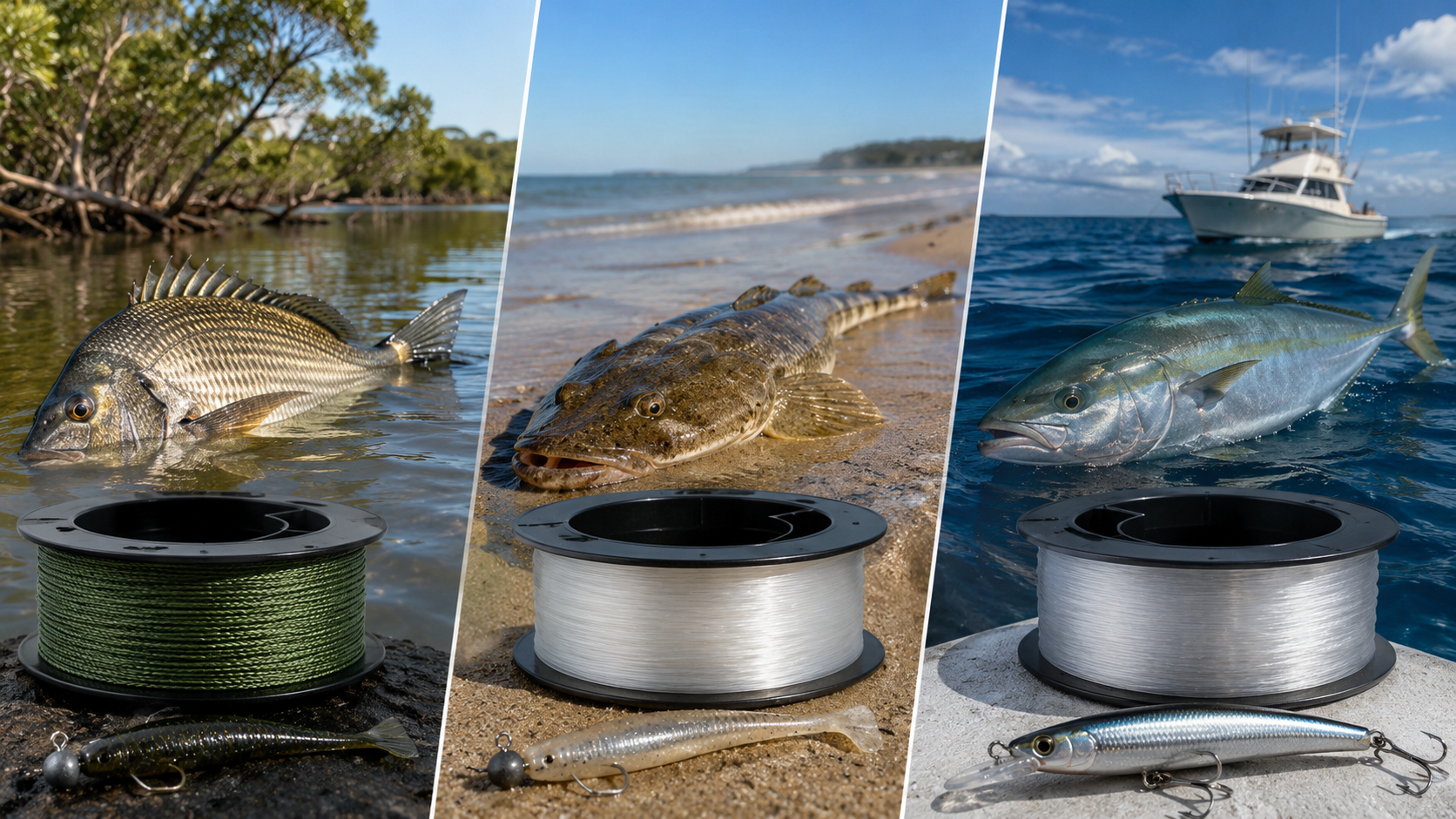
Why line choice still decides more fish than brand hype
On Sydney Harbour rock walls, the Georges River flats and the coastal reefs off the eastern beaches, the “best” line is the one that matches water clarity, structure and how you actually fish. Braid, monofilament and fluorocarbon each win in different jobs. Mixing them on purpose—main line plus leader—is normal for Australian recreational anglers chasing bream, flathead, mulloway, tailor, kingfish and the odd mangrove jack in warmer months.
This guide keeps the comparison practical: diameter, stretch, abrasion, visibility, knot behaviour and when to spool what. Pair it with a sensible rod and reel match from our fishing rods selection, specs and comparisons notes so the whole outfit loads the drag cleanly instead of fighting itself.
Braid: thin diameter, zero stretch, maximum feedback
Modern braid is thin for its breaking strain, cuts through current and wind better than mono of the same rating, and telegraphs every tick of sand, weed and soft-plastic bite. That sensitivity is why so many estuary and soft-plastics anglers run braid as main line when working deep edges for flathead or hopping plastics for bream around pontoons.
Where braid actually wins
- Long casts with light lures — smaller diameter means less air resistance and better distance for metal slices at tailor schools or light soft plastics on windy harbour days.
- Depth and contact — you feel the bottom contour and subtle mouthings from mulloway or jewfish-style takes that mono would cushion.
- Capacity on small reels — kayak and light spin outfits hold more usable line without jumping up reel size.
- Hook-sets at range — low stretch helps drive hooks home when a kingfish or Spanish mackerel (further north in season) hits wide of the boat.
Where braid loses
- It is more visible in clear, shallow water unless you add a leader.
- Abrasion on oyster racks, barnacles and rock is poor compared with a tough mono or fluoro bumper.
- Wind knots and backlashes punish sloppy casting technique or mismatched rod guides.
- Shock load is harsh—without a mono top-shot or fluoro leader, sudden hits can pop lighter leaders or tear hooks free.
Typical Aussie setups run 3–6 kg braid for bream and flathead plastics, 6–10 kg for estuary mulloway and jewie work, and heavier braid when kingfish or larger reef species are on the cards. Always check local fisheries rules for your waterway and species before you fish.
Monofilament: stretch, forgiveness and simple versatility
Monofilament remains the honest all-rounder. It stretches, floats more readily than fluoro, cushions surging runs and is kinder when a barra or Murray cod (in inland seasons) shakes its head at the boat. For many beach, rock and general bait fishers around Sydney, a quality mono main line is still the easiest path to reliable knots and fewer mid-session dramas.
Where mono actually wins
- Shock absorption — stretch protects light hooks and soft mouths when tailor or bream thrash near the surface.
- Abrasion budget on a budget — thicker mono shrugs off mild rock and grit better than equal-strain braid.
- Top-shots and casting leaders — a mono section over braid can improve casting comfort and act as a sacrificial wear zone.
- Surface and shallow bait work — floatier behaviour helps present unweighted baits and some poppers without constant mending.
- Cold-morning handling — easier on bare hands in winter sessions than thin braid when you are rigging in the dark before a dawn tailor run.
Where mono loses
- Thicker diameter means more drag in current and less spool capacity.
- Stretch steals sensitivity and long-range hook-set power.
- It absorbs water and weakens with UV and age faster than many anglers expect—replace spools on a seasonal rhythm, not “when it looks tired”.
- Memory can coil off older spools and reduce casting distance.
Mono shines for family bait sessions, running sinker rigs for flathead on sand, and as a forgiving main line when kids or newer anglers are learning drag control. In spring and summer estuary trips it remains a solid choice for simple paternoster and running-ball setups.
Fluorocarbon: stealth and abrasion in the strike zone
Fluorocarbon sinks faster than mono, resists abrasion well for its diameter and is harder for fish to see in clear water. Most Sydney anglers meet it as a leader material rather than a full spool, though light full-fluoro spin outfits have a place for ultra-clear winter bream work when water clarity peaks.
Where fluorocarbon actually wins
- Leaders in clear water — 1–3 m (sometimes longer) of fluoro between braid and lure is standard for educated bream, whiting flats and harbour kingfish when the bite is shy.
- Abrasion near structure — oyster leases, timber and rock edges punish thin braid; fluoro buys you seconds to turn a fish.
- Faster sink and less “sail” — helps soft plastics and lightly weighted presentations reach the zone without ballooning in current.
- Knot-to-lure durability — holds up well against toothy tailor strikes when the leader rating is honest for the job.
Where fluorocarbon loses
- Full spools are dearer and stiffer; poor-quality fluoro can be brittle at the knot if moistened and seated carelessly.
- Low stretch is closer to braid than mono—great for contact, less forgiving on violent head shakes.
- On the surface, sinking behaviour can pull poppers and stickbaits under if you wanted them high.
- Thick fluoro leaders can still spook fish if you over-gun diameter “just in case” in skinny clear water.
For mulloway around bridges and deep holes, many anglers favour braid main line with a robust fluoro leader. For mangrove jack country in warmer northern seasons, abrasion-resistant leaders matter as much as lure choice. Match leader breaking strain to structure and drag setting, not to ego.
Head-to-head: pick by job, not by forum argument
- Estuary soft plastics (bream, flathead) — thin braid main line + light fluoro leader. Sensitivity and castability win; stealth sits in the leader.
- Beach and rock bait fishing (tailor, salmon, general) — mono main line is simple and tough; step up shock leader where cast weights and rock scrub demand it.
- Harbour and coastal kings — braid for power and capacity, quality fluoro or heavy mono leader for teeth and structure. Keep drag smooth and progressive.
- Clear winter shallows — longer, lighter fluoro leaders; consider downsizing lure hardware before blindly upsizing line.
- Inland cod and impoundment work — braid for casting big surface lures and feeling timber, with leaders chosen for abrasion around snags; mono still has fans who want stretch near the boat.
- Trolling and high-speed pelagics — braid or mono depending on outfit; leaders and trace materials must suit species such as Spanish mackerel where legal and in season further afield.
Leaders, knots and practical spool strategy
Most modern spin outfits in the Sydney scene run braid to a leader. Double uni, FG and improved albright-style connections all have a place—practise at home with good light so you are not learning on a windy wharf. Wet knots, seat them firmly and trim tags short without cooking the line on a dry cinch.
- Replace leaders after oyster rasps, rock chips or a big fish—do not “one more cast” a furry leader.
- Retie lure knots after snags; nicks hide under the knot coils.
- Fill reels correctly: braid needs a mono or backing bed on many spools so the whole pack does not spin on the arbor.
- Label spools with strain and date; UV and seasons in the southern hemisphere beat up lines left on hot dashboards through summer.
Gear care is part of line performance. Rinse reels after salt sessions, ease drag washers when storing, and keep spare leader material in a shaded tackle tray—not baked under a kayak hatch all January.
Safety, rules and honest expectations
Line choice does not override safety or fisheries rules. Wear eye protection when pulling snags or tensioning heavy braid; thin braid can cut skin under load. Check bag limits, size limits, closures and gear restrictions for your state waters before you leave the ramp or rock platform. Rules differ across jurisdictions and change—use official state fisheries sources, not memory from last season.
If you are building or refitting a kayak or small-craft setup, keep line coils organised so they cannot loop ankles or paddle shafts at the worst moment. A tidy storage system matters as much as the polymer on the spool. For broader outfit matching—power, action and why a soft tip can still drive a fluoro leader home—see fishing rods selection, specs and comparisons.
Quick decision checklist before you spool
- Is the water clear and the fish leader-shy? Favour fluoro at the business end.
- Do you need maximum cast and feel in deeper or windy water? Favour braid main line.
- Is the session simple bait fishing with kids or mixed structure and shock loads? Mono earns its keep.
- Are oysters, rock or timber guaranteed? Budget abrasion into leader diameter and plan to re-tie.
- Does your rod load smoothly with the chosen diameter? An oversized stiff leader on a light tip kills presentation.
Aussie Tackle Box is here to help recreational anglers around Sydney sort tackle decisions with local species and conditions in mind. For questions about guides on the site, contact [email protected] or call +61275903570 during Mon–Fri: 09:00 – 17:00 (AEST). Match the line to the job, keep knots honest, and let braid, mono and fluorocarbon each win where they are genuinely strongest.
Navigation
See also
FAQ