Catch and Release Kit: Nets, Brag Mats, Grippers and Release Weights
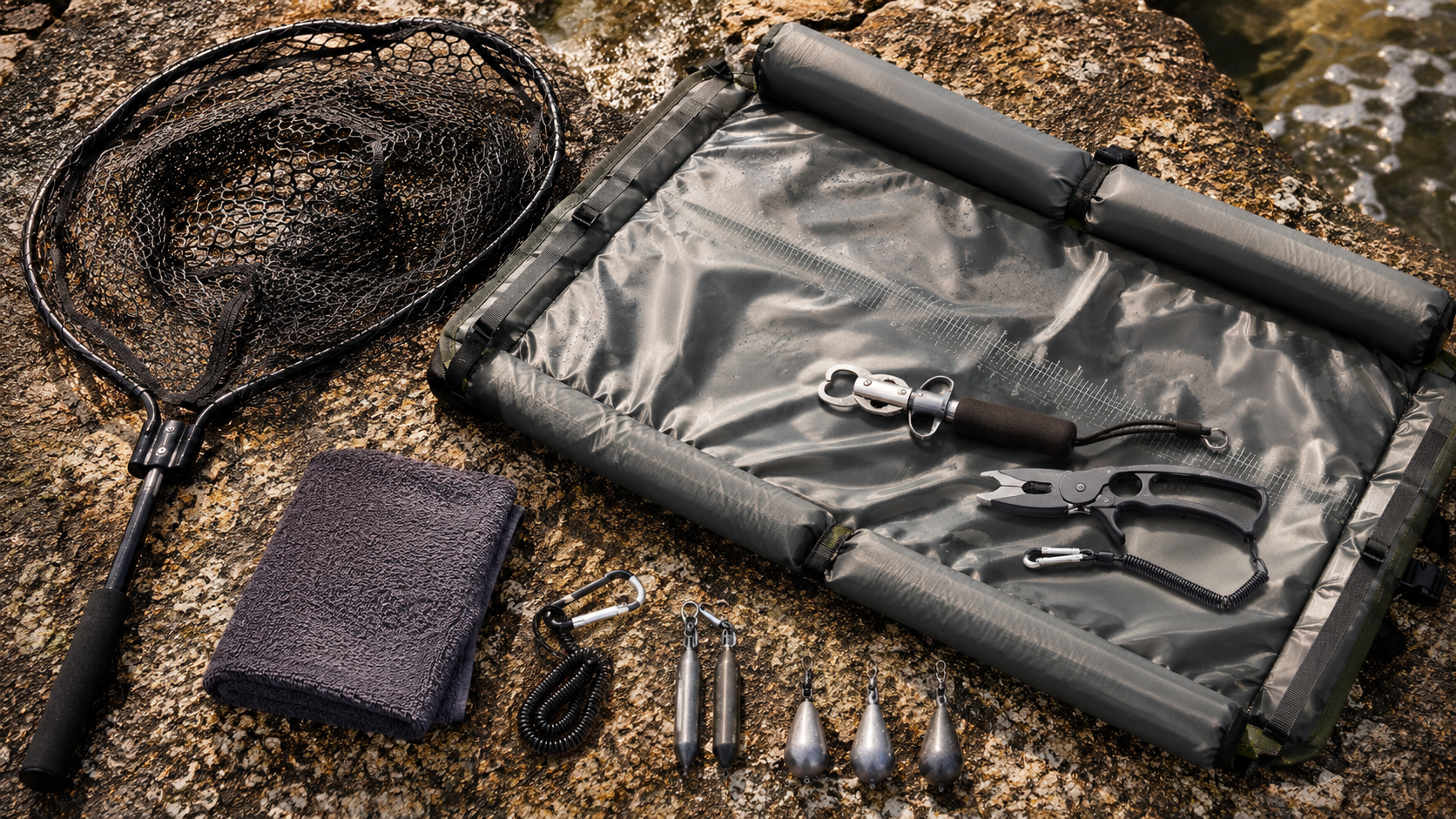
Why a dedicated catch and release kit matters
Recreational fishing around Sydney and along the wider Australian coast is built on healthy stocks of bream, flathead, mulloway, tailor, kingfish, mangrove jack, barra, Murray cod and Spanish mackerel. A compact catch and release kit keeps fish in the water longer, cuts handling time and helps you measure and photograph without dragging a fish across hot decks or dry sand. On Aussie Tackle Box we treat release gear as core tackle, not an afterthought. Pair it with sound rod choices from our guide to fishing rods selection, specs and comparisons so you can land fish quickly and hand them back in good nick.
Landing nets that suit Aussie species
Choose net size and mesh for the fish you actually chase. For estuary bream and flathead, a rubber or rubber-coated mesh scoop around 40–50 cm across is easy to stow in a kayak or small tinny. For mulloway, kingfish and larger tailor, step up to a longer-handled net with a deeper bag so the fish sits supported, not bent over the rim. Knotless rubber mesh is kinder on slime coats and reduces hook snags in the bag. Look for a corrosion-resistant frame, a simple float or buoyant handle section, and a hoop stiff enough that it does not collapse when you lift a solid fish clear of the water.
- Estuary and wharf work: compact hoop, short handle, soft rubber mesh.
- Beach and rock: longer handle for reach, deeper bag for thrashing tailor or small kingfish.
- Kayak and small craft: short overall length, quick-dry mesh, clip or leash point so the net cannot drift away.
Rinse nets in fresh water after salt sessions, shake out sand and hang them in shade. Sand packed in mesh abrades fish and shortens net life.
Brag mats and measuring without the damage
A wet brag mat or fish-friendly measuring mat lets you record length for personal logs or size limits without laying fish on hot alloy, dry carpet or rough rock. Unroll it, wet it thoroughly, then support the fish fully along its body. Measure from the snout to the tip of the tail to the nearest centimetre as your local rules require, take a quick photo if you want one, and get the fish back. Soft PVC or fabric mats with clear centimetre markings are easier to rinse than rigid boards that collect grit in corners.
In summer heat around Sydney Harbour, the lower reaches of coastal lakes and open beaches, keep the mat in shade between fish. A mat left in full sun can scorch delicate flanks in seconds. For kayak anglers, a roll-up mat that clips under a hatch lid or sits in a crate keeps the deck clear while you paddle between spots.
Grippers, lip grips and when to use bare hands
Quality lip grippers help control toothy or spiky fish such as flathead, tailor and mangrove jack when you need to remove a hook at the side of the boat. Prefer models with a secure lock, a wide jaw face that does not pinch a tiny mouth shut, and a reliable scale hook-up only if you truly need weight—many anglers simply estimate or skip weighing to reduce air time. Never hang a heavy fish vertically for long; support the belly with your other hand or keep the fish partly in the net or water.
For bream and similar small-mouthed species, wet hands or a soft wet cloth often beat metal grips. Barra and Murray cod in freshwater systems need extra care around the jaw and gill plates—firm but calm control, hooks out fast, and minimal time upright in air. Always keep fingers clear of gill rakers and spines.
Release weights and deep-hooked fish
When you fish deeper reefs, headlands or offshore grounds for kingfish, Spanish mackerel and similar species, some fish come up with over-expanded swim bladders. A release weight (descender) clipped to the jaw or a purpose clip, then lowered to depth on a spare rod or handline, returns the fish below the pressure zone so it can swim off. Match weight mass to conditions—enough to pull a lively fish down against chop and current, typically in the hundreds of grams to low kilograms range depending on fish size and drift. Practise the clip-on and release motion at the wharf before you need it in a swell.
- Keep the fish in water in the net while you ready the weight.
- Hook or clip the descender as directed by the design, supporting the body.
- Lower steadily to depth, then trigger or jiggle free and retrieve the gear.
Release weights do not replace gentle hook-sets, circle hooks where appropriate, or cutting the line on deeply swallowed hooks when that is the kinder option. Carry small bolt cutters or strong sidecutters in the same pouch as your grippers.
Building a compact kit for van, kayak or tinny
Store release tools together so you are not hunting through tackle trays while a fish tires in the net. A single dry bag or crate sleeve can hold:
- One primary landing net matched to your main fishery.
- A wettable brag mat with clear cm scale.
- Lip grippers with a wrist lanyard.
- Long-nose pliers, sidecutters and a hook-out tool.
- A release weight and a short dedicated cord or spare outfit.
- A small towel kept wet in a zip pouch for hand wetting and brief fish support.
In southern hemisphere summer, ice slurry is for fish you are keeping within legal limits—not a holding tank for catch and release. For release fish, cooler shaded water alongside the hull or a flooded live well used briefly is preferable, then straight back over the side. In winter sessions on the same grounds, cold air still dries gills quickly, so the same speed-of-handling rules apply.
Species-focused handling notes
Bream and flathead: soft mesh, wet hands, watch flathead spines, photograph on a wet mat, slide head-first back in. Mulloway and kingfish: larger net, two-person lifts if needed, avoid vertical hangs, consider a descender after deep fights. Tailor and Spanish mackerel: respect teeth, use grippers or a jaw cloth, work fast. Mangrove jack: solid grippers, mind the reef under the hull, revive facing into current. Barra and Murray cod: support the body, never hold only by the jaw under full weight for long, revive in water until strong kicks return.
Safety, rules and good habits
Fisheries size, bag and closure rules differ by state and waterway. Carry a current rules summary for the waters you fish and measure every borderline fish on a wet mat before you decide. Release gear does not override protected slots, closures or marine park zones. On deck, lanyards on grippers and pliers reduce overboard losses and barefoot stab risks. If you fish solo from a kayak, practise netting on the non-paddle side and keep the release pouch where your non-rod hand can reach it without standing.
For gear questions, local loadouts or shop-style advice, contact Aussie Tackle Box on +61275903570, [email protected] during Mon–Fri: 09:00 – 17:00 (AEST). Base yourself around Sydney or tour interstate—the same kit principles travel well when you adjust net size and descender mass to the species in front of you.
Quick pre-trip checklist
Before you leave the driveway, confirm the net mesh is free of dried salt clumps, the brag mat markings are still readable in centimetres, gripper jaws lock and unlock smoothly, cutters bite cleanly, and the release weight clip opens under light thumb pressure. Replace cracked mesh or rusty pivots before they fail on a fish you intended to let go. A tidy catch and release kit shortens every landing, protects the next bite for everyone, and keeps recreational fishing on Australian waters looking the way we want it to look next season.

Navigation
See also
FAQ