Estuary Soft Plastics: Matching Rod, Leader and Jighead Combos
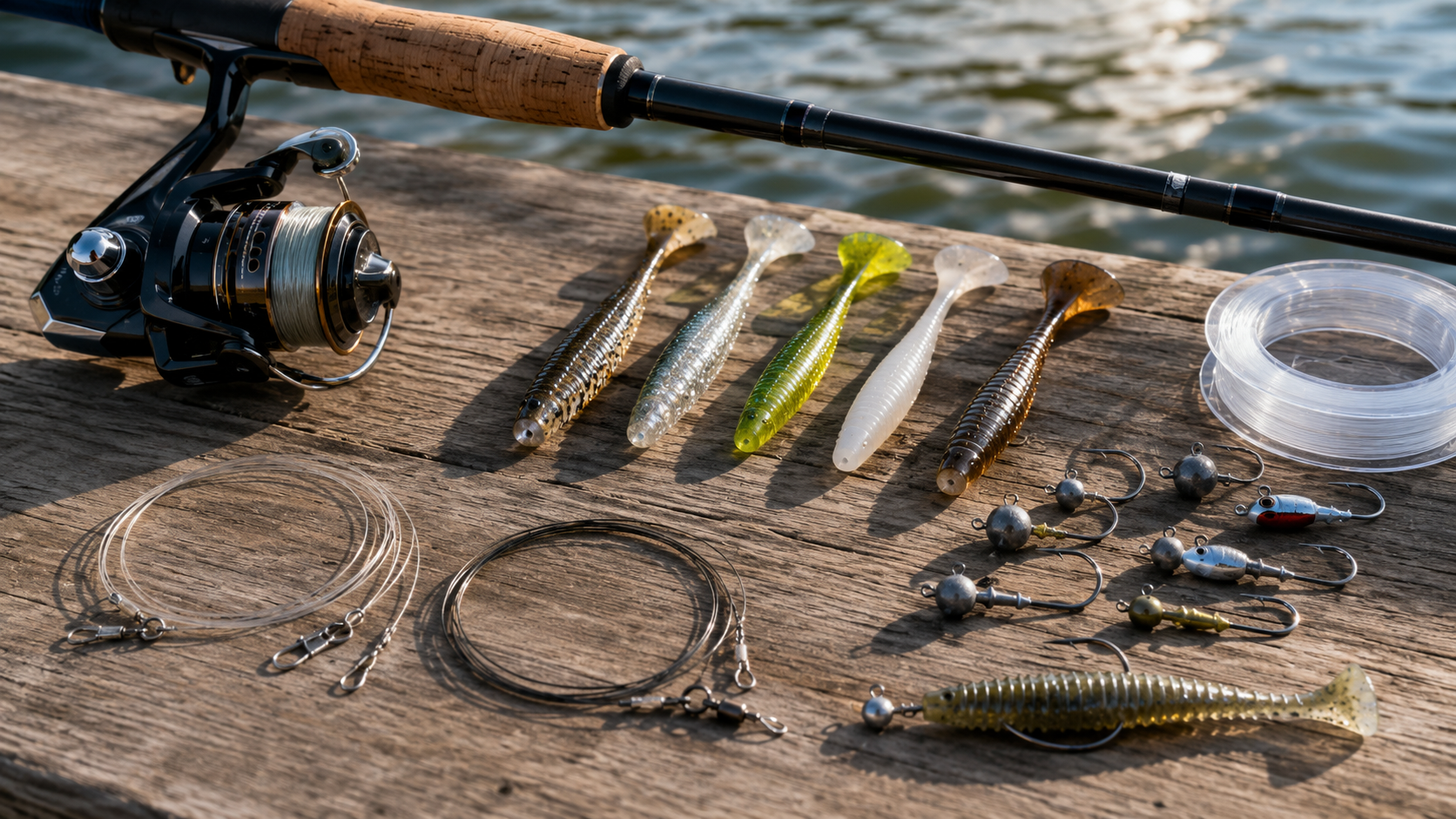
Why rod, leader and jighead have to work as one set
In Sydney’s estuaries, soft plastics only fish well when the rod tip, leader and jighead weight share the same job. A light tip that cannot load a 1/4 oz head, or a heavy fluorocarbon leader that kills the action of a 2-inch grub, costs you bites from bream, flathead, mulloway and the odd mangrove jack in warmer months. This guide walks through practical combos for harbour edges, river bends and lake flats so you can build a kit that casts cleanly, feels the bottom and still lets the plastic swim.
Aussie Tackle Box focuses on recreational tackle choices that suit Australian conditions: metric lengths, gram-rated heads where useful, and species you actually meet from the rocks to the upper reaches. Use the pairings below as a starting point, then fine-tune for wind, depth and current on the day.
Rod length, power and action for estuary plastics
Most estuary soft-plastics work sits in the 1.98–2.28 m (roughly 6'6"–7'6") range. Shorter sticks cast accurately under mangroves and pontoons; longer blanks help with distance across open flats and keep line clear of boat rails on small craft.
- Ultra-light to light (approx. 1–4 kg or PE 0.4–0.8 class): 2–3 inch plastics, micro jigs and finessed bream work in clear water.
- Light to light-medium (approx. 2–5 kg): the all-rounder for mixed bream, flathead and tailor on 3–4 inch plastics.
- Medium (approx. 3–6 kg or a touch more): deeper channels, heavier heads, bigger flathead and exploratory mulloway plastics after dark.
Prefer a fast or moderate-fast tip so you feel subtle ticks on sand and weed edges, with enough backbone to set a hook on a long fluorocarbon leader. A soft, parabolic blank can be pleasant for small bream but makes it harder to drive the hook home when a flathead engulfs a paddle-tail at range.
Leaders: material, breaking strain and length
Main line is usually thin braid for feel and casting. The leader is what the fish sees and what takes abrasion from oyster racks, rock bars and teeth.
- Fluorocarbon is the default for clear estuary water: lower visibility and decent abrasion resistance around structure.
- Monofilament can help when you want a little stretch as a shock buffer on aggressive flathead strikes or when fishing very shallow, snaggy edges.
Typical leader strengths for Sydney-style estuary plastics:
- 4–8 lb (about 2–4 kg) fluorocarbon for shy bream over clean sand and light weed.
- 8–12 lb (about 4–6 kg) for mixed sessions where flathead and structure are likely.
- 12–20 lb (about 6–10 kg) when probing timber, rock walls or night sessions aimed at mulloway on larger plastics.
Leader length of 60–100 cm is a solid boat or kayak starting point. Go longer (up to about 1.5 m) from the bank when you need extra abrasion buffer or when fish are leader-shy in clear winter water. Keep knots neat—a reliable join from braid to leader matters more than chasing the absolute lightest tippet.
Jighead weight, hook size and plastic match
Match head weight to depth, current and plastic size—not to habit. In 1–2 m of calm water a 1/16–1/12 oz (about 1.8–2.5 g) head often keeps a 2.5–3 inch plastic in the strike zone. Wind, run-out tide or 3–4 m holes push you toward 1/8–1/4 oz (about 3.5–7 g), sometimes heavier in strong harbour flow.
- Hook size: size 4–1 for small bream grubs and shrimp profiles; 1/0–3/0 for 3–5 inch paddle-tails aimed at flathead and mulloway.
- Gap and length: the hook should leave the plastic sitting straight with the point clear of the body. A head that is too heavy for a light plastic will nose-dive and snag weed constantly.
- Weed guards: useful around heavy grass and timber; free up the guard tension if you miss too many short bites.
Local favourites in the plastics tray include small prawn and bloodworm profiles for bream, paddle-tails and jerk-shads for flathead on sand flats, and larger shads or jerkbaits when you are covering deeper water for mulloway. In northern trips the same matching logic applies to barra and mangrove jack, usually with heavier leaders and stronger hook gauges.
Sample combos you can copy and adjust
- Clear-water bream edges: 2.01–2.13 m light rod, 4–6 lb braid, 4–8 lb fluoro leader ~80 cm, 1/16–1/12 oz jighead, 2–3 inch grub or shrimp. Slow lifts, long pauses.
- Flathead sand flats: 2.13–2.28 m light-medium rod, 6–10 lb braid, 8–12 lb fluoro, 1/8–1/4 oz head matched to a 3–4 inch paddle-tail. Steady hop-and-drag along the bottom contour.
- Channel and night mulloway prospecting: medium rod with a sensitive tip, 10–15 lb braid, 12–20 lb leader, 1/4 oz+ head on a 4–5 inch shad. Longer soaks near drop-offs and bridge shadow lines.
On kayak and small-craft fit-outs, keep two pre-rigged outfits ready—one light bream setup and one slightly heavier flathead or structure setup—so you are not retying while the bite window is open. Store spare heads and plastics in a shallow tray so weights stay sorted by grams or labelled ounces.
Seasonal notes for the southern hemisphere
Summer and early autumn bring warmer shallows, prawn activity and aggressive flathead on the flats; lighter heads and natural prawn tones excel. Autumn often fishes well for mixed bags as bait schools push into the rivers. Winter can mean clearer water and tougher bream—drop leader diameter, downsize plastics and slow the retrieve. Spring sees fish spreading back onto flats; keep a mid-weight head ready for changeable wind on Sydney Harbour and the rivers.
Always check current state fisheries rules for bag and size limits, closed waters and gear restrictions before you launch. Rules differ across jurisdictions, and estuary closures or special limits can apply seasonally.
Rigging, care and safety basics
Thread plastics straight so the tail tracks true. Replace nicked leaders after oyster scrapes. Rinse reels and guides in fresh water after salt sessions, dry them, and back off the drag for storage. On the water, wear a PFD in the kayak or tinny, watch boat traffic in busy Sydney channels, and treat hooks and weight trays as carefully as any other sharp terminal tackle.
If you are building out a broader kit—lines, storage systems or marine electronics for small craft—keep the same principle: every piece should help you present the plastic naturally and stay in contact with the bottom. For local questions about gear pairing, Aussie Tackle Box can point you toward sensible next steps during Mon–Fri: 09:00 – 17:00 (AEST) via [email protected] or +61275903570. Anglers around Sydney will get the most from these combos by logging depth, tide and head weight after each session and adjusting one variable at a time.
Dial in the lightest head that still holds bottom, the lightest leader that survives the structure you choose, and a rod tip that telegraphs both weed and bites. That three-way match is the core of consistent estuary soft-plastics fishing along the Australian coast.
Navigation
See also
FAQ