Home Reel Servicing: Schedule, Tools, Grease vs Oil Points
Why a home service routine matters on Aussie water
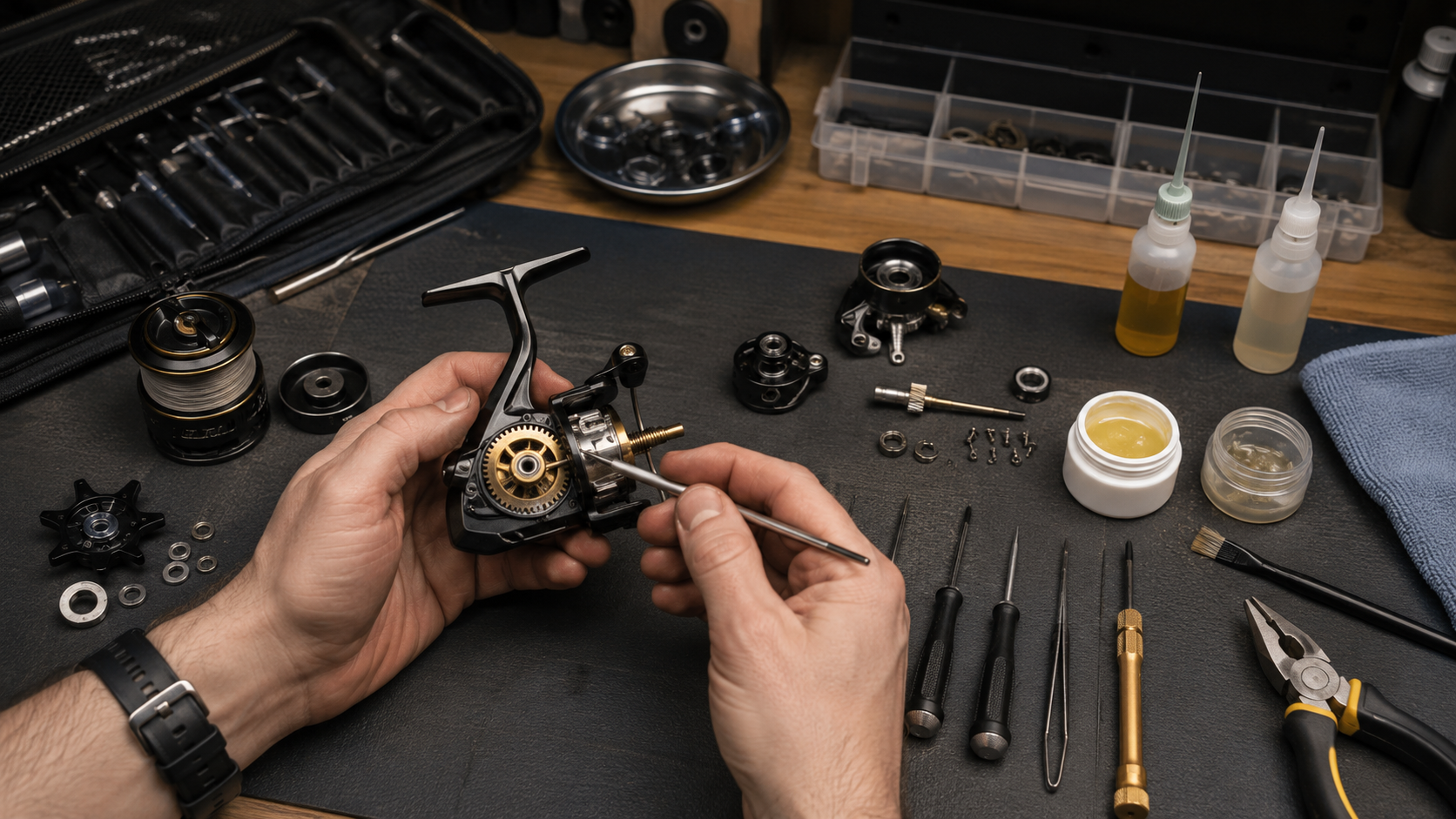
Salt, sand and summer heat punish reels harder around Sydney than many anglers expect. A light home service keeps drag stacks smooth, bearings quieter and bail rollers free so you can focus on bream in the rivers, flathead on the flats, tailor along the beaches and the odd mulloway after dark. You do not need a full workshop—just a clean bench, the right lubricants and a steady schedule tied to how often you fish and whether you rinse after every session.
This guide from Aussie Tackle Box covers a practical calendar, a minimal tool kit, and clear grease-versus-oil points so you avoid the two common mistakes: drowning a reel in thick grease or oiling places that should stay dry. Pair sound reel care with sensible rod choices from our fishing rods selection, specs and comparisons notes so the whole outfit stays balanced and reliable.
Service schedule for recreational use
Match the interval to exposure, not to a calendar alone. Freshwater estuary work is gentler than ocean rock or kayak sessions in the chop.
- After every salt session: light freshwater rinse, dry with a soft cloth, wipe the foot and handle knob, and a tiny drop of oil on the line roller if it feels dry.
- Every 4–6 outings in salt, or monthly in heavy use: open the side plate or rotor nut as your model allows, clean visible grit, refresh oil on bearings and roller, and check drag washers for glazing.
- Seasonal deep clean (end of spring run-off and again before peak summer): full strip to the main gear, degrease old lubricant, regrease drive gear and pinion contact faces, oil free-spinning parts, and reseat seals carefully.
- After sand or mud incidents: service immediately. Grit under the spool lip or in the oscillation gear will score parts long before the next planned date.
- Winter lay-up: clean, dry thoroughly, light oil on exposed metal, store in a breathable bag away from battery fumes and direct sun.
Kayak and small-craft anglers who chase barra in the north on trips, or kingfish and spanish mackerel further afield, should treat spray and deck wash as salt exposure even in short sessions. Mangrove jack country and Murray cod impoundment weekends still deserve a rinse if you trailered through coastal air.
Tools and consumables worth owning
Keep a dedicated kit so you are not hunting kitchen utensils at midnight after a late session.
- Precision screwdriver set (including common Japanese cross-head sizes used on many spin reels)
- Small adjustable spanner or nut drivers for rotor nuts
- Plastic or wooden picks—never steel scrapers on anodised skirts
- Soft toothbrushes and lint-free cloths
- Isopropyl alcohol or a reel-safe degreaser for old grease only
- Reel oil (light) and reel grease (medium, water-resistant)
- Cotton buds, a magnetic parts tray, and a phone photo habit so reassembly order is obvious
- Spare drag washers and a tube of manufacturer-approved drag grease if your model uses greased carbon stacks
Work on a pale towel under good light. Photograph each layer as you go. If a clip or spring launches, stop and find it before you continue. For questions about local timing or shop hours, Aussie Tackle Box can be reached on +61275903570, [email protected], during Mon–Fri: 09:00 – 17:00 (AEST).
Grease vs oil: where each belongs
Think of grease as a long-life film for slow, loaded metal-on-metal contact. Think of oil as a thin film for fast-spinning or frequently moving parts that must not feel sticky.
Grease points
- Main drive gear teeth and the faces that mesh with the pinion
- Oscillation gear and slider tracks (thin, even coat—do not pack cavities full)
- Worm shaft threads on reels that use them, wiped almost dry after application
- Handle knob bushings if the maker specifies grease rather than oil
- Anti-reverse roller clutch outer faces only when the service sheet calls for a specific clutch grease—many units prefer to stay clean and dry inside the clutch itself
Oil points
- Line roller bearing or bush (one small drop after cleaning)
- Bail hinge knuckles
- Spool shaft where the spool rides—wipe excess so braid does not pick it up
- Handle shaft ends and external bearing shields if they are designed to be oiled
- Level-wind guide on baitcasters (light oil; keep grease off the line path)
Avoid grease on the line roller, inside most instant anti-reverse clutches, on drag felt that is meant to run dry, and anywhere lubricant can migrate onto monofilament or braid. Excess grease on a pinion can slow start-up and attract grit; excess oil on a main gear will fling off and leave metal unprotected.
Step-by-step home service outline
- Back off the drag, remove the spool, and wash salt from exterior surfaces with lukewarm fresh water. Dry completely.
- Remove handle and side plate or rotor as your schematic allows. Bag tiny screws by stage.
- Lift old grease from gears with a cloth and a little degreaser. Do not soak shielded bearings in solvent unless you plan to relubricate them properly.
- Inspect teeth for rolled edges, check the bail spring seat, and spin bearings by hand. Rough bearings need replacement, not more oil.
- Apply a pea-sized amount of grease to the drive gear; mesh the pinion through it so both parts share a thin film. Wipe pools out of the housing.
- Oil the line roller, bail hinges and spool shaft. Reassemble in reverse order, confirming the one-way clutch orientation marks.
- Refit the spool, set a practical drag for your line class, and turn the handle under light load. Listen for clean mesh without grinding.
Drag stacks, seals and line management
Carbon drag washers often prefer a specialised drag grease sparingly applied; felt washers are frequently run dry. Follow the pattern your reel used from the factory. After service, check that skirted spool gaps are free of sand and that the clicker still works. Respool if the top shots are frayed from rock work or oyster racks—fresh line is cheaper than losing a solid fish because a nick met a kingfish run.
When you store outfits in a hot garage through late summer, crack drags off so washers do not take a set. Before the first spring session, recheck oil on the roller; heat can thin and migrate lubricants over months of sitting.
Safety, fisheries sense and state-aware loadouts
Servicing gear is also a moment to audit leaders, sinkers and hooks against current state rules for the waters you fish from the Sydney region and on road trips. Carry a small first-aid kit with your tackle, use sun protection on long sessions, and keep pliers and line cutters where you can reach them one-handed. A smooth reel reduces the urge to high-stick a rod when a fish surges, which protects both tip sections and your wrists.
Quick troubleshooting after a service
- Handle feels gritty: residual sand in the gear housing—open and clean again.
- Bail will not stay open: spring dislodged or hinge needs a drop of oil and correct seating.
- Drag stutters: glazed or contaminated washers; clean or replace, then reset evenly.
- Unusual hum on retrieve: dry pinion or failing bearing; do not keep fishing it hard.
Home reel servicing will not replace a factory-level overhaul after years of heavy salt use, but a disciplined rinse-and-lube habit multiplies the seasons you get from spin and baitcaster outfits aimed at bream, flathead, mulloway, tailor and everything else on the Aussie Tackle Box shortlist. Keep the kit simple, respect grease versus oil points, and time deeper cleans around southern hemisphere season changes rather than waiting for a seizure on the water.

Navigation
See also
FAQ