Hook Patterns Explained: Circle, Suicide, Octopus, Worm and Assist Hooks
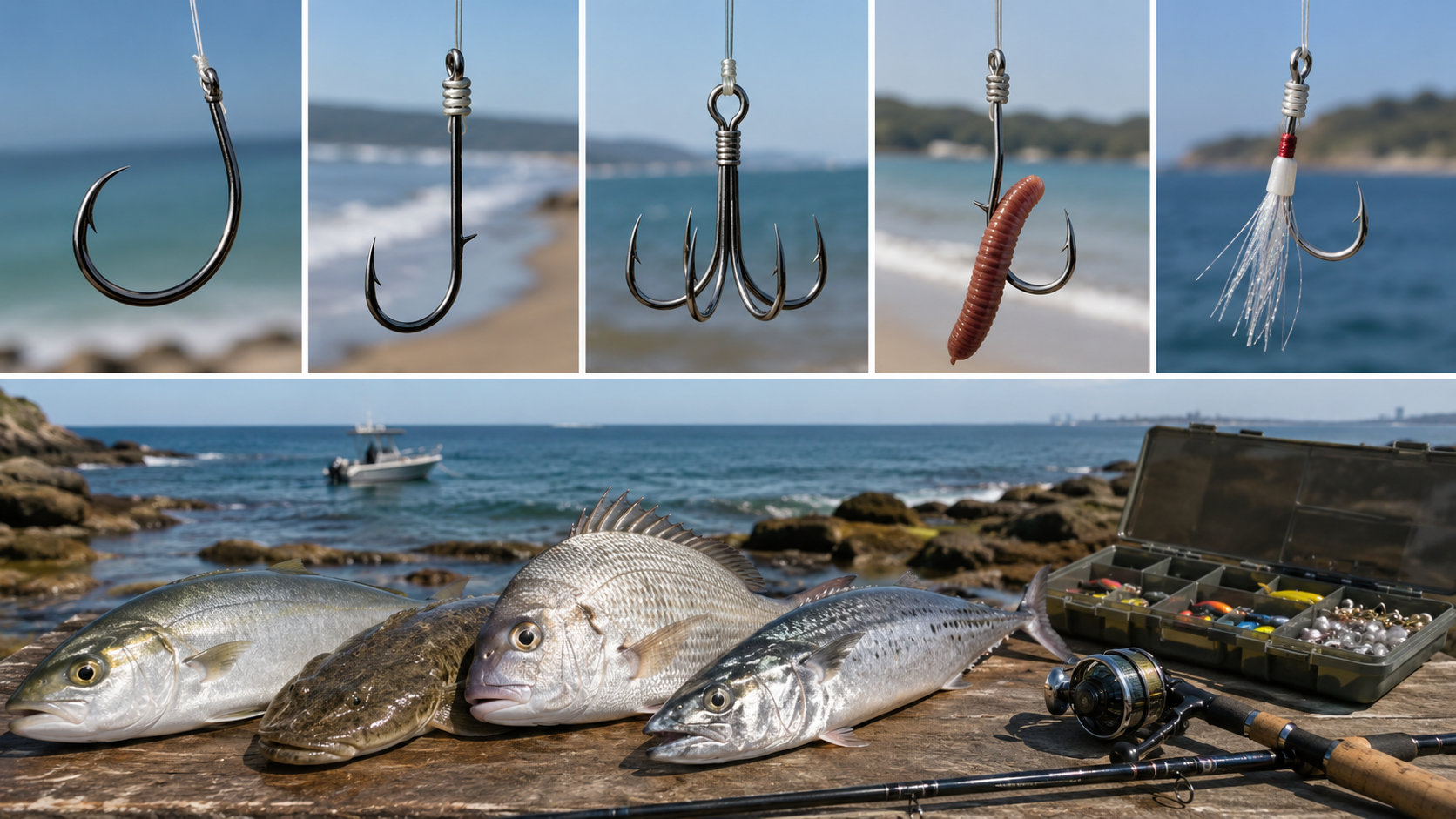
Why hook pattern matters on Aussie waters
The right hook pattern is one of the cheapest upgrades you can make to your terminal tackle. Shape, gape, eye orientation and point style all change how a bait or lure presents, how cleanly you hook up, and how well a fish stays pinned while you work structure, current and boat wash. Around Sydney and along the coast, the same bait bucket can produce very different results on bream, flathead, mulloway, tailor or kingfish simply because the hook sits differently in the mouth.
This guide from Aussie Tackle Box breaks down the everyday patterns Australian anglers actually use: circle, suicide (beak), octopus, worm and assist hooks. It is practical gear talk—not theory—so you can match pattern to species, bait and fishing style without overcomplicating your tackle box.
Circle hooks: set-and-forget bait fishing
Circle hooks have a point that curves back toward the shank. When a fish swallows the bait and turns away, the hook tends to slide to the corner of the jaw rather than burying deep in the gut. That is why circles are widely preferred for live and dead bait when you want higher jaw-hook rates and simpler releases.
Use circle hooks when you are:
- Soaking baits for mulloway in deeper holes, bridges and river mouths
- Live-baiting yellowtail or slimy mackerel for kingfish
- Berley trails for snapper and other reef species where long soaks are normal
- Fishing with kids or newer anglers who struggle with timing a hard strike
How to fish them: resist the big sweep. When the rod loads or the reel starts giving line, come tight smoothly and keep steady pressure. A violent strike can pull the bait out before the circle finds the jaw hinge. Match gape to bait bulk—too small and the point buries in flesh; too large and small bream or flathead struggle to get the hook in.
For estuary work, finer-wire circles in sensible sizes suit peeled prawn, nippers and strip baits. Offshore and for bigger kingfish or mulloway, step up to stronger wire and a wider gape so the hook still tracks cleanly past a bulky bait.
Suicide (beak) hooks: the all-round bait classic
Suicide hooks—often called beak hooks—have a slightly reversed point and a versatile shape that has filled Aussie tackle trays for decades. They strike well, hold reliably and suit a huge range of baits from pilchard halves to squid strips and whole whitebait.
They shine when you need a confident hook-set on active fish:
- Tailor chopping through surface baits along beaches and headlands
- Flathead on whole fish or bigger strip baits drifted over sand flats
- General estuary sessions where bream, whiting and flathead might all show
- Light rock and breakwall fishing when bites are short and sharp
Compared with circles, suicides reward a firmer strike. Keep points sticky-sharp; a dull beak hook turns solid bites into frustrating taps. Offset points help the hook catch tissue on the strike, which is useful with tougher baits, but check local rules if you are in a fishery that specifies non-offset circles for certain methods.
Octopus hooks: short-shank strength for chunk baits
Octopus hooks are short-shank, wide-gape patterns with a turned-out eye on many models. The compact shank keeps more of the bait free to move and reduces bulk in a fish’s mouth, while the wide gape still gives solid purchase on bream, mangrove jack, barra in the north, and solid estuary predators down south.
Reach for octopus hooks when:
- You are presenting neat prawn, yabby or pipi baits for bream
- Chunk baits need to sit compact on the hook for jack or cod country
- You want a strong, tidy hook under a running sinker or paternoster
- Soft baits fall off long-shank patterns too easily in current
Many octopus hooks come chemically sharpened and in black-nickel or similar finishes that suit both fresh and salt. Pair them with fluorocarbon or quality mono leaders matched to structure—lighter and abrasion-aware around oyster racks, heavier when you expect mangrove jack, barra or snaggy murray cod sessions inland.
Worm hooks: long shank for slim baits and fewer deep swallows
Worm hooks are long-shank patterns built for beach worms, bloodworms, tube weed presentations and other slim baits that need to be threaded neatly. The extra shank length helps keep the point clear and can make unhooking easier when whiting and bream are mouthing baits gently in the wash.
Typical uses include:
- Surf and flat fishing for whiting with beach worm or pipi
- Light estuary rigs where a long shank stops small fish swallowing the lot
- Delicate bait presentation in clear, shallow water over sand
Thread bait so the point sits exposed or just barely hooded by the bait tip. A fully buried point looks neat but costs hook-ups when fish are sipping rather than slamming. In windy beach conditions, a slightly heavier wire helps the rig cast without spinning the bait into a knot.
Assist hooks: jigs, micro jigs and stickbaits
Assist hooks are short-shank hooks on braided cord, usually with a solid ring. They hang free of the lure body so kingfish, tuna, spanish mackerel and aggressive tailor can grab a metal jig or stickbait without needing the treble to find bone on the first touch. They are standard on slow-pitch and high-speed jigs and are increasingly common on micro jigs in harbour and coastal water around Sydney.
Practical tips:
- Keep assist length matched to the jig—too long and you foul the lure; too short and you miss short strikes
- Replace rusty or opened assists before a trip; the cord and split ring are cheap insurance
- On larger kingfish jigs, quality thick-wire assists matter more than fancy paint
- For micro jigs aimed at bream and light reef species, finer assists improve action and hook penetration on light braid
Single assist setups can also reduce deep hooking compared with big trebles when fish are boiled up on the surface, which helps if you are releasing fish during warmer months when fight times and handling stress add up.
Matching pattern to species and season
Southern hemisphere summer heat pushes a lot of bait into shallows and around lights at night—prime time for circle and octopus patterns on live baits and prawns. Autumn often brings cleaner ocean water and strong kingfish and mulloway windows where circles for live bait and assists on jigs both earn a place in the same kit. Winter beach sessions still favour suicide and worm hooks for tailor, whiting and flathead on strip and worm baits. Spring estuary flushes are classic octopus and light circle territory for bream and flathead as fish push onto flats.
Rough species starting points (adjust size to bait and average fish):
- Bream: small octopus or light circles on nippers, prawn and soft plastics with light jig heads
- Flathead: suicide or octopus on bait; wide-gape patterns on soft plastics
- Mulloway: strong circles for live and big dead baits
- Tailor: sturdy suicide hooks on pillies; wire traces when choppers are thick
- Kingfish: heavy circles for live bait; quality assists on jigs and stickbaits
- Mangrove jack / barra: strong octopus or specialist wide-gape singles suited to snags
- Murray cod: robust wide-gape singles matched to large presentations in freshwater
- Spanish mackerel: strong singles or assists with appropriate wire where required
Terminal tackle setup tips that save fish and gear
Hook pattern only works if the rest of the rig supports it. Keep these habits in the boat and on the sand:
- Sharpen or replace points after rocks, oyster and ramp concrete—Aussie structure is hard on hooks.
- Match hook weight and wire to leader: fine circles on light fluoro for bream; thicker wire on heavier leaders for kingfish and mulloway.
- Check eye closure and barb condition straight from the packet; manufacturing variance happens.
- Store hooks in dry, divided boxes—mixed damp trays rust points fast in salt air.
- Pinch barbs or use micro-barbs when you expect heavy catch-and-release, especially in warm shallow water.
When you build paternosters, running-sinker rigs or snell connections, keep knots neat and tag ends short so they do not lever against the hook eye. A perfect circle hook still fails if the snell slips under load.
Rules, safety and responsible hook choice
Fisheries rules differ by state and can specify hook types, sizes or configurations for certain species and methods. Always check the current rules for the water you are fishing before you commit to a pattern, especially for protected slots, circle-hook requirements and shark or reef management zones. Aussie Tackle Box is a gear and technique guide for recreational anglers—not a substitute for official state fisheries information.
Safety is part of tackle choice too. Assist hooks and big suicide hooks on windy decks catch skin and clothing as easily as fish. Cover points in the kit, clear the casting arc, and carry long-nose pliers or a hook-out tool so you are not fumbling over a lively flathead or tailor in a kayak.
Building a simple multi-pattern kit
You do not need every size ever made. A compact Sydney-to-coast kit might include a small range of light octopus and worm hooks for estuary bait, a mid-size suicide selection for beaches and general bait work, a few stronger circles for live-bait mulloway and kingfish nights, and spare assists sized to the jigs you actually own. Add spare split rings, quality leaders and a small sharpener, and you can adapt to most recreational sessions without a suitcase of steel.
If you are refining the rest of your terminal setup—leaders, swivels, sinkers and how they join—keep notes on what hook pattern produced clean jaw hooks versus deep takes. Those notes, more than any catalogue slogan, will tell you what belongs in your box for the next run.
For local questions about gear matching and page updates, Aussie Tackle Box can be reached on +61275903570, [email protected] during Mon–Fri: 09:00 – 17:00 (AEST). Fish fair, check the rules, and let the hook pattern do the quiet work at the business end of the line.

Navigation
See also
FAQ