How We Test and Rank Tackle: Criteria, Scoring and Limitations
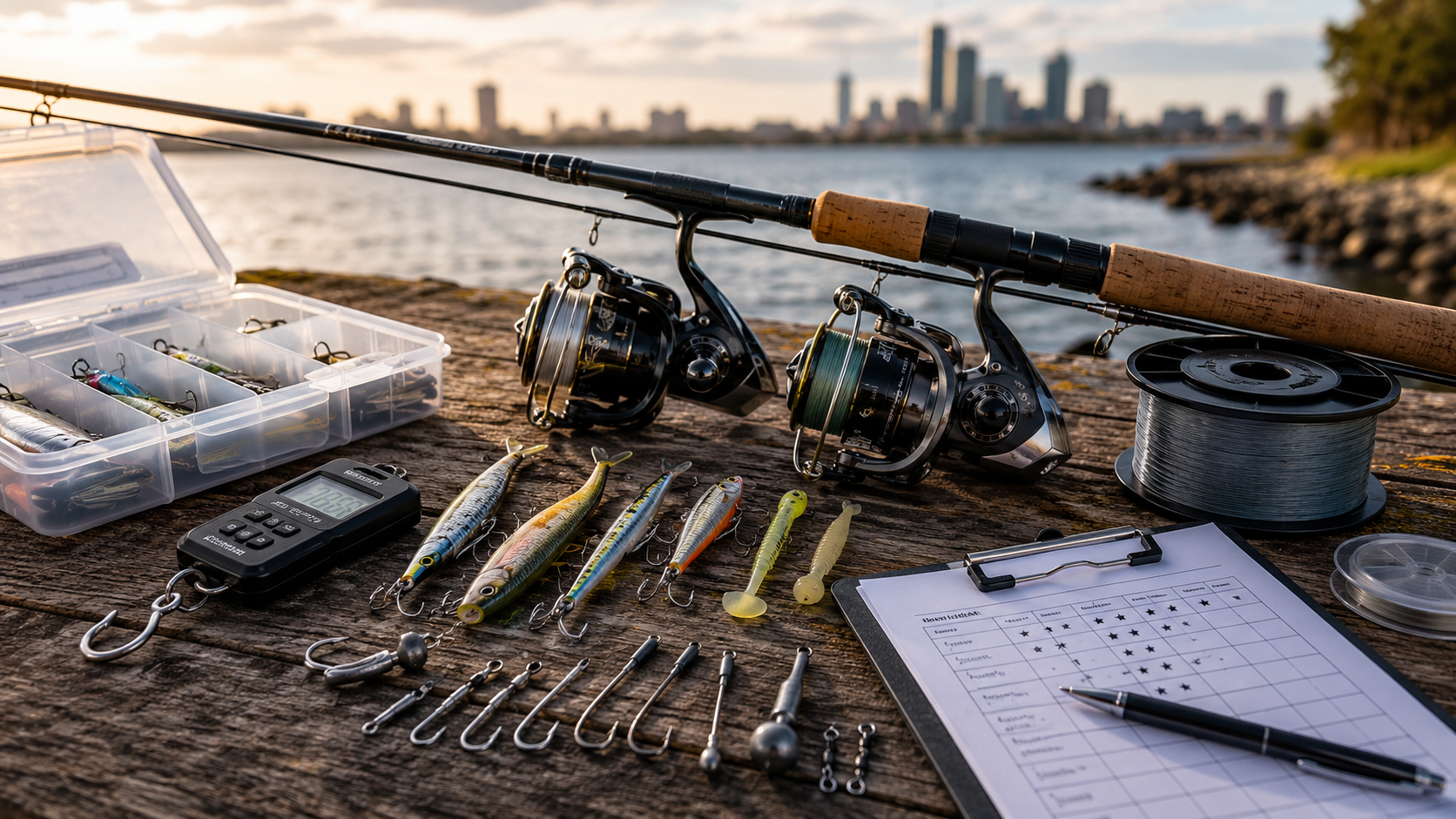
Why a clear method matters for Australian anglers
At Aussie Tackle Box we rank recreational fishing tackle so Sydney and coastal anglers can compare gear without marketing noise. Our focus is practical use in local waters: estuary sessions for bream and flathead, beach and rock work for tailor and mulloway, harbour runs for kingfish, and travel kits aimed at barra, mangrove jack, Murray cod and Spanish mackerel. We write in Australian English, use metric measures (mm, cm, m, kg, g) and talk about cost in AUD only as broad ranges when helpful—not as fixed shop prices.
This article explains the criteria we apply, how scores are built, and where our method stops. It is a guide to process, not a promise of catch rates, product certification or warranty outcomes. For store hours or a direct question, use +61275903570, [email protected] or visit during Mon–Fri: 09:00 – 17:00 (AEST) in Sydney.
What we put on the bench
We group tackle into families that Australian fishers actually pack:
- Rods and reels — casting feel, drag smoothness, corrosion resistance after salt spray and freshwater rinse cycles.
- Lures and soft plastics — action in typical current, hook-up geometry, durability of paint and soft material after repeated casts.
- Line, leader and terminal tackle — diameter versus stated breaking strain, knot strength, abrasion on rock and oyster, hook point retention and split-ring security.
- Storage, kayak and small-craft fit-outs, marine electronics — organisation, weight, splash resistance and simple usability on a rocking platform.
- Care products and safety kit — rinse, lube and basic personal safety items relevant to rock ledges and night estuary sessions.
Southern hemisphere seasons shape the calendar. Summer heat and UV stress plastics and mono; autumn and winter bring heavier swell and colder hands on the Harbour and open coast; spring sees mixed estuary traffic. We note seasonal wear where it changes results.
Core criteria we score
Each item is assessed against the same backbone so ranks stay comparable across brands and price bands.
Build and materials
We check fit and finish, reel seat stability, guide alignment, bail and drag stack behaviour, lure hardware, and terminal components such as swivels, snaps, sinkers and hooks. Salt is assumed. Fasteners that rust after a short spray-and-dry cycle lose marks quickly.
On-water handling
Casting accuracy at common recreational distances, retrieve feel, and control when a fish turns near structure matter more than brochure peak figures. For kayak and small-craft use we favour balanced outfits that do not fight the angler in chop.
Line, leader and hook performance
We measure line diameter with simple callipers where practical, tie common Australian knots (including improved clinch and FG-style connections where relevant), and pull to failure on a basic scale. Leaders are checked for abrasion after controlled rubs on rough surfaces similar to rock bars. Hooks are inspected for point sharpness out of the pack, gape suitability for bream through to larger kingfish or mulloway patterns, and whether the coating flakes after salt exposure. We do not claim laboratory accreditation; results are comparative within our own protocol.
Maintenance load
Gear that needs constant fiddling after every short session scores lower for everyday fishers. Clear strip-down steps, available spares and sensible rinse-down routines raise the score.
Value in AUD context
We discuss relative value bands only (budget, mid, premium) without inventing exact shelf prices. A mid-band reel that holds drag smoothly after repeated salt use can outrank a premium unit that binds early.
How scoring works
Each criterion receives a whole-number mark from 1 to 10. Weightings reflect real risk for the category:
- On-water handling and reliability — highest weight for rods, reels and electronics.
- Corrosion and abrasion resistance — high weight for terminal tackle, guides and hooks.
- Build quality and serviceability — medium to high across all groups.
- Maintenance load and packing practicality — medium, higher for kayak fit-outs and storage systems.
- Relative AUD value — medium, never the sole decider.
Category score is a weighted average, rounded to one decimal place for display. Rankings inside a shortlist are ordered by that score, then by consistency across repeat checks. If two items tie, we prefer the simpler maintenance path and clearer sizing information (for example stated leader diameter in mm and breaking strain in kg).
Species notes adjust emphasis, not the maths. Flathead and bream soft-plastic kits stress hook penetration and light-line knot strength; kingfish and Spanish mackerel contexts stress abrasion, drag heat and solid terminal connections; Murray cod and barra travel kits stress toughness and secure storage for long drives.
State rules, safety and loadouts
Fisheries rules differ by state and change over time. Our ranks never replace official size limits, bag limits, closed seasons or gear restrictions. Before you fish, confirm current rules for your waters. Safety sits outside the product score but inside our write-ups: personal flotation for kayak work, non-slip footwear on rocks, sun and hydration plans in peak summer, and conservative decisions when swell builds on Sydney’s exposed ledges.
State-by-state loadout articles on Aussie Tackle Box describe typical recreational kits only. They are starting points for packing lists, not legal advice and not guarantees of compliance.
Limitations you should read before trusting a rank
Honesty about limits keeps the guide useful.
- Sample size — We work with the units we can access and re-check. Batch variation exists; one excellent spool of leader does not prove every spool identical.
- Conditions — Harbour chop is not the same as a flooded tropical river or a Bass Strait wind against tide. Scores reflect the sessions and shore tests we run, with notes when a product is aimed at another region.
- No lab certification claim — We do not present our benches as accredited test houses. Breaking-strain checks are comparative aids, not certified ratings.
- No invented awards or endorsements — Rankings are editorial. We do not fabricate licences, trophies, medical claims or financial outcomes.
- Electronics drift — Sounder and GPS software changes. A unit ranked well for menu clarity can shift after updates; we note review dates in related pieces when we revise.
- Human factors — Casting style, knot skill and hook-set timing change results. We describe technique assumptions so you can judge fit.
- Price movement — AUD street prices move with supply. Value comments are directional only.
How we update ranks
When a product is revised, discontinued or shows a repeating fault pattern in later sessions, we adjust scores and rewrite the summary. Seasonal re-checks after summer UV and after a run of winter rock sessions catch coating failure, leader stiffness in the cold and reel seal issues. If evidence is thin, we say so and avoid forcing a precise rank.
Practical checklist before you buy from any rank list
Use our scores as a filter, then finish with your own checks:
- Match rod power and line class in kg to the species and structure you actually fish.
- Confirm leader diameter in mm and material (mono or fluorocarbon) for local abrasion and clarity needs.
- Inspect hook points and alloys suited to salt if you chase tailor, kingfish or mackerel.
- Plan rinse, dry and light lubrication the same day you return to Sydney or your ramp.
- Pack safety gear first; tackle ranks never outrank getting home safely.
Questions about how a specific category was scored can be directed to [email protected] or +61275903570 during Mon–Fri: 09:00 – 17:00 (AEST). Aussie Tackle Box will keep publishing method notes alongside gear guides so you can see the criteria, the numbers and the limits in one place.

Navigation
See also
FAQ