Jighead Weight Selection by Depth, Current and Wind
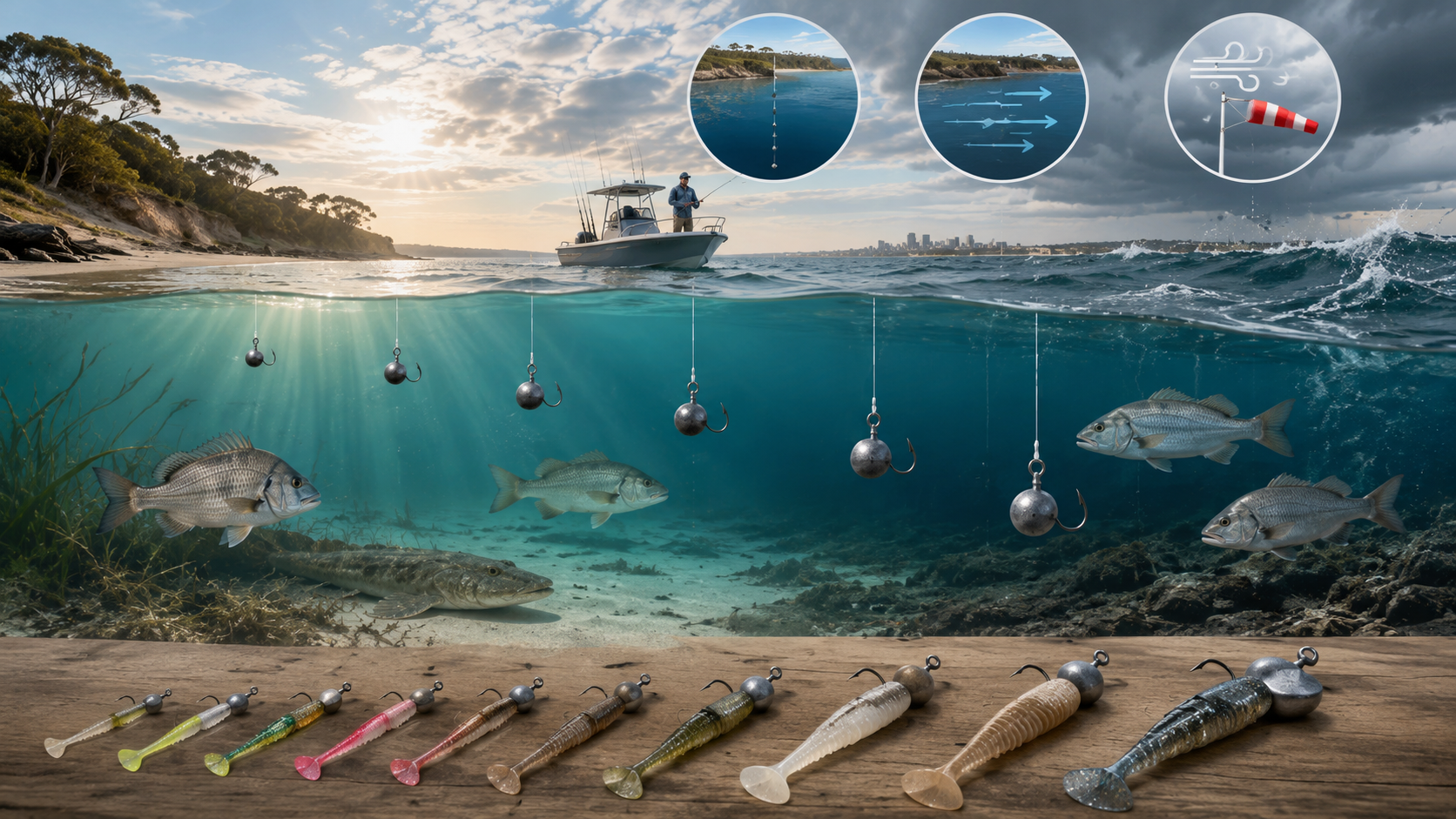
Why jighead weight decides contact and hook-ups
On Australian estuaries, beaches and inshore reefs, jighead weight is not a fashion choice. It sets how fast your soft plastic sinks, how it tracks in current, and whether you stay in touch when wind pushes a bow in the line. Get it wrong and you either snag the bottom constantly or fish above the strike zone. Get it right and the same plastic that looked dead last weekend starts drawing bites from bream, flathead, tailor, mangrove jack and the odd mulloway.
Aussie Tackle Box puts the focus on simple, repeatable choices you can make on the water around Sydney and further afield. Use metric weights, watch the conditions, and change heads more often than you change brands.
Match weight to depth first
Depth is the baseline. A light head that works in a metre of calm flathead water will never reach a 8–12 m drop-off in useful time. As a starting grid for soft plastics:
- 0.5–1.5 m (skinny flats, drains, rock bars at high tide): 1/32–1/16 oz class heads, roughly 0.9–1.8 g. Ideal for bream and small flathead when you want a slow glide.
- 1.5–3 m (typical estuary channels and pontoons): 1/12–1/8 oz, about 2–3.5 g. Covers most day-to-day estuary work.
- 3–6 m (deeper holes, bridge pylons, river bends): 1/6–1/4 oz, roughly 4–7 g. Helps you count down to the bottom before the drift carries you off the mark.
- 6–12 m+ (harbour edges, coastal reefs, deeper mulloway or kingfish country): 3/8–1/2 oz and up, about 10–14 g or heavier when you must stay vertical.
These are launch points, not rules. If the plastic is still fluttering halfway down after a long count, step up. If you are hanging up every second cast, step down or change the retrieve angle.
Factor in current strength
Tide and river flow change the effective weight of every head. In a hard run-out through a Sydney harbour constriction, a 3 g head that felt perfect at slack water can ride high and never kiss the sand where flathead sit. In the same spot on a gentle flood, that same head may bury into weed.
Work current like this:
- At slack or light flow, favour the lightest head that still gives a clear “tick” on the bottom every few hops.
- In moderate current, increase one size so the plastic still reaches the zone within a short cast and controlled drift.
- In strong current, either go heavier, cast further up-tide and let the head swing into the strike lane, or switch to a more compact profile that punches through water faster.
For barra in northern systems and mangrove jack around snags, current against structure often means a heavier, faster-sinking head so you can get the plastic into the eddy before it washes past. For mulloway in deeper holes, a controlled vertical presentation with enough weight to hold near the bottom beats a light head that never settles.
Wind, line belly and real contact
Wind is the quiet killer of light-jighead fishing. A nor’easter or southerly across an open bay puts a belly in braid, delays your feel of the bottom, and turns subtle bites into invisible taps. Southern hemisphere summer sea breezes and winter westerlies both matter; the season only changes which bank is sheltered.
When wind rises:
- Step up one jighead size so the plastic pulls line tight sooner.
- Shorten the cast and fish more under the rod tip if you are in a kayak or small craft.
- Keep the rod tip lower and wind faster on the drop so slack does not build.
- Consider a slightly heavier fluorocarbon leader only if abrasion demands it; extra leader diameter also adds drag in wind and current.
If you still cannot feel the bottom, the head is too light for that combination of depth, drift and breeze—not “unlucky”.
Species cues around Australian waters
Bream on flats and pontoons often want slow sink rates: light heads, long pauses, and plastics that hover near pylons. Flathead reward contact with the sand; a head that consistently ticks bottom along the drop-off outfishes a lighter one that sails overhead. Tailor and Spanish mackerel in open water may smash a faster-sinking profile when bait is moving, so do not be afraid of a heavier head if it keeps you in the school. Murray cod in deeper river holes need enough weight to get large plastics down beside timber without endless countdown. Kingfish around headlands and harbours often demand heavier jigheads or micro-jig style weights simply to stay deep when the boat is moving.
Local names help you think local: a mangrove jack session tight to snags is a different weight problem to drifting plastics for mulloway after dark in a shipping channel.
Practical selection routine on the water
Use a short checklist every time you change banks or the tide turns:
- Estimate depth under the boat or along the cast with the sounder or a test drop.
- Note current direction and strength from surface drift and your anchor or spot-lock behaviour.
- Feel the wind on the line after the first cast; if the braid balloons, go heavier.
- Count the plastic down. If you never get a bottom signal in a sensible count, increase weight.
- Watch snag rate. Constant hang-ups mean a lighter head, a weedless hook style, or a steeper retrieve angle—not necessarily a different plastic brand.
Carry a small range in the same hook size: for example several weights from about 1 g through to 10 g-plus in the hook sizes you actually use. That kit covers most recreational soft-plastic work without filling the whole tackle box.
Hook size, profile and sink rate
Weight alone does not set sink rate. A bulky paddle-tail on a light head sinks slower than a slender jerk-shad on the same gram rating. Match hook length to the plastic so the point sits in the striking zone, and remember that larger hooks add a little mass and change balance. For weed beds and oyster edges, a lightly weighted weedless presentation can outperform a heavier open-hook jighead that collects rubbish every cast.
Kayak and small-craft notes
From a kayak you sit closer to the water and drift faster in wind. Keep a couple of heavier heads ready so you can stay in contact without long casts that the breeze ruins. Stow weights in a shallow tray so you can swap without balancing a full box on your lap. Marine electronics help confirm depth before you guess the gram rating, especially when you slide off a flat into a channel.
Gear care and small safety habits
Rinse jigheads after salt sessions and dry them so points and moulded weights last. Store sharp heads so they cannot puncture soft plastics in the same compartment. On windy rock edges or crowded boat ramps, make controlled casts and mind other anglers. Check state fisheries rules for the waters you fish—bag limits, closures and gear restrictions change by state and season, and a well-chosen jighead does not replace a legal session.
Quick reference before you leave the ramp
Depth sets the floor, current adjusts it, wind finishes the decision. Start light enough to look natural, then add weight until you feel bottom and bite without losing the plastic’s action. Around Sydney and across southern and northern fisheries alike, that simple loop—observe, step up or down one size, cast again—beats any single “magic” gram number printed on a packet.
For more tackle guidance from Aussie Tackle Box, keep notes on what weight worked at which depth and tide. Next trip, you will spend less time guessing and more time with the plastic in the zone where bream, flathead, mulloway, tailor, barra and kingfish actually feed. Contact [email protected] or call +61275903570 during Mon–Fri: 09:00 – 17:00 (AEST) if you need help finding your way around the site’s gear guides.
Navigation
See also
FAQ