Leader Choice: Abrasion Resistance vs Invisibility by Species
Why leader choice matters in Australian waters
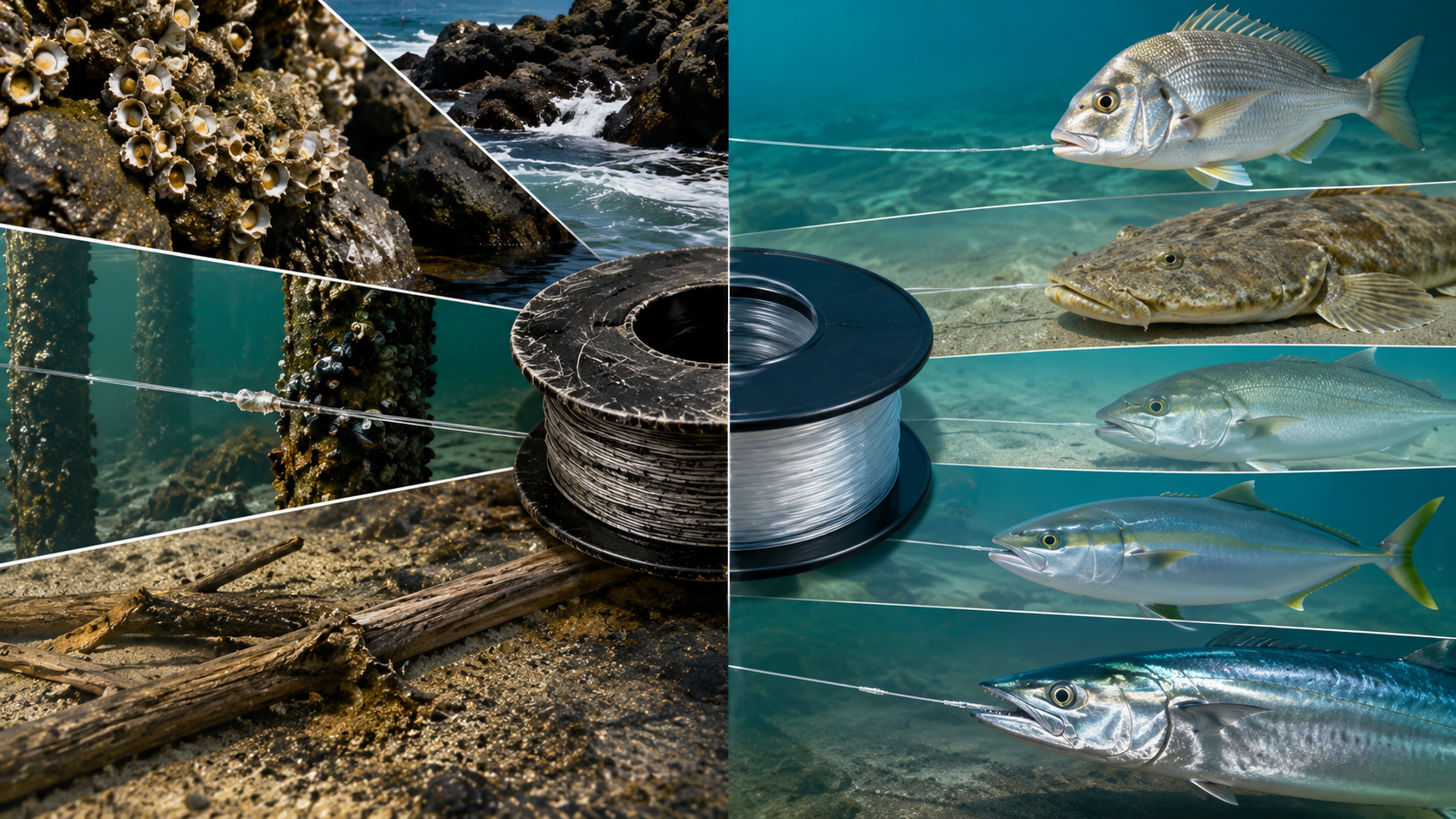
On Aussie Tackle Box, leader selection is treated as a species-and-structure decision, not a one-line habit. Around Sydney and along the coast, the same spool of braid can be paired with very different leaders depending on whether you are threading oyster racks for bream, bouncing soft plastics over sand for flathead, or working rocky points for kingfish. The core trade-off is simple: thicker, tougher material shrugs off rocks, shell and teeth, while thinner, clearer material is harder for pressured fish to see. Getting that balance right lifts hook-up rates and cuts lost fish without forcing you into unnecessarily heavy gear.
Leaders do three jobs at once. They take the scrapes that braid cannot, they give a short section of stretch or stiffness for lure action and knot security, and they sit in the fish’s field of view right next to the bait or lure. In clear winter harbour water a heavy mono stub can look like rope. In dirty summer run-off after storms, invisibility matters far less than holding power on snags. Match the leader to water clarity, structure and the species’ mouth and behaviour, then fine-tune diameter until break-offs and refusals both drop.
Materials at a glance: mono, fluorocarbon and alternatives
Monofilament remains useful where a little stretch helps, such as surface lures for tailor or barra, or when you want a buoyant section above a soft plastic. It is generally cheaper per metre, knots well, and shows up more in clear water. Fluorocarbon sinks faster, resists abrasion better for a given breaking strain in many real-world rubs against shell and rock, and has a refractive index closer to water, so it is the default “invisibility” choice for wary bream, flathead and mulloway in clear shallows. Hard fluorocarbon and specialised abrasion leaders cost more but earn their keep on mangrove jack country and kingfish bombora edges.
Wire and heavy single-strand or multi-strand traces belong with toothy species and big pelagics—spanish mackerel and solid tailor schools—where invisibility is secondary to not being bitten off. For most estuary and bay work covered on Aussie Tackle Box, you will still live in the mono-to-fluoro range and only step to wire when bite-offs become routine. Always check state fisheries rules for any gear restrictions in the waters you fish, and keep leaders long enough for clean knots and a fair amount of rub zone above the lure.
Abrasion resistance: when toughness wins
Choose abrasion first when the fish lives on hard structure or has abrasive jaws and gill plates. Mangrove jack around snags, murray cod on timber and rock in inland systems, kingfish on wash and kelp edges, and mulloway hard against bridge pylons or rock walls all punish light leaders. In those cases step up diameter, favour quality fluorocarbon or tough mono, and accept a small visibility penalty. A slightly heavier leader that survives the first two scrapes is more ethical and more effective than a gossamer tippet that parts on the strike.
- Mangrove jack and snaggy barra country: short, stout fluoro or heavy mono; prioritise rub resistance and solid knots over stealth.
- Kingfish on rocks and bomboras: longer heavy leaders so the fish can circle structure without sawing braid on barnacles.
- Murray cod: thick leaders that handle timber, rock bars and violent head shakes.
- Spanish mackerel and big tailor: wire or very heavy hard leader where bite-offs dominate losses.
Practical checks help more than brand myths. After every session on shell or rock, run the leader between clean fingers and retie at the first nick. Replace leaders after a big fish even if they look intact. Store spools out of direct sun in your tackle system so UV does not quietly weaken the section you rely on most.
Invisibility: when clear, fine leaders catch more
Invisibility leads when fish are educated, water is clear, and structure is softer—sand, mud, light weed—or when you can keep the fight away from the worst rub points. Harbour and coastal bream over winter glass-offs, flathead on clean sand in bright conditions, and shy mulloway in skinny clear water all respond to stepping down diameter and using good fluorocarbon. Southern hemisphere summer can bring green or tannin-stained water after rain; winter and calm high-pressure spells often bring the clearest columns, especially in sheltered Sydney systems, so seasonal clarity should change your default tippet size.
- Start with the lightest leader that still gives an acceptable abrasion margin for the spot.
- Lengthen the leader in clear water so the braid-to-leader knot sits well away from the lure.
- Match lure weight and drag so you are not forced into panic pressure that overloads a fine tippet.
- Retie after snags; a stretched or creased light leader fails when the good fish finally eats.
For bream, many anglers work in lighter fluoro classes with neat FG or PR connections and small neat knots at the lure. Flathead on soft plastics often tolerate a touch more diameter because the plastic and jighead already create bulk, but clear sand in bright sun still rewards a tidy, low-visibility leader. Tailor blitzes may allow heavier mono for speed of rigging and tooth resistance, while still keeping the trace no longer than needed for casting comfort.
Species-by-species leader notes
Bream
Favour invisibility in clear shallows and around boats: quality fluorocarbon, neat knots, and enough length to hide the braid. Bump diameter only when fishing heavy shell, rock walls or bridge base rubble where rubs are constant.
Flathead
Balanced fluoro leaders suit most soft-plastic work on sand and mud. Increase abrasion rating when dragging past oyster edges or rubble patches. Keep leaders long enough that sandy abrasion on the lower section does not reach the braid join too quickly.
Mulloway
Clear water and open sand lean invisible; pylons, rock and night sessions near structure lean tougher and a little heavier. Mulloway punish poor knots, so build leaders carefully and test them before dark sessions.
Tailor
Teeth matter more than crystal clarity during a surface blitz. Moderately heavy mono or short tough traces reduce bite-offs; drop diameter when casting small metals to wary fish in clear, calm conditions.
Barramundi and mangrove jack
Structure and violent fights dominate. Use abrasion-first leaders, strong connections, and inspect after every snag pull. In dirty water, step up diameter freely; in clear drains and edges, shave diameter only as far as the timber allows.
Murray cod
Timber and rock demand heavy, tough leaders. Invisibility is secondary to landing fish cleanly and releasing them in good shape after a fair fight.
Kingfish
Wash zones, kelp and reef call for long, heavy abrasion leaders. In blue water with less structure you can moderate diameter slightly, but never below what your drag and the fish’s runs demand.
Spanish mackerel
Plan for bite-offs. Wire or specialised heavy traces are normal when mackerel are the target; pure “invisible” fluoro tippets are the wrong tool once teeth enter the chat.
Building a simple leader system for Sydney and beyond
Carry two clear roles in the box rather than one compromise spool. Keep a “stealth” fluoro in lighter classes for bream, flathead and clear-water work, and an “armour” fluoro or tough mono in heavier classes for jack country, kingfish edges and snaggy mulloway posts. Add a small wire kit if tailor or spanish mackerel are on your seasonal plan. Label diameters in millimetres and breaking strain so you can swap on the water without guesswork, and pair leaders with sensible drag settings so the material—not hope—absorbs the first surge.
Rig for the fight you expect after the bite. A light invisible leader is wasted if you fish locked drags against rock. A heavy abrasion leader is wasted if knots are bulky or half-seated. Practice your join to braid at home, wet knots, seat them firmly, and trim tags clean so they do not gather weed in estuary current. For kayak and small-craft sessions out of Sydney, pre-tie a few leaders to measured lengths so wind and chop do not rush you into sloppy connections.
Safety, care and local rules
Leaders and light line under load can cut skin; use sensible pressure, eye protection when pulling snags, and gloves or a fish grip when handling toothy species. Rinse salt from reels and leader spools, dry gear before storage, and retire sun-baked or nicked line. Fisheries rules, size and bag limits, and any gear restrictions vary by state and waterway—check current advice for the system you are fishing before you launch. Aussie Tackle Box is a recreational tackle and techniques guide for Australian anglers; for local tips around Sydney you can reach the team on +61275903570 or [email protected] during Mon–Fri: 09:00 – 17:00 (AEST).
When you next spool up, decide species and structure first, then pick abrasion or invisibility as the primary job of that leader. Adjust diameter in small steps, keep leaders fresh, and let water clarity and season push you lighter or heavier. That simple habit covers bream on the flats, flathead on the sand, mulloway after dark, and the tougher customers—barra, murray cod, kingfish, mangrove jack, tailor and spanish mackerel—without turning every session into a break-off lottery.
Navigation
See also
FAQ