Murray Cod Casting Gear: Big Lures, Heavy Leader and Rod Power
Why Murray cod gear is built differently
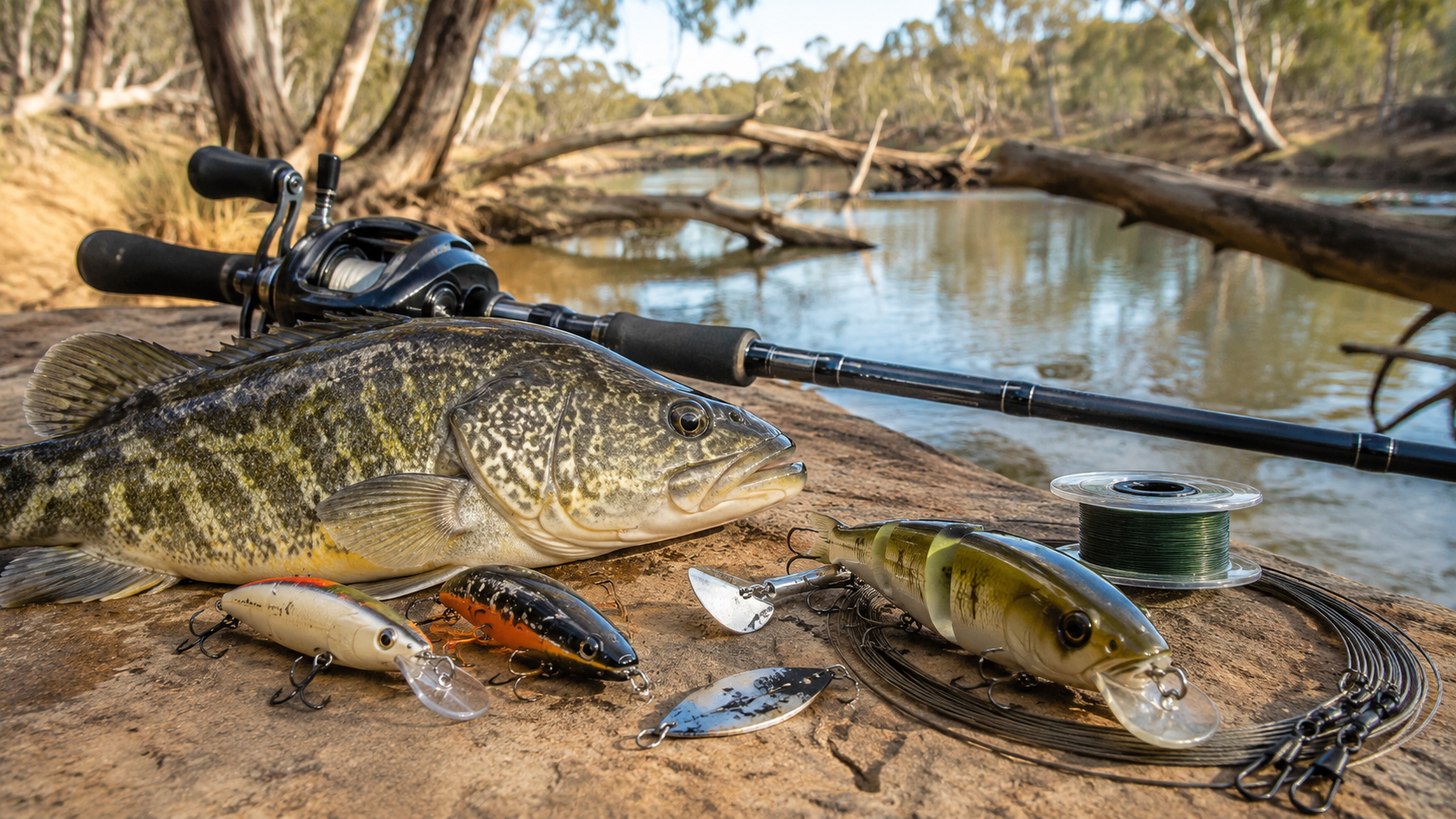
Murray cod are thick-shouldered ambush predators that live around timber, rock bars and undercut banks. In Australian freshwater systems they reward anglers who cast large profiles, run heavy leader and fish rods with genuine backbone. This guide from Aussie Tackle Box walks through a practical casting set-up aimed at recreational fishers around Sydney who travel inland for cod, or who want a clear checklist before the next trip. Think big lures, abrasion-resistant leader and rod power that can turn a fish before it reaches snags—not light estuary tackle stretched past its limits.
Cod will eat year-round, yet cooler months and the shoulder seasons either side of the closed season in many jurisdictions are prime for big surface and sub-surface presentations. Always check current state fisheries rules for closed seasons, size and bag limits before you wet a line. Gear choices below are about control and presentation, not shortcuts around the regulations.
Rod power, length and action for casting oversized lures
A dedicated Murray cod casting rod is usually a baitcast stick in the heavy to extra-heavy class, roughly 1.8 m to 2.1 m long. That length gives leverage on large hardbodies, spinnerbaits and surface walkers while still allowing accurate casts into timber pockets. Look for a moderate to moderate-fast action: enough tip to load a 20–40 g (and heavier) lure, with a strong mid and butt section so you can steer fish away from structure.
- Power: heavy or extra-heavy, rated for braid in the 20–40 kg class when the manufacturer lists it that way.
- Length: about 1.8–2.1 m for boat and bank casting; shorter sticks help in tight timber.
- Guides and build: solid wrapping and inserts that handle thick leader knots without heat build-up on long casts.
- Grip: full or long half-grips help when you need two-handed casts with oversized lures.
If you already own a lighter barra-style baitcaster, it can cover smaller cod water, but once you step up to 120 mm-plus hardbodies and heavy timber, a true heavy casting rod is safer for both fish and tackle. Spin outfits in the same power range work for anglers who prefer overhead-free casting, provided the rod blank is not under-gunned.
Reels, braid and the heavy leader system
Pair the rod with a low-profile or round baitcast reel that holds plenty of heavy braid and has a smooth, strong drag. Many cod anglers spool 20–30 kg braid for a fine diameter and direct contact, then add a long mono or fluorocarbon leader. Leader is where abrasion resistance matters most: rock, timber and the cod’s sandpaper mouth will test thin connections quickly.
- Braid: quality 20–30 kg mainline for casting distance and bite detection.
- Leader material: abrasion-resistant mono or fluoro, commonly in the 20–40 kg range depending on snag density and lure size.
- Leader length: often a long leader (a rod length or more) so the knot stays clear of the guides on the cast and you have sacrificial material after rubs.
- Knots: reliable braid-to-leader joins and a strong terminal knot or split ring clip rated for big lures; check knots after every snag session.
Heavy leader is not only about breaking strain. Stiffer leader helps large hardbodies track true and reduces the chance of the lure fouling on the line during aggressive twitches. Replace leader whenever you see flat spots, whitening or nicks—cheap insurance compared with losing a fish of a lifetime in the timber.
Big lures: hardbodies, metals, vibes and topwater
Cod respond to profile and displacement. Casting boxes for this species lean toward large hardbody minnows, deep divers, jointed swimmers, spinnerbaits, blades and vibes, plus surface lures when the water is warm enough and fish are looking up. Match lure weight to your rod’s casting sweet spot so you load the blank cleanly rather than lobbing underpowered gear.
Hardbodies and deep divers
Large floating and suspending hardbodies in the 80–150 mm class (and bigger for specialised work) cover banks, standing timber and rock faces. Deep divers help when cod sit lower along ledges. Colours that imitate local baitfish, dark silhouettes for dirty water, and natural browns and greens for clear rivers are all useful starting points. Work them with pauses—many eats come on the stop.
Metals, blades and vibes
Lipless vibes and metal blades punch into deeper holes and can be hopped along the bottom or yo-yoed beside structure. They are efficient search baits when you need to cover water from a kayak or small craft. Keep hooks sharp and consider heavier gauge trebles or singles if you are constantly straightening light hooks on solid fish.
Topwater for explosive sessions
Walkers, poppers and large surface paddlers come into their own in the warmer months and calm evenings. Cast past likely lies, work the lure into the zone, and keep contact without rushing the retrieve. Surface gear still needs the same heavy leader and rod power—cod that smash a topwater will dive hard for cover.
Carry a mix rather than one “magic” lure. Changing depth, noise and profile through a session is more productive than repeating the same cast with the same swimbait when the bite is quiet.
Terminal tackle, storage and kayak-friendly loadouts
Terminal hardware should match lure size: strong split rings, quality trebles or singles, and clips that will not open under load. A simple waterproof tray system keeps hardbodies from tangling and protects hooks during travel from Sydney to inland rivers. Foam or slotted boxes work well for large profiles; label trays by depth or lure type so night changeovers stay calm.
For kayak and small-craft fit-outs, mount a rod cradle that secures heavy baitcasters, keep a short leader spool handy, and stow a small tool pouch with pliers, line cutters, spare rings and a headlamp. Marine electronics such as a basic sounder help mark timber edges and depth changes, but learn the bank first—cod structure is often visible as laydowns, rock walls and shade lines.
Species rigs, safety and fisheries rules
A core Murray cod casting rig is straightforward: heavy baitcast or spin outfit, braid mainline, long heavy leader, and a large lure clipped or knotted on. Fish single lures rather than multi-lure dropper styles in snaggy water. When you hook up, keep side pressure and try to stop the first run toward timber without horsing the fish on a high rod angle that risks pull-outs.
- Safety: lifejacket on small craft, sun protection, solid footwear on slippery banks, and care with big trebles during the landing.
- Handling: support large fish horizontally, minimise time out of the water, and use appropriate grips or tools without dry-sliding fish over hot rock or carpet.
- Rules: closed seasons, slot limits and gear restrictions vary by state and waterway—verify before each trip and carry any required licences.
- Ethics: if you are unsure of a measurement or the fish’s condition, prioritise a clean release.
Compared with saltwater targets such as kingfish, barra or mangrove jack, Murray cod fishing is less about long open-water runs and more about short, brutal fights in cover. That is why rod power and leader abrasion resistance sit at the centre of the kit, while lure choice fine-tunes depth and mood on the day.
A simple pre-trip checklist
- Rod and reel checked: drag smooth, guides clean, cast control set for heavy lures.
- Fresh braid end and new leader of suitable breaking strain and length.
- Lure selection covering surface, mid-depth hardbodies and a vibe or blade for deeper lies.
- Pliers, spare hooks and split rings, measuring device, and a camera plan that does not delay release.
- Local rules confirmed, weather and river levels checked, and a float plan shared if you are remote.
Build the outfit once, maintain leader and hooks carefully, and you will spend more time casting productive water and less time untangling light gear that never belonged in cod timber. For more recreational tackle guidance tailored to Australian anglers, explore the rest of Aussie Tackle Box or contact the team on +61275903570 or [email protected] during Mon–Fri: 09:00 – 17:00 (AEST). Tight lines, and respect the river.
Navigation
See also
FAQ