Organising a Tackle Box by Technique Instead of by Lure Type
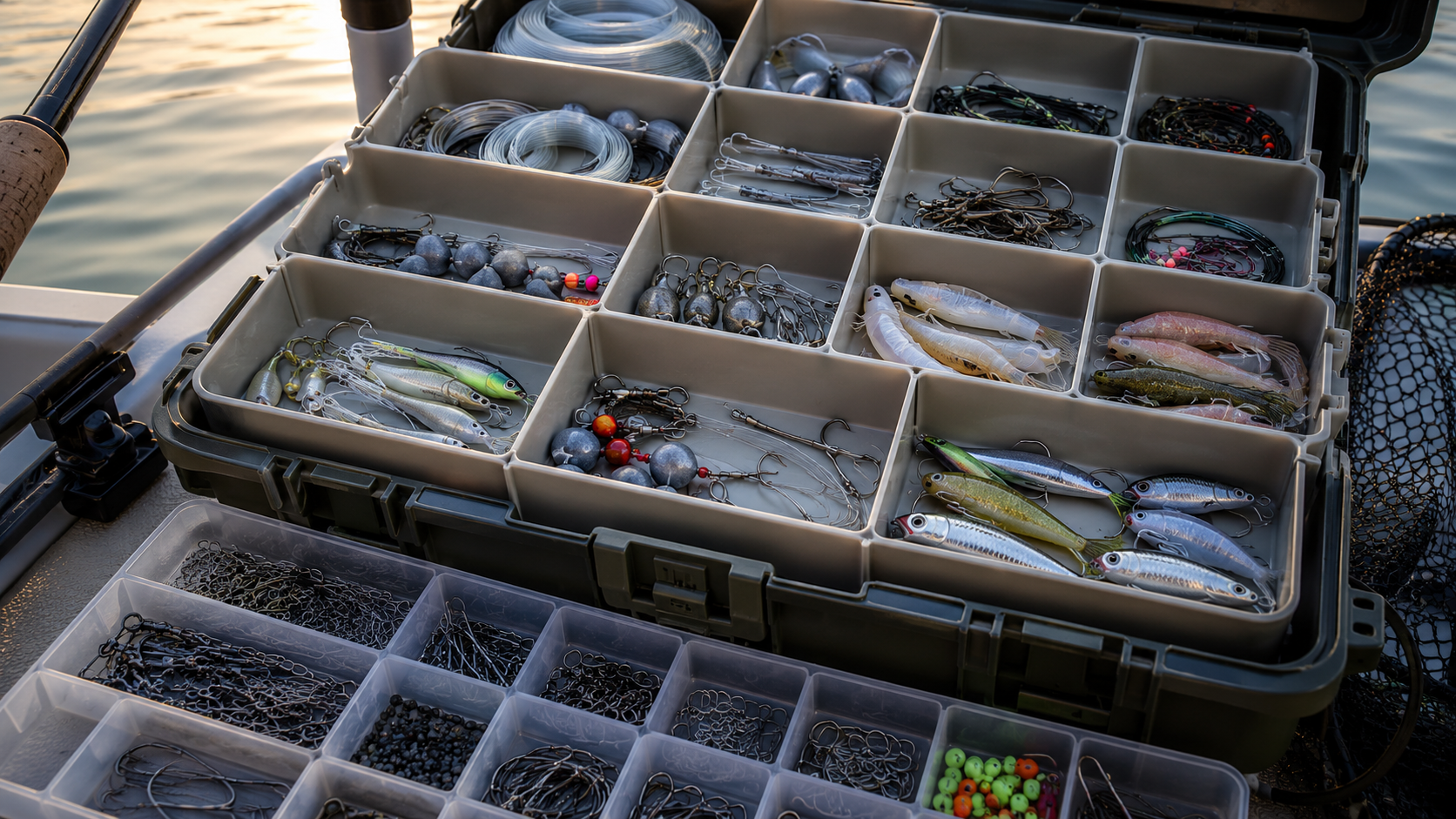
Why technique trays beat lure-type chaos
Most anglers around Sydney start with trays labelled soft plastics, hardbodies and metals. That looks tidy until you are on a windy rock ledge at dawn and need a full mulloway setup in under a minute. Grouping gear by technique means each compartment holds the line, leader, hooks, sinkers and clips you actually use together. Aussie Tackle Box favours this layout because it cuts fumbling, reduces dropped packs over the side, and makes seasonal swaps clearer when spring run-off or summer estuary heat changes what is biting.
Technique organisation also protects terminal tackle. Fine fluorocarbon leaders for clear-water bream stay separate from heavier wire or thick mono used around kingfish and spanish mackerel. Hooks sized for flathead do not get mixed with heavier ganged sets for tailor. You pack less dead weight and still cover the sessions you fish most.
Map your sessions before you buy more boxes
List the techniques you truly run in a typical month, not every method you have watched online. Common Sydney and NSW coastal patterns include:
- Estuary soft-plastic hopping for bream and flathead over sand and weed edges
- Live or fresh-bait bottom fishing for mulloway in deeper holes and bridges
- Surface and sub-surface walkers for tailor and trevally on beaches at dusk
- Light trolling or cast-and-retrieve for mangrove jack in snaggy backwaters when travelling north
- Kayak-friendly vertical jigs and slow-pitch styles for kingfish around headlands
Give each technique its own shallow tray or zip pouch. Keep a slim shared tray only for universal items such as split rings, swivels in a few rated strengths, and spare clips. If a method needs unique leader material or hook patterns, those parts live with that technique, not in a giant mixed hook tin.
Build a technique kit: line, leader, hooks and terminal tackle
Every technique tray should answer four questions without opening another box: what mainline is on the rod, what leader length and breaking strain you will tie, which hook or jighead range matches the bait or lure profile, and which sinkers or weights keep contact with the bottom or current. Work in metric sizes and clear labels so you are not guessing in low light.
Estuary plastics kit
Pair light braid mainline with fluorocarbon leaders suited to clear shallows. Stock jigheads in a tight weight band so you can tick plastics along the bottom without snagging every cast. Include small ball-bearing swivels if you join leader with a clip system, plus spare worm hooks for weedless presentations around mangroves. A short note card with preferred leader length in centimetres keeps knots consistent between mates sharing the boat.
Mulloway bait and soft-bait kit
Heavier leaders, stouter circle or octopus hooks, and a graduated sinker set matter more than a rainbow of lure colours. Keep sinkers ordered by mass in grams so you can step up when the tide runs harder. Add quality snaps rated above your leader strain, bean or ball sinkers, and a small spool of tougher leader material for bridge pylons and rocky edges.
Beach and headland tailor or kingfish kit
Ganged hook sets, wire or heavy mono trace options, and metals or stickbaits belong together with the pliers and cutters you need to service them. Separate stainless hardware from fine estuary hooks so salt corrosion on one pack does not stain everything else. Rinse metal bits in fresh water after trips and dry trays open at home.
Label, weigh and stage trays for the boat or kayak
Use waterproof labels naming the technique, not the brand of plastic inside. Add a rough packed weight in grams or kilograms on the lid if you paddle a kayak or load a small tinny; balance matters when gear stacks beside a battery and soft esky. Stage trays in the order you fish: launch and travel tray accessible, overnight mulloway tray deeper in the hatch. On multi-day trips, rotate only the technique packs that match the forecast wind, water temperature and season—remember southern hemisphere summer favours early starts and shaded storage for soft plastics that can stiffen or weep plasticiser in heat.
- Empty one old lure-type box completely onto a towel.
- Sort parts into technique piles, discarding rusty hooks and cracked split shot.
- Rebuild each tray with line notes, leaders, hooks, weights and only the lures that technique needs.
- Photograph each open tray on your phone as a restock reference after a good session.
- Leave one small spare pouch for impulse buys so new packs do not explode your system.
Species notes without overcrowding the box
Bream and flathead reward light, neat terminal tackle and sharp small hooks. Mulloway ask for abrasion-resistant leaders and reliable knots more than extra lure slots. Tailor destroy light traces, so keep sacrificial ganged hooks in their own corner. Barra and murray cod gear, if you travel inland or north, should live in dedicated travel packs rather than crowding the weekly estuary box. Spanish mackerel wire traces stay coiled and labelled away from fine fluorocarbon. Local names on labels—flathead plastics, mulloway sinkers, kingy jigs—beat generic factory stickers when you are tired and the bite window is short.
Care, safety and rules-aware packing
Rinse trays in fresh water after salt sessions, dry fully, and crack lids open in the garage so moisture does not pit hooks overnight. Store spare batteries for lights or small marine units upright and away from metal terminal tackle. Pack a compact first-aid pouch and a knife in a known pocket, not buried under leaders. When you pre-tie rigs, match them to current state bag limits and size rules for the waters you fish; organisation is wasted if a rig tempts you toward undersized fish or closed methods. For location-specific questions, check official fisheries sources before you leave, and keep Aussie Tackle Box notes focused on gear layout rather than legal advice.
If you need a hand matching leader grades or hook patterns to the techniques above, call +61275903570 during Mon–Fri: 09:00 – 17:00 (AEST) or write to [email protected]. Bring a photo of your current box layout and the species you chase most around Sydney; a short tidy-up plan usually beats buying another oversized tackle suitcase.
Quick restock checklist after a session
Before the next tide, refill only what the technique trays actually used. Replace leaders that show nicks, hooks that dragged rock, and sinkers lost to snags. Wipe salt from clips, confirm braid ends are clean for the next knot, and return each tray to its labelled slot. A technique-first tackle box stays light, stays honest about what you fish, and keeps terminal tackle ready when bream school on the flats or a heavier mulloway rod suddenly earns its place in the rack.

Navigation
See also
FAQ