Paternoster, Running Sinker, Snelled and Float Rigs: When to Use Each
Why rig choice matters on Aussie waters
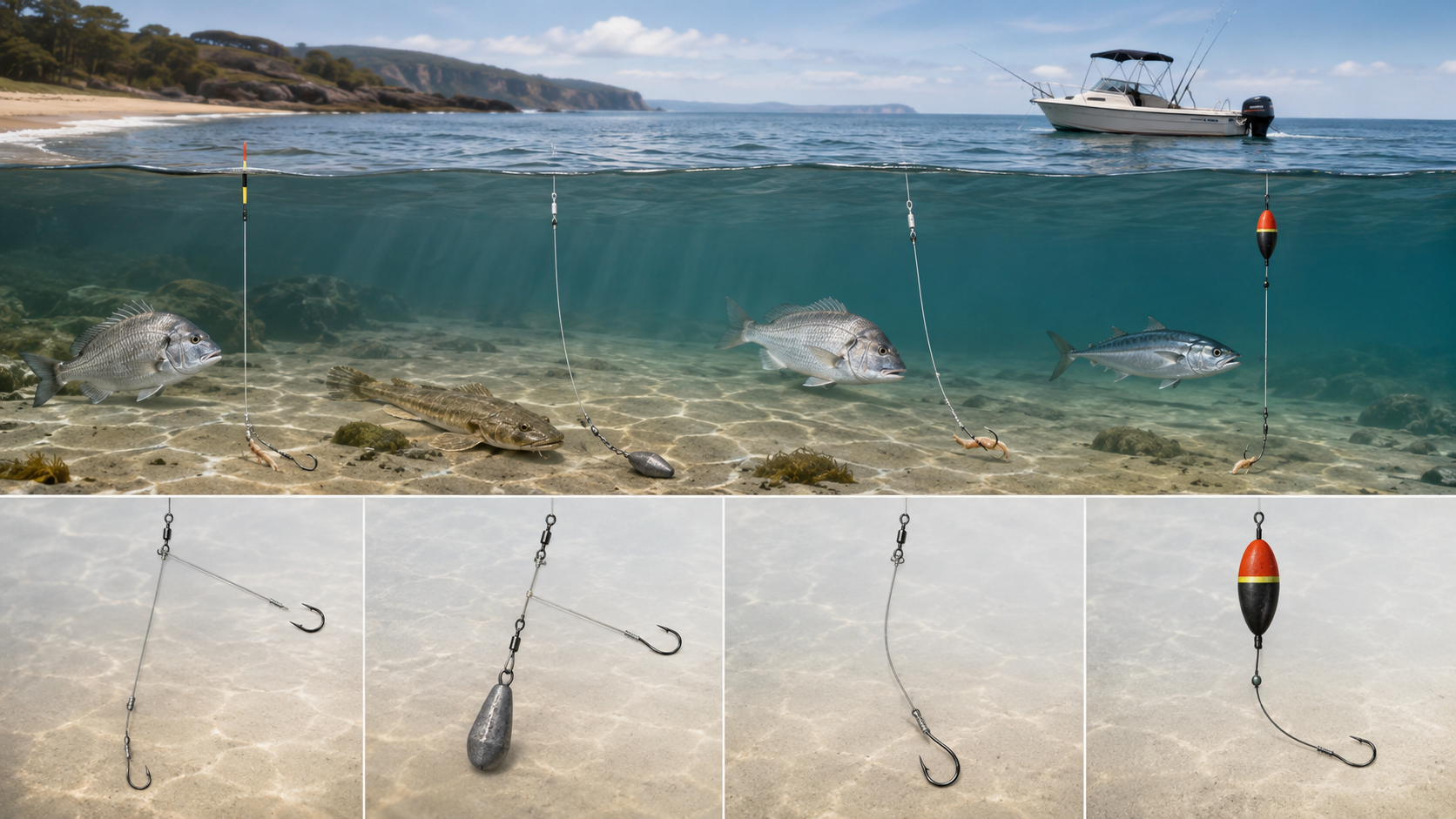
Choosing the right terminal setup is as important as the rod and reel in your kit. Around Sydney and along the rest of the coast, current, depth, bait presentation and target species all change how a rig behaves. A paternoster that pins bait hard on the sand for flathead can feel lifeless in a quiet estuary where a lightly weighted running sinker lets bream mouth the bait without feeling resistance. This guide breaks down four core recreational rigs used by Australian anglers—paternoster, running sinker, snelled and float—so you can match the setup to the session, not the other way around.
Aussie Tackle Box focuses on practical tackle decisions for rods, reels, lines, soft plastics, hardbodies and terminal gear. Use the notes below as a field checklist, then fine-tune hook size, leader length and sinker mass to local conditions, tide and the species you are chasing—bream, flathead, mulloway, tailor, kingfish, mangrove jack, barra, Murray cod or Spanish mackerel depending on region and season.
Paternoster rig: fixed bait on the bottom
A paternoster keeps one or more dropper hooks above a fixed sinker on the end of the main line or leader. The sinker hits first, the hooks stand off on short snoods, and baits stay in the strike zone even when the boat or shore position drifts slightly. It is a staple for beach gutters, rock ledges and boat work over sand or broken ground when you want bait hard on the bottom.
When to fish a paternoster
- Surf and beach sessions for flathead, tailor and school mulloway when swell and longshore current would roll a free-running sinker out of the gutter.
- Boat or kayak drifts over sand flats where you need consistent contact and a clear bite indication through the rod tip.
- Deeper harbour or coastal drops when you must hold bottom without constant reeling to reset a sliding weight.
Build it with a strong barrel or crane swivel above the droppers, short snoods of around 10–20 cm so hooks do not tangle, and a sinker heavy enough for the run—often 28–85 g in moderate surf, more in heavy wash. Circle or suicide hooks suit whole baits and strip baits; keep points sharp and snoods slightly lighter than the main leader so a snag breaks the dropper first. In southern waters through autumn and winter, the same layout works well when tailor and mulloway push closer inshore.
Running sinker rig: natural bait movement
A running (or sliding) sinker rig lets the weight move freely on the main line above a swivel, with a leader and hook below. When a fish picks up the bait, line can pull through the sinker so the fish feels less dead weight. That free movement is why many estuary and bay anglers default to it for wary bream, whiting-style presentations and shy mulloway in calm water.
Best uses for a running sinker
- Estuaries, lakes and quiet harbour edges where bream and flathead inspect bait before committing.
- Light berley trails from a boat or kayak when you want bait to sit naturally on or just above the bottom.
- Situations with light to moderate current where a ball, bean or bomb sinker of 7–28 g is enough to hold.
Thread the sinker on the main line, tie on a quality swivel, then add a fluorocarbon or monofilament leader matched to structure—longer and lighter over clean sand, shorter and tougher near oysters or rock. A small plastic bead between sinker and swivel reduces knot wear. For flathead on the sand flats in spring and summer, a lightly weighted running rig with a long leader and a whole baitfish or prawn presentation stays in the zone without dragging unnaturally. Step sinker mass up only as far as needed to hold bottom; excess weight dulls bite feel and increases snags.
Snelled rigs: secure hooks for bigger baits
Snelling locks the line or leader to the hook eye and shank so pull is straight along the hook rather than levering against a simple knot at the eye. Twin-hook snelled traces are common for larger baits aimed at mulloway, kingfish, Spanish mackerel and solid tailor, and the same idea helps when you need two points of contact in a long baitfish or fillet.
When a snell earns its place
- Live or dead baitfish where a single hook can tear free on the strike or during a long fight.
- Heavy rock, reef or wash fishing where hook-sets must stay aligned under sudden load.
- Ganged or paired hook layouts for tailor and mackerel-style strip or whole-bait presentations (check local rules on ganged hooks and berley).
Tie consistent snells with even wraps, wet the line before final pull-down, and match hook size to bait bulk—not ego. A well-snelled single or double hook trace pairs cleanly with either a paternoster-style fixed sinker or a running sinker above the swivel. For kingfish around headlands and harbours, keep leaders abrasion-resistant and inspect the snell after every fish or snag. Inland, similar snelled bait traces can present large offerings for Murray cod around timber, always with care for catch-and-release handling and local closed seasons.
Float rigs: depth control and surface-zone bites
Float rigs suspend bait or light jigs at a set depth using a bobby cork, bubble float, quill or slim pencil float. They shine when fish are mid-water or feeding under a surface berley trail, when bottom snags are severe, or when you need a visual bite indicator at range. In Australian recreational fishing they are classic for whiting-style and bream work in shallows, for suspended baits around structure, and for keeping live baits ticking above weed.
Situations that favour a float
- Shallow flats and lake edges where a sinker would bury in weed or soft mud.
- Berley trails for bream and other estuary species holding off the bottom.
- Live-bait presentations for pelagics or harbour predators when you must control depth precisely above reef or rubble.
Set the stop knot or float stopper so bait hangs at the depth fish are marking or feeding. Use enough weight under the float—small ball sinkers or split shot—to cock it upright without dragging the bait down unnaturally. Leaders should be fine enough for a natural sink of the bait yet tough enough for oysters and rock. Through warmer months when surface activity lifts in the mornings and evenings, a float keeps prawns, worms or small baitfish in the strike window longer than a pure bottom rig.
Matching rig to species and season
Flathead on sand respond well to paternoster and light running-sinker layouts with bait or soft plastics worked nearby. Bream in clear estuary water often prefer a running sinker or float so they can mouth bait without bumping a heavy fixed weight. Mulloway in gutters and holes may take a solid paternoster with fresh bait after dark, while a running rig can outperform it in still deep holes. Tailor smash fast-moving baits and metals, but bottom-fished strips on snelled or paternoster traces still score along beaches. Kingfish and Spanish mackerel lean toward live-bait traces and robust leaders; barra and mangrove jack in the north demand abrasion-proof leaders around timber and rock, often with simpler single-hook rigs. Murray cod bait sessions inland favour sturdy snelled hooks and controlled sinker mass around snags.
Southern hemisphere seasons shift the mix: spring and summer lift estuary and flats activity; autumn can bring stronger tailor and mulloway pulses along exposed coasts; winter concentrates effort around deeper holes, harbours and timed tides. Always confirm bag limits, size limits, closed waters and gear rules for your state before you fish—regulations differ and change.
Sinkers, leaders and terminal tackle basics
Carry a small range of sinker shapes: ball and bean for general running rigs, bomb or snapper-style for holding in current, and lighter shot for float cocking. Weigh options in grams and test the lightest mass that holds. Leaders in monofilament or fluorocarbon from light estuary grades up to heavy abrasion-resistant lengths cover most Sydney harbour and coastal jobs; step up for rocks, oysters and toothy species. Swivels should be rated above your line class, and hooks should match bait size—too large and small bream cannot take the offering cleanly; too small and a solid mulloway or kingfish may straighten or tear free.
Store pre-tied traces on a foam or plastic winders in your tackle box so changing from paternoster to running sinker on a turning tide takes minutes. Rinse salt off swivels, hooks and float stops after the session and replace rusty hooks before the next trip. Kayak and small-craft anglers benefit from a single waterproof tray with one of each rig pre-built, plus spare sinkers in marked compartments.
Safety, fisheries rules and practical loadouts
Rig choice does not replace basic safety: lifejackets on small craft, sun protection, stable footing on rocks, and sober judgement around wash zones. Tell someone your plan and expected return time. Keep a simple first-aid kit and pliers for hook removal in the same bag as your terminal tackle.
State and territory fisheries rules govern gear, bait, protected species and no-take areas. Check official sources for the waters you fish rather than relying on memory or hearsay. A sensible shore loadout for Sydney might include a light running-sinker kit for harbour edges, a paternoster spool for beach gutters, one float setup for shallow berley work, and a couple of snelled heavier traces if larger baits are on the menu. Boat and kayak kits can add slightly heavier sinkers and longer leaders without cluttering the deck.
If you are still building the rest of your kit—rods, reels, braid and leader pairings—browse the wider guides on Aussie Tackle Box and match line class to the rigs above so drag, rod tip and terminal strength work as one system. For local tips or stock questions, contact [email protected] or call +61275903570 during Mon–Fri: 09:00 – 17:00 (AEST).
Quick decision checklist
- Need bait locked on the bottom in current or surf? Start with a paternoster.
- Fishing shy estuary fish on clean ground? Use a running sinker and the lightest weight that holds.
- Presenting long or lively baits to larger predators? Snell single or twin hooks and protect the leader.
- Fish holding mid-water or snags ruling out bottom weights? Rig a float and set depth deliberately.
- Reassess after tide, wind or berley changes—swap rigs rather than forcing a poor presentation.
Master these four layouts and you can cover most recreational bait scenarios across Australian estuaries, beaches and nearshore grounds. Keep notes on what worked at each venue, refine sinker mass in grams and leader lengths in centimetres, and let the fish—and the conditions—tell you when to change.

Navigation
See also
FAQ