Post-Session Saltwater Wash-Down Routine That Won't Wreck Your Seals
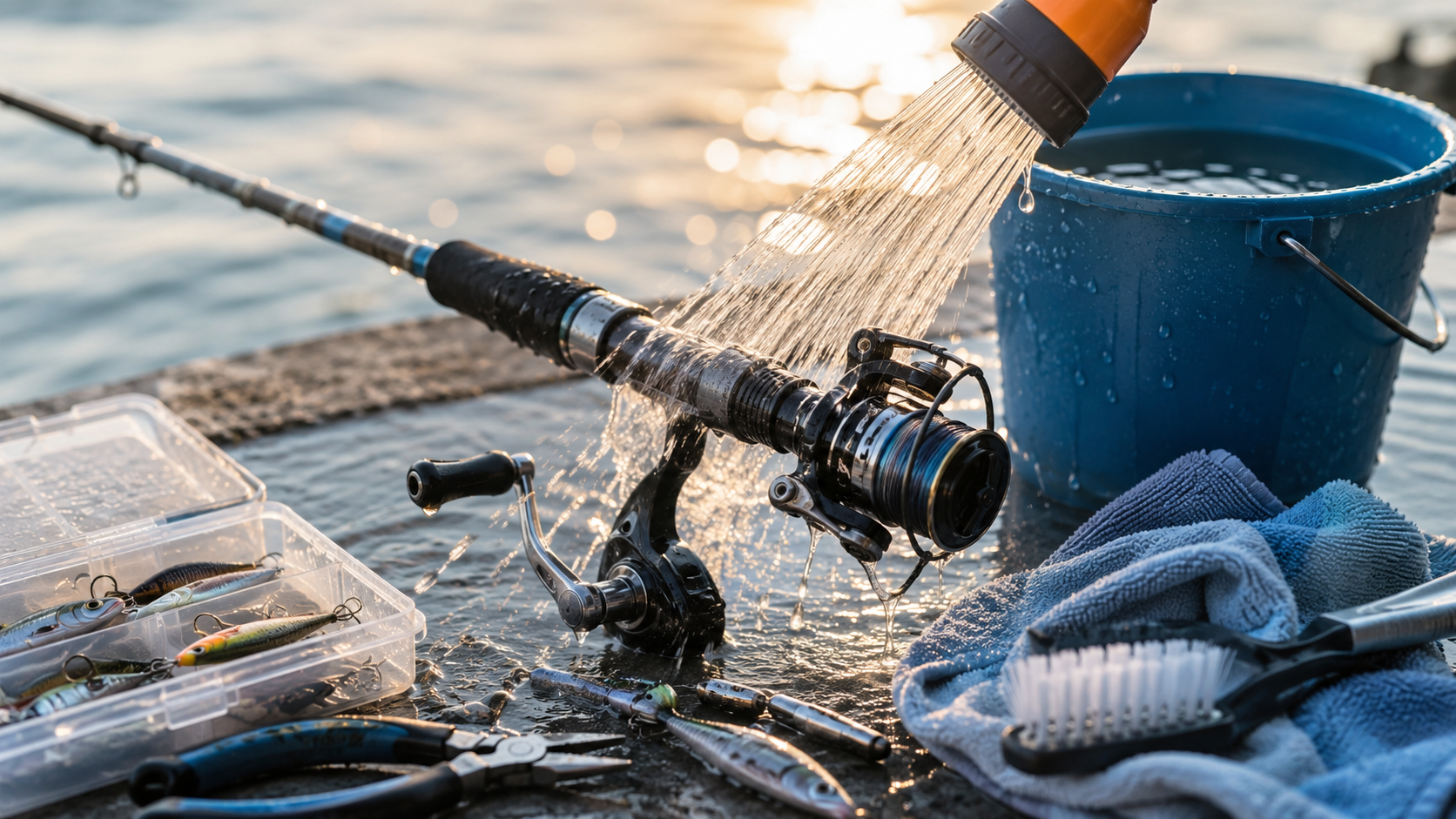
Why a gentle rinse beats a hard hose blast
After a session around Sydney—harbour walls, estuary flats or a short run outside—the salt, fine sand and fish slime on your kit will keep working long after you pack up. The goal is simple: remove that residue without driving freshwater under reel seals, into drag stacks or along rod blank joins. A controlled wash-down protects the same gear you rely on for bream, flathead, tailor, mulloway and kingfish, and it takes less time than fixing a seized roller or gritty drag later.
Think of seals as barriers that manage pressure, not as waterproof walls you can pressure-wash. High-pressure jets from a marina hose or home unit can push water past lips and O-rings. Low flow, cool water, short contact time and smart angles keep moisture on the outside where it belongs. Aussie Tackle Box treats wash-down as routine maintenance, not a deep strip-down after every trip.
Set up your wash station before you unclip the first lure
Work in shade if you can. Hot sun on wet metal and graphite speeds drying in some spots and leaves salt rings in others. You need:
- A hose with a trigger nozzle set to a soft shower or the lightest spray pattern—not a jet
- Two clean buckets (about 10–15 L each): one with fresh water, one empty for parts and leaders
- A soft cloth, a non-abrasive sponge and a soft toothbrush reserved for tackle only
- Mild, pH-neutral soap diluted weakly if slime is heavy; plain water is enough for most trips
- Reel covers or zip bags, a towel for grips, and a shaded rack or rod holders for drying
If you fished kayak or small-craft, rinse the craft’s rod holders, anchor well area and scupper zones first so grit is not transferred back onto rods while you work. Keep electrics covered until the wet work is finished.
Rods: blank, guides and joins without trapping water
Hold the rod tip-down at a gentle angle. Start at the tip guide and move toward the butt so water runs off the blank rather than into the reel seat threads. Use a soft spray only. Wipe each guide frame and insert with the damp cloth; spin the tip lightly so droplets leave the ring instead of sitting in the frame. Pay attention to the stripper guide and any wrapped feet where salt likes to crust.
For two-piece rods, separate sections only if the ferrule design is meant to come apart wet, then wipe the male and female faces dry before they sit. Do not soak cork or composite grips—wipe them, then towel dry. If you are comparing actions or builds for future upgrades, pair this habit with sound spec reading on our fishing rods selection, specs and comparisons guide so care and purchase decisions stay aligned.
Check for sand in the reel seat hood and locking rings. A soft brush and a light rinse clear grit that would otherwise grind the thread. Finish with a dry cloth along the blank so water is not left sitting against binder wraps.
Reels: angles, drag caps and the “no dunk” rule
Leave the reel on the rod if the seat is secure; it gives you a handle and keeps the foot from sitting in a puddle. Point the reel so the spool face and drag star or dial are not aimed straight up into the spray. A light mist across the frame, side plates and bail arm is enough. Rotate the handle slowly while rinsing so the line roller turns and sheds salt, then wipe the roller path.
- Do not submerge spinning or overhead reels in a bucket
- Do not spray directly into the anti-reverse gap, drag knob seams or level-wind windows
- Do not click the drag wide open under running water; keep your fishing setting or back it off only slightly after you are dry
- Pop the side plate only when you plan a proper service—not as part of a beachside rinse
If you cast soft plastics for flathead or worked metals for tailor, peel off weed and scale first with a cloth so you are not grinding protein into the bail hinge. A drop of manufacturer-approved oil on the line roller after the reel is fully dry is useful; oil on a wet roller only traps brine. Spool faces can be wiped with a barely damp cloth, then dried—avoid soaking braid still packed tight with salt.
Lines, leaders and terminal tackle
Run several metres of line through a wet cloth held lightly in your fingers, then through a dry cloth. That pulls abrasive salt crystals off the surface without a pressure wash aimed at the spool. Fluorocarbon and mono leaders that saw toothy tailor or mangrove jack sessions can be inspected for nicks while damp; replace anything suspect before the next trip rather than “cleaning” damaged leader.
Terminal tackle gets a separate shallow rinse in the freshwater bucket:
- Unclip lures and soft-plastic jigs; remove weed and scale
- Swish hooks, rings and small sinkers briefly—do not leave them soaking for ages
- Lay hardware on a towel in the shade; open split rings gently if grit is trapped
- Dry thoroughly before boxes close so trays do not sweat overnight
Corrosion on cheap rings spreads to better hooks in a closed box. Cull rusty pieces instead of mixing them back into clean stock. For estuary sessions chasing bream and flathead, small ball-bearing swivels especially deserve a wipe and full dry.
Soft plastics, hard-bodies and scent residue
Soft plastics pick up sand in the slits and hook slots. A quick freshwater dip and hand squeeze removes grit that would dull hooks in the bag. Do not boil or heat plastics to “clean” them. Air-dry before they go back into sealed bags so you are not farming mildew. Hard-bodies and metals can take a soft cloth and light rinse on bibs, tow points and trebles; dry trebles fully and consider a touch of corrosion inhibitor on the points only after moisture is gone—never soak painted bodies in solvent-heavy cleaners as part of a routine wash.
Kayak and small-craft touch points that dirty your gear again
Even a perfect rod rinse fails if holders are full of dried salt. Flush tube-style holders from the top with low pressure and let them drain. Wipe rail mounts, anchor trolley cleats you touched with sandy hands, and any crate or crate-track where reels rested. Marine electronics stays capped and dry during the wet stage; freshwater on a cloth for screens and housings only as the maker allows, with connections facing down and powered off.
Storage crates and tackle bags benefit from a wipe of the base and latch areas. Open zippers fully later at home so damp pockets can air. Aussie Tackle Box kits that live in a hot vehicle boot need extra drying time after summer sessions when humidity and heat combine.
Drying, light lube and what to leave until a proper service
Stand rods vertically or on a rack with reels shaded and spools not hard against a wall. Towel external water within a few minutes, then let residual moisture flash off in airflow—not in a sealed tube. Once dry to the touch:
- Wipe reel feet and seats so they do not sweat against each other in the rack
- Apply only the light lubricants your reel maker recommends, and only on external points meant for user oil
- Avoid flooding bushings “for good measure”; excess oil holds grit
- Note any rough handle feel, sticky bail or uneven drag for a bench service—do not chase it with deeper spraying at home
Autumn and winter harbour trips still leave salt; colder air just slows drying, so give gear more rack time before lids close. Spring and summer sessions add sweat and sunscreen to the mix—wipe grips so those residues do not sit under your hand the next dawn start.
A simple post-session order you can repeat every trip
- Safe unhook and pack fish gear; keep knives and spikes separate from reels
- Low-pressure rinse of craft holders and high-touch surfaces
- Rods tip-down, guides wiped, seats checked for grit
- Reels misted at safe angles, rollers turned, frames wiped—no dunking
- Line cloth-pull; leaders inspected
- Terminals swished briefly and towel dried open
- Full air dry in shade; light external lube only when dry
- Boxes closed only after hardware is moisture-free; note anything for workshop service
This sequence keeps seals happier than a long, hard wash and still strips the salt that shortens guide inserts, braid life and drag smoothness. Species loadouts change—barra trips up north, murray cod in freshwater, spanish mackerel on heavier coastal gear—but the same seal-safe habits travel with you.
Fisheries rules, safety and local common sense
Wash-down water and slime should go to garden or turf where local rules allow, not straight into stormwater if your council asks otherwise. Mind sharps while wiping trebles. If you trailered, rinse hitch, light plugs (once disconnected and dry-facing) and winch areas so the next launch does not start with seized pins. For bag limits, size rules and seasonal closures, always check the current state fisheries sources before you fish; gear care does not replace compliance.
When you need a second pair of eyes on a gritty drag or a rod that still feels rough after a correct rinse, contact Aussie Tackle Box on +61275903570 or [email protected] during Mon–Fri: 09:00 – 17:00 (AEST). We are geared toward practical recreational setups for Sydney anglers who want tackle that keeps working season after season—without drowning the seals that protect it.
Stick to cool water, soft spray, tip-down rods, angled reels and patient drying. That is the post-session saltwater wash-down routine that cleans your kit and still respects the seals, rollers and seats you paid for.

Navigation
See also
FAQ