Rigging Weedless for Snags, Weed Beds and Mangroves
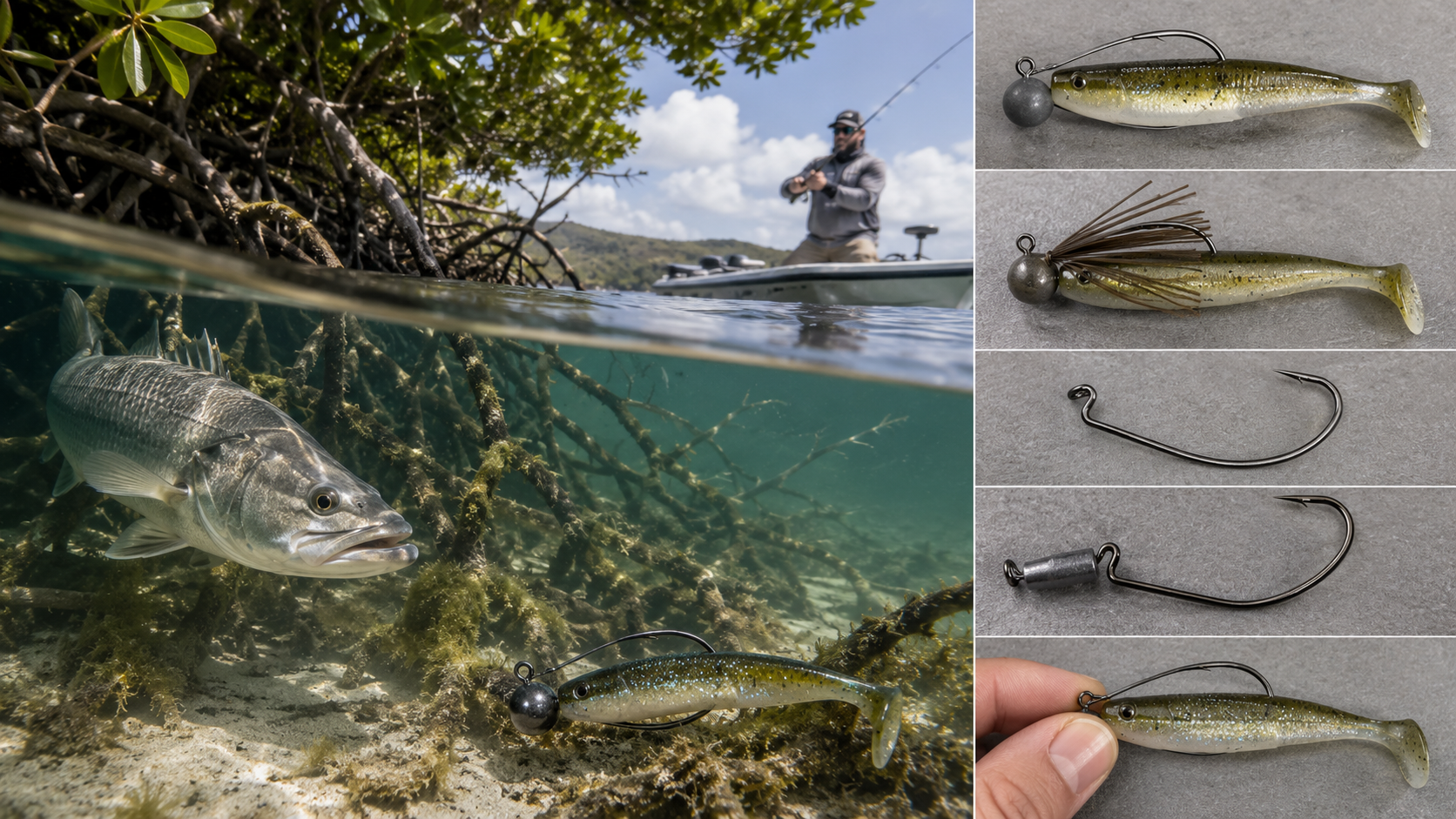
Why weedless rigs matter in Australian snags
Around Sydney and along the wider east coast, the best bream, flathead, mangrove jack and mulloway often sit tight to timber, rock bars, weed edges and mangrove roots. A conventional exposed jighead hangs up on the first cast. Weedless soft-plastic rigging keeps the hook point shielded until a fish compresses the bait, so you can work structure without constant snags. On Aussie Tackle Box we treat weedless setups as everyday tools for recreational anglers, not specialist tricks.
Southern hemisphere seasons shape when and where you need this most. In spring and summer, weed beds thicken in lakes and estuaries and mangrove jack push hard into flooded roots. Autumn still offers strong structure fishing for mulloway and kingfish around rock and pylons, while winter clears some weed but leaves snaggy timber and oyster racks that punish open hooks. Match your rig weight, plastic length and hook gauge to the cover, current and target species rather than forcing one setup everywhere.
Core weedless options for soft plastics
Three approaches cover most Australian estuary and inshore work:
- Texas-style worm hook — offset shank, plastic threaded so the point sits flush in the back of the bait. Ideal for stickbaits, creature baits and larger plastics around mangroves and timber.
- Weedless jighead — moulded weight with a wire or plastic keeper and a point that nests against or just under the plastic. Excellent for paddle-tails and curl-tails when you still want a controlled sink rate.
- EWG (extra wide gap) with bullet or tungsten weight — free weight ahead of the hook for deeper holes and faster drops beside snags without burying the point in wood.
For bream and small flathead in light weed, favour finer wire and plastics in the 60–90 mm range. For mangrove jack, barra in northern trips, murray cod in inland timber, or bigger mulloway along rock walls, step up to heavier gauge EWG hooks and 100–150 mm plastics so the gape still clears a thick body when the fish bites.
Step-by-step: Texas weedless on a soft plastic
- Choose an offset worm hook sized so the bend matches the plastic’s girth — typically 1/0 to 3/0 for estuary work, larger for jack and cod-style baits.
- Insert the point into the nose of the plastic about 3–5 mm, then exit the underside so the bait hangs straight.
- Slide the plastic up to the hook eye, rotate the hook, and re-insert the point into the body so it lies just under or flush with the dorsal surface — not buried deep, or hook-up rates fall.
- Optional: add a small cone or cylindrical weight on the line ahead of the hook for deeper snags, or a screw-lock keeper if your hook has one.
- Check alignment: the plastic should sit straight with no banana curve. A crooked bait spins and fouls weed faster.
For weedless jigheads, thread the plastic onto the keeper until the nose sits tight to the head, then nick the point into a shallow skin pocket on the back. The point should be shielded but ready to pull free on a firm strike.
Weights, lines and leaders for snaggy water
Use metric sink rates you can repeat. In shallow weed flats (0.5–1.5 m), 1–3 g weedless jigheads or unweighted Texas rigs let plastics glide. Along mangrove edges and deeper timber (2–5 m), 5–10 g heads or tungsten bullets help hold bottom in current without needing a huge profile. Heavier 10–21 g setups suit deeper rock and stronger tidal runs when chasing mulloway or kingfish-style structure bites.
Braid mainline in the 4–10 kg class keeps contact sharp; pair it with a fluorocarbon or quality mono leader suited to abrasion. Around oyster and mangrove roots, a slightly longer leader gives a buffer when the plastic brushes shell. Always check local fisheries rules for the waters you fish — bag and size limits, closed areas and gear restrictions vary by state and change with seasons. Aussie Tackle Box content is general guidance only; confirm current rules before you launch.
Species-focused notes
Bream and flathead
Light weedless curl-tails and prawn profiles worked along weed edges and drain mouths produce well. Short hops and long pauses beat constant winding. Flathead often sit on the sand just outside the weed, so bump the plastic out of cover then let it settle.
Mangrove jack, barra and mulloway
Jack and barra crush plastics tight to shade. Use stout leaders, strong EWG hooks and plastics that will not tear off the keeper on the first hit. Mulloway along deep snags respond to slower rolls and longer pauses; keep the point truly weedless so you can live in the strike zone instead of fishing open water only.
Tailor, kingfish and spanish mackerel
These species are less about buried timber and more about bait schools and headlands, but weedless or lightly protected points still help when casting around kelp fringes, bomboras and fouled washes. Faster retrieves and denser plastics suit tailor and mackerel; kingfish around harbours may take larger paddle-tails worked beside pylons — shield the point enough to survive the structure, not so much that hook-sets fail.
Murray cod and inland timber
Inland snags demand heavy gauge hooks, durable plastics and confident strikes. Weedless rigging lets you pitch into tinder-dry timber shadows where open jigheads would lock solid on the first cast.
Kayak and small-craft tips near structure
From a kayak or tinny, position so wind and tide drift you along the edge rather than straight into it. Keep a short, controlled cast length so you can lift the plastic up and over roots. Stow pliers and line cutters where you can reach them with one hand. A simple crate or tackle storage system with pre-rigged weedless rods saves time when the bite is short. For electronics, a basic sounder helps mark depth changes beside mangrove lines and weed edges; learn your machine’s shallow-water settings so you are not guessing sink times.
Gear care after snaggy sessions
Rinse reels and guides with fresh water after salt sessions, dry soft plastics so keepers do not corrode, and inspect hook points for rolls after rock or oyster contact. Replace nicked leaders before the next trip. Store pre-rigged plastics so points are not pressing hard into plastic for weeks, or you will return to warped baits and covered points that never expose on the strike.
Safety and responsible access
Wear stable footwear on oyster and rock, watch tide height in mangrove creeks, and tell someone your plan when fishing remote banks. Give nesting birds and other water users space. Take rubbish home, including offcuts of plastic and old hooks. If you need local shop hours or a quick steer on stocked terminal tackle in Sydney, contact Aussie Tackle Box on +61275903570 or [email protected] during Mon–Fri: 09:00 – 17:00 (AEST).
Master a straight Texas rig and one reliable weedless jighead size first. Once those feel natural, add weight variations and plastic profiles for bream flats, jack mangroves and deeper mulloway timber. Weedless skill is less about fancy tackle and more about point placement, straight baits and fishing where open hooks cannot stay.

Navigation
See also
FAQ