Rock Fishing Safety Gear and Lifejacket Rules in NSW
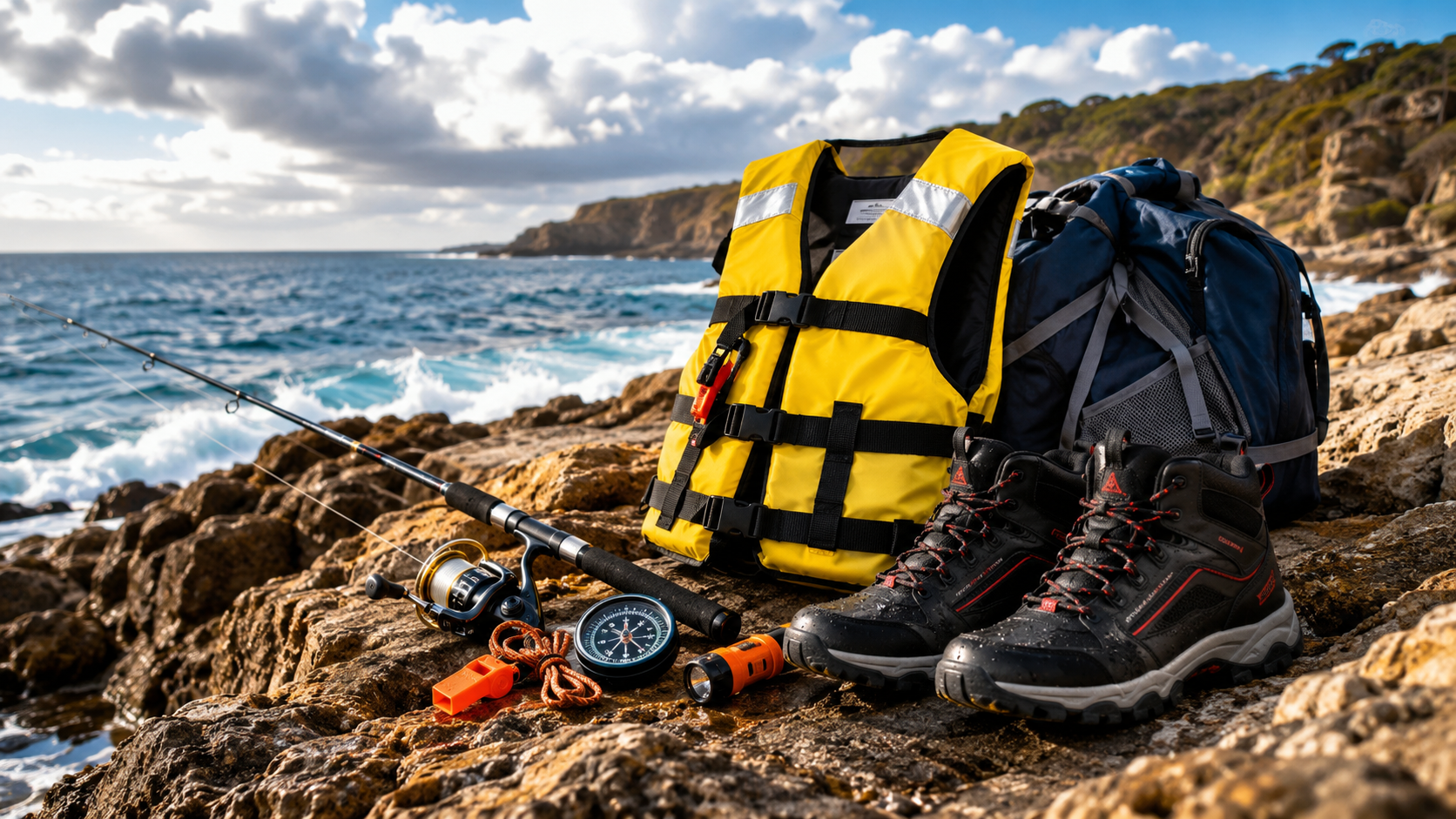
Why rock platforms demand a different kit
Rock fishing around Sydney can produce tailor, bream, flathead, kingfish and the odd mulloway, but swell, slippery basalt and sudden wash-ups make it one of the higher-risk ways to wet a line. Aussie Tackle Box puts safety gear ahead of the latest lure colour: the right lifejacket, footwear and simple planning habits matter more than another stickbait. This guide focuses on recreational anglers fishing ocean rocks and headlands in New South Wales, with practical loadouts you can check before you leave home.
Lifejacket rules on NSW rock platforms
In NSW, lifejackets are required when rock fishing at many declared high-risk locations. Rules can change and lists of declared spots are updated, so always confirm the current requirements with official NSW government fisheries and safety sources before you go. As a working habit, treat a correctly fitted lifejacket as non-negotiable whenever you step onto wet rock, whether or not a sign is in view.
What “suitable” usually means in practice
- A lifejacket that fits snugly over your fishing layers and stays closed while you cast and retrieve.
- Appropriate buoyancy for an adult angler wearing waders or heavy spray gear where relevant.
- A jacket you can swim in, not a decorative vest left in the car.
- Regular checks of zips, buckles, straps and any inflation status indicators on inflatable styles.
If you use an inflatable lifejacket, know how it activates, carry any required re-arming knowledge from the manufacturer, and never assume a damp or expired cylinder will save you. Foam-only jackets trade bulk for simplicity; many rock anglers prefer them because there is less to fail when you are hit by wash.
Core safety gear beyond the jacket
Pair the lifejacket with kit that keeps you upright and visible, and that helps mates recover you if things go wrong.
- Non-slip footwear — felt, sticky rubber or purpose rock boots with grip suited to wet stone; avoid smooth-soled street shoes.
- Light layers you can swim in — skip heavy cotton hoodies that waterlog; favour quick-dry tops and a compact spray shell.
- Whistle and simple light — clipped where you can reach them with cold hands.
- Throw bag or short floating rope in the group kit if you fish with others, used only with training and common sense.
- Dry bag for phone and keys — so you can still call for help after a dunking.
- Basic first-aid items for cuts from oysters and barnacles, plus sun protection for long summer sessions.
Reading conditions before you walk the ledge
Southern hemisphere seasons shape risk as much as gear. Spring and autumn can bring clean water and active tailor or kingfish, yet large groundswell still rolls through NSW coasts. Summer northerlies and humid days hide fatigue and dehydration; winter westerlies can look calm in the bay while ocean rock faces remain unsafe.
- Check swell height, period, wind direction and tide against a forecast you trust, then add a personal buffer — if it looks marginal, do not go.
- Watch a full set from high ground before stepping down. Long-period swell can look gentle until a larger set arrives.
- Plan exit routes that work when the ledge is wet and your hands are full of rod and gaff.
- Fish with a partner when you can, keep visual contact, and agree who carries the spare whistle and dry-bag phone.
Local knowledge helps, but it never overrides what the ocean is doing that morning. Headlands near Sydney can turn from fishable to dangerous within one tide cycle.
Fishing kit choices that support safety
Keep terminal tackle simple so you are not crouched and distracted when wash arrives. A single well-balanced outfit often beats a tangle of spare rods on a narrow shelf.
- Rods and reels — a sturdy spin or overhead outfit you can hold one-handed while you move; secure the reel drag before you climb.
- Lines — quality braid with a clear mono or fluoro leader suited to rocks; check for nicks after every snag on oyster fringe.
- Lures and baits — metals and soft plastics for tailor and kingfish, or simple bait rigs for bream and flathead in calmer corners; carry only what fits a small hip pouch.
- Landing tools — a short gaff or grip used with extreme caution; never plant your feet on the wash zone to chase a fish.
Store spare sinkers and hooks in sealed boxes so you are not picking hardware off wet rock. A compact backpack that stays clipped shut reduces gear loss if you have to move fast.
Group habits, kids and less-experienced mates
If you introduce someone new to rock ledges, choose calm days, lower ledges with clear escapes, and make lifejackets and footwear mandatory for the whole group. Keep sessions shorter than a boat trip; fatigue on uneven stone causes slips. Share the plan with someone on shore, including the car park name and expected return time during Mon–Fri: 09:00 – 17:00 (AEST) or whenever you usually check in.
Never turn a rock session into a swim test. If a lure is snagged deep in the wash, break it off. Hooked fish are not worth a step closer to green water.
Fisheries rules, respect and conservation gear notes
Carry your fishing licence arrangements as required for NSW recreational fishing, measure fish accurately in centimetres, and keep only what you will use within bag and size limits. Use environmentally safer sinkers and dispose of mono offcuts on shore. Rock platforms are shared with other anglers and wildlife; pack out bait bags, soft-plastic wrappers and drink bottles.
For species such as mulloway, tailor and kingfish, solid fish-handling tools (wet hands, appropriate grips, quick unhooking) reduce time spent off balance at the waterline. If conditions rise while you are cleaning a catch, leave — the next feed can wait.
Pre-trip checklist for NSW ocean rocks
- Lifejacket fitted and fastened before you leave the car park.
- Grip footwear, whistle, light, dry-bag communications, water and sun protection.
- Swell, wind, tide and daylight checked; backup venue if the primary ledge is wrong.
- Simple rod, sound line, limited lure or bait kit, measured esky space for legal keepers only.
- Partner plan and shore contact noted; no solo heroics on exposed washes.
Questions about balancing a Sydney rock kit with estuary loadouts for barra trips interstate or murray cod gear inland are common at Aussie Tackle Box. For local advice on tackle selection that still puts safety first, contact [email protected] or call +61275903570 during Mon–Fri: 09:00 – 17:00 (AEST). Build the habit that the best session is the one where everyone walks back up the track with dry lungs and a story worth telling.

Navigation
See also
FAQ