Rust Prevention in Tackle Trays: Silica, Inhibitors and Drying Routines
Why tackle trays rust so fast in Australian conditions
Salt spray, humid summers and damp boat carpet turn ordinary steel hooks and split rings into orange grit inside a few sessions. In Sydney, afternoon sea breezes push moisture into open trays on the console, and overnight dew finishes the job. Soft plastics bags trap condensation, and even stainless hardware can pit when left wet against aluminium tray walls. A short drying routine plus the right desiccants and inhibitors will keep bream, flathead, mulloway and kingfish kits ready without constant re-buys.
Aussie Tackle Box focuses on practical storage habits that work for shore, kayak and small-craft anglers—not lab theory. The steps below use metric sizes, everyday products you can buy locally, and seasonal timing for the southern hemisphere.
Empty, rinse and dry before anything else
Rust control starts the moment you leave the water, not weeks later when the tray lid sticks.
- Tip out loose sand, weed and broken soft plastics on the lawn or a mat—never into stormwater.
- If trays saw heavy spray, give metal bits a quick freshwater rinse in a bucket; avoid blasting sealed bearings on small reels stored in the same box.
- Shake trays dry, then stand them open on edge for airflow. Aim for at least 30–60 minutes in shade with a breeze, longer after night sessions.
- Wipe tray walls and dividers with a clean microfibre cloth. Residual film holds salt crystals that restart corrosion overnight.
- Only close lids when internal surfaces feel dry to the touch. Warm, closed plastic is a condensation chamber.
After winter southerlies or multi-day trips, repeat the wipe-down at home before the box goes back in the garage. Kayak anglers should pull trays from hatches the same evening—closed hatches stay damp long after you hose the hull.
Silica gel: sizes, placement and refresh cycles
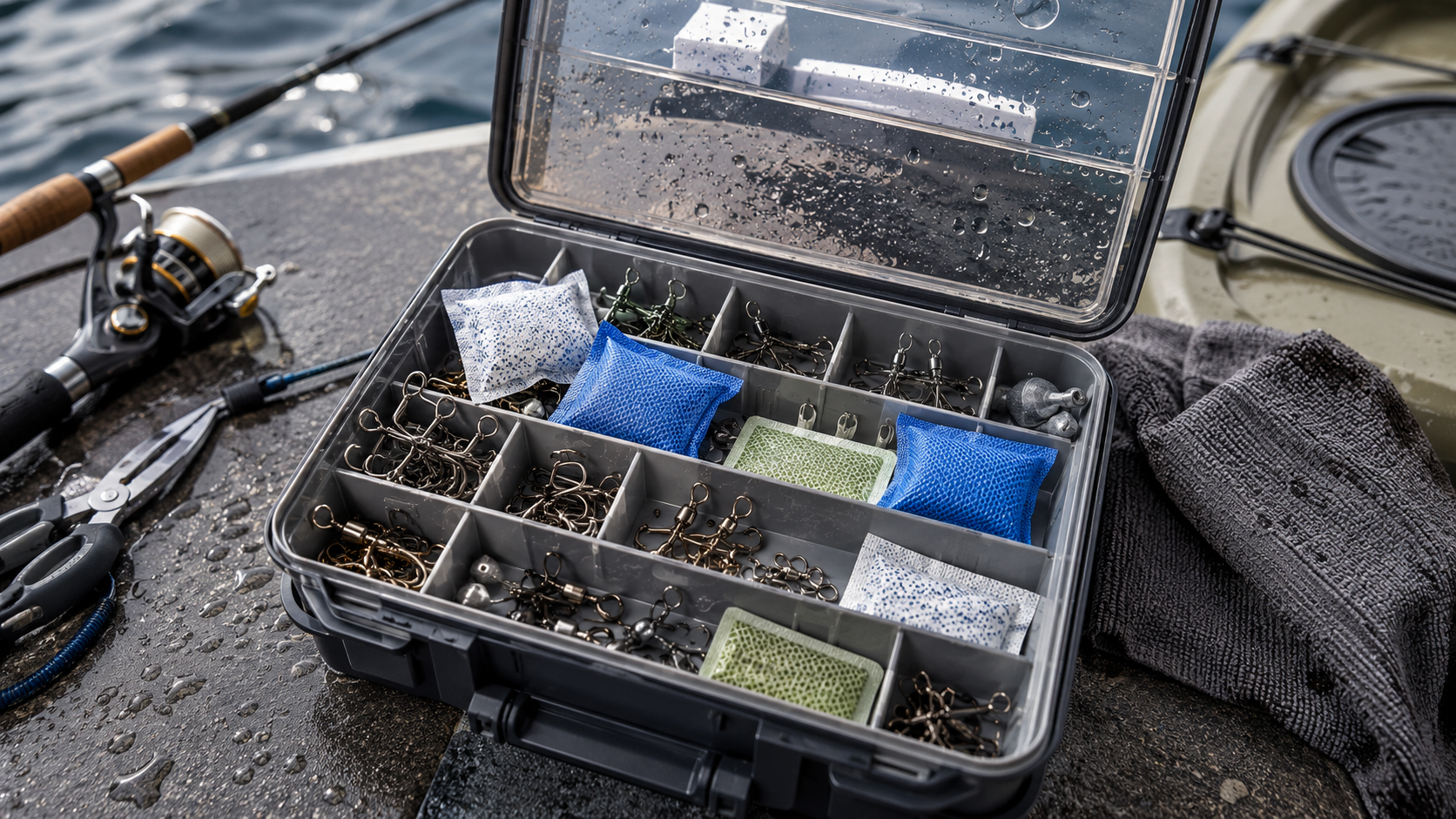
Silica gel packs pull free moisture from the air inside a closed tray. They do not remove salt already on metal, so always dry first.
- Pack size: for a typical 300–370 mm utility tray, two to four 5 g packs or one 10–20 g pack is a sensible start. Larger bulk boxes may need 50 g total distributed in corners.
- Placement: tuck packs in empty compartments or under a mesh pocket so they do not rub hooks bare. Keep them off open soft-plastic oils where possible.
- Colour-change beads: orange-to-green or blue-to-pink indicators show when the pack is spent. Refresh when colour shifts or every 4–8 weeks in peak humidity.
- Recharging: many bead packs can be oven-dried on a tray at low heat (follow the maker’s limit, often around 100–120 °C) until colour returns. Cool fully before reuse. Do not microwave unmarked packs.
- Summer load: December to February humidity around the harbour and rivers is brutal—double pack count or swap more often after barra or mangrove jack sessions up north and tailor runs locally.
Label a small zip bag “spent silica” so wet packs do not wander back into dry trays. Keep loose beads away from pets and kids; use sealed sachets in family vehicles.
Vapour corrosion inhibitors and tray-safe options
Vapour corrosion inhibitors (VCIs) release a protective vapour that settles on metal surfaces inside a closed space. Used with silica—not instead of drying—they slow flash rust on hooks, swivels, rings and jig heads.
- Choose emitter tabs, paper sheets or small capsules rated for tool or tackle storage. Cut sheets to fit compartment lids rather than stuffing whole cards against sharp points.
- One small emitter often covers a single closed tray roughly the size of a standard 3600-style box; follow the product coverage area in cm² or m³ if listed.
- Replace on the schedule printed on the pack—commonly every 6–12 months in sealed use, sooner if lids stay open on the deck all day.
- Avoid heavy oil sprays inside shared trays if you also store soft plastics or scented baits; residue can soften some plastics and attract grit. Light, purpose-made protectants on bulk hook packets stored separately are usually cleaner.
If you prefer simpler chemistry, a few grains of uncooked rice are a weak backup only—they hold far less moisture than silica and can dust compartments. Food-grade options are not a substitute for proper desiccants on serious kingfish or spanish mackerel trace kits.
Tray layout habits that cut corrosion
How you pack matters as much as what you pack.
- Store identical hook sizes in small clip-lid tubs inside the main tray so one wet session does not soak the whole row.
- Keep sacrificial steel items (cheap longshanks, spare trebles) separate from premium chemically sharpened singles used for bream and flathead.
- Park lead sinkers and mixed-metal snap swivels in their own cells; dissimilar metals plus salt water speed galvanic staining.
- Leave a little air gap under the lid—overfilled trays crush packs and block vapour flow.
- Rotate seasonal loads: summer surface and estuary kits versus cooler-month mulloway and murray cod gear, so idle steel is not sitting damp for months.
For kayak and small-craft fit-outs, mount tray bags above bilge line and crack zips during the drive home so heat can escape before you seal silica inside.
Weekly and seasonal drying routines
Build a short checklist you actually keep.
- After every salty trip: open trays, wipe, air-dry, confirm silica colour, close only when dry.
- Weekly in warm months: inspect hooks under bright light; discard pitted trebles that can fail on tailor or kingfish. Refresh any damp packs.
- Monthly: vacuum grit from hinge lines, check VCI life, wipe interior with a barely damp cloth then dry fully.
- Season change (around March and September): full unload, mild soapy wash of plastic shells if needed, complete dry in sun for a short period (avoid baking soft plastics), reload with fresh desiccant and updated species rigs.
Garage storage in Sydney still sees coastal humidity—do not assume “indoors” means dry. A shelf off the concrete floor and away from the laundry trough helps.
Safety, fisheries sense and kit longevity
Rusty hooks are a tetanus and failure risk; retire them rather than forcing a point. Dispose of sharps in a rigid container, not loose in household rubbish. When you refresh trays, double-check that terminal tackle still matches local size and configuration rules for the waters you fish—state fisheries pages are the authority, and bag limits do not care how pretty your box looks.
Pair clean storage with sound line and leader habits: damaged fluorocarbon and frayed braid fail before rust does. If you are building out broader storage systems, keep drying gear next to your main box so the routine is automatic after late runs home.
For more guidance on organising rods, reels and species-specific loads around Sydney, explore the rest of Aussie Tackle Box or contact the team on +61275903570 during Mon–Fri: 09:00 – 17:00 (AEST) ([email protected]). Small habits—silica in the right spots, inhibitors on a calendar, and lids left open until trays are truly dry—save more fishable gear than any single product alone.

Navigation
See also
FAQ