Sit-On-Top vs Pedal vs Powered Kayaks for Australian Fishing
Why kayak choice matters on Australian water
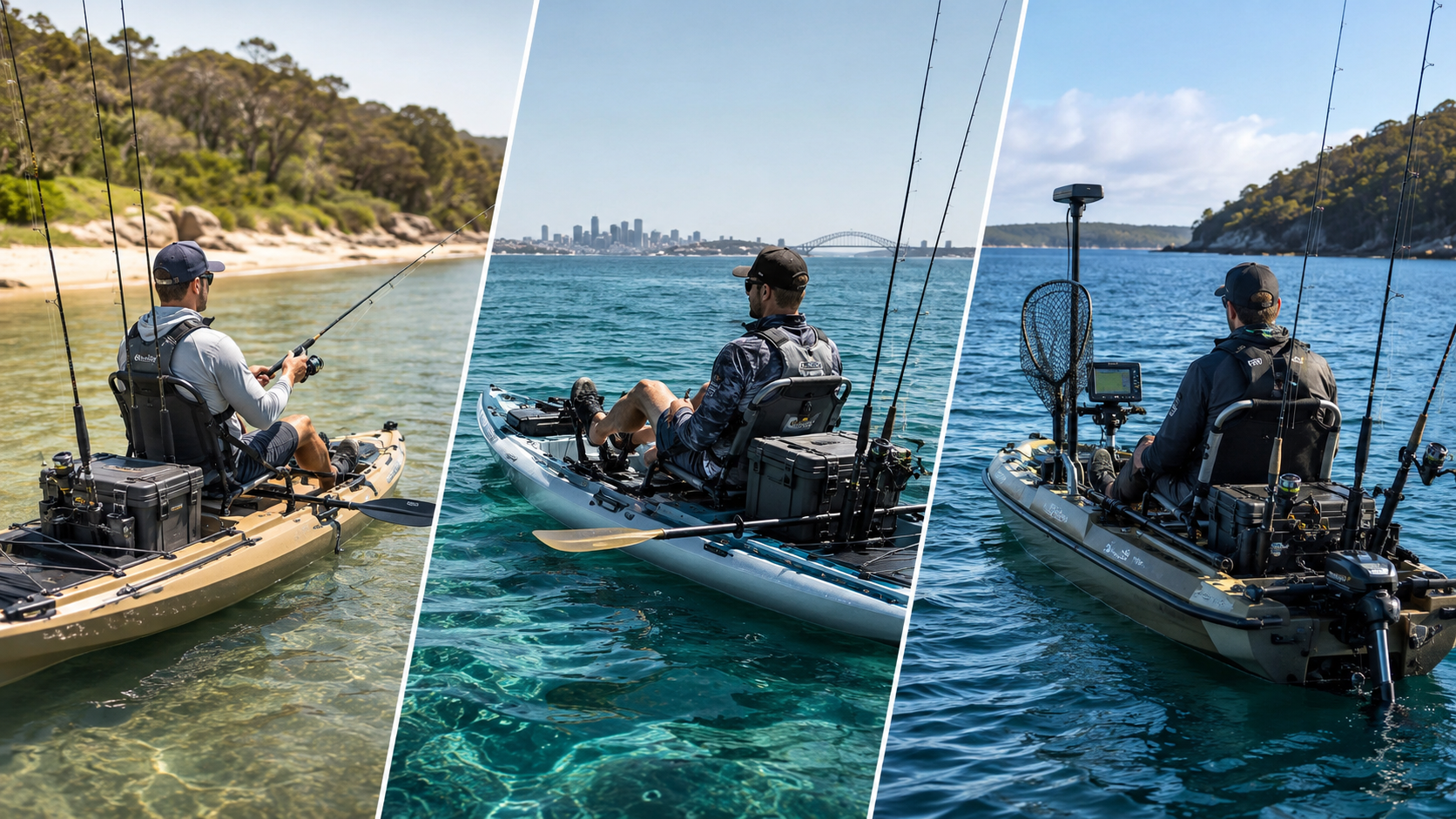
Choosing between a sit-on-top, a pedal drive and a powered fishing kayak shapes how you fish rivers, estuaries and coastal edges around Sydney and further afield. Hull stability, hands-free propulsion and range decide whether you can hold a soft plastic over a drop-off for flathead, work a headland for kingfish, or cover mangrove edges for barra and mangrove jack. Aussie Tackle Box looks at real on-water trade-offs for recreational anglers: storage, rod management, marine electronics, safety and state-aware loadouts—not hype.
Southern hemisphere seasons matter. Spring and summer bring warmer shallows and active tailor, bream and flathead; autumn can fire up mulloway and spanish mackerel runs in the right zones; winter often means deeper holding water and slower presentations for murray cod in inland systems or kingfish around structure. Your platform should match the season’s wind, chop and distance, not just the species on the hit list.
Sit-on-top kayaks: the versatile baseline
Open sit-on-top hulls remain the most common Aussie fishing platform. You sit above a scuppered deck, swing a leg over for a quick swim or beach landing, and mount rod holders, crate systems and a small sounder without complex sealing. For estuary work chasing bream, flathead and mulloway, a stable mid-length hull in the 3.5–4.2 m range is a practical starting point.
Strengths for recreational fishing
- Simple self-rescue and easy re-boarding after a swim or a hot day rinse.
- Open deck space for tackle crates, soft-plastic wallets and a landing net.
- Lower purchase and maintenance complexity than pedal or electric setups.
- Easy beach and ramp handling when you fish short sessions after work.
Limits to plan around
- Paddle propulsion keeps one blade in motion, so lure work is stop–start unless you drift or stake out.
- Wind and current push you off the mark faster than a pedal or motor craft of similar length.
- Long crossings and big bays demand fitness, timing with tides, and conservative weather calls.
Fit a comfortable high-back seat, flush or rail rod holders, and a rear crate with lash-down points. Keep terminal tackle in sealed boxes so spray and scupper splash do not rust hooks and swivels. A simple anchor trolley helps hold position on flathead drifts or when soaking a bait for mulloway in a channel.
Pedal kayaks: hands-free lure fishing
Pedal drives (prop or flippers) free both hands for casting soft plastics, vibes and hard-bodies while you hold boat position with your legs. That is a genuine edge when working edges for barra, twitching plastics for mangrove jack, or keeping a stickbait working for kingfish without dropping the rod every few seconds.
When pedal shines
- Hands-free lure retrieval and boat control in estuaries and lakes.
- Steady slow speeds for covering banks without constant paddle noise.
- Better station-keeping against light wind when you micro-adjust with the pedals and rudder.
Practical caveats
- Prop and fin drives need depth awareness; rock bars, oyster leases and weed beds can foul gear.
- Drive units add weight, cost and rinse-down steps after salt sessions.
- You still need a spare paddle lashed on deck for drive failure or skinny water.
Rinse the drive with fresh water after every salt trip, check fasteners, and carry basic spares recommended by the manufacturer. Mount the transducer where pedal turbulence is minimal, and route cables clear of moving parts. For storage, plan longer hull length and taller seat height when measuring roof racks, sheds and garage clearance in millimetres, not guesswork.
Powered kayaks: range, wind and heavier loads
Electric outboards and integrated motor systems extend range and punch into afternoon sea breezes that stall paddle craft. Power suits larger harbours, longer creek systems and days when you want to reach a tailor or spanish mackerel mark and still have energy to fish. Keep expectations recreational: these are small-craft setups, not offshore replacements for a trailer boat.
Fit-out priorities
- Battery placement on the centreline for balance, with secure mechanical restraint.
- Measured amp-hour planning for your typical kilometres of run plus a safety reserve.
- Dry storage for wiring, switches and connectors above bilge and scupper splash.
- Kill-switch discipline and prop awareness around lines, dogs on beaches and swimming kids.
Do not overload the hull beyond the maker’s stated capacity in kilograms. Add the combined mass of angler, batteries, motor, tackle, water and catch before you bolt on extra rail bling. A lightweight lithium pack can free payload for a second rod or a safer drink and safety kit load, but only use batteries and chargers suited to marine small-craft duty and store them per maker guidance.
Hull stability, length and fishing stance
Primary stability (initial steadiness) helps when you stand to sight fish or cast to kingfish bust-ups. Secondary stability (how the hull firms up on lean) matters in chop. Wider beams feel steadier at rest; longer waterlines track better and usually cover distance with less effort. For many Aussie estuary anglers, a beam that allows confident seated casting—and standing only when conditions are mild—is the sensible middle path.
Measure storage and transport in metres and millimetres: roof-rack spread, backyard path width, and whether two people can car-top the rig without injury. A superb hull you cannot launch safely from your street is the wrong hull.
Species-focused rigging ideas
Match platform control to the presentation, then keep terminal tackle simple and strong enough for structure.
- Flathead and bream: soft plastics on light spin outfits; slow pedal or controlled drift along weed edges and drain mouths.
- Mulloway: quieter approaches at low light; ability to hold near steeper banks and bridge shadow lines without constant paddle splash.
- Tailor and kingfish: faster repositioning helps stay with surface activity; secure gaff or grip access and robust leaders.
- Barra and mangrove jack: precise boat position beside timber and rock; hands-free control pays off for accurate casts.
- Murray cod (inland): stable casting platforms for larger lures; plan cold-weather clothing and shorter winter days.
- Spanish mackerel: range and speed to reach and leave wide marks in fair weather only, with realistic small-craft limits.
Rod tips should sit clear of pedal housings and motor controls. Use leash clips on landing nets and pliers. Spool lines suited to the fishery—braid with sensible leaders—and retie after rock or oyster abrasion.
Marine electronics on a kayak
A compact sounder with GPS helps mark flathead grounds, creek bends and safe exit routes. Mount the head unit where it does not block paddling or pedal knee travel. Secure the transducer to minimise aeration. Keep wiring neat, fused and serviceable; salt and vibration punish loose joins. Card maps and a phone in a buoyant dry pouch back up the plotter when you need a second opinion on the way home.
Storage systems and gear care
Milk-crate or dedicated kayak crates, tackle trays and dry bags beat loose gear on the deck. Label boxes for soft plastics, hooks and lead weights in grams so you are not fumbling mid-session. After saltwater use:
- Rinse hull, hardware, drives and reels with fresh water.
- Drain scuppers and hatches; open lids to dry.
- Check screws, rail knobs and motor mounts by hand.
- Wash soft plastics boxes so sand does not grind fine braid.
- Store batteries and electronics per manufacturer guidance in a cool, dry place.
UV in Australian sun is harsh on plastics and cordage—cover or shade the craft when it lives on a trailer or racks.
Safety and small-craft habits
Wear a suitable lifejacket, carry a communication plan, and tell someone your launch point and return window. Add a light, whistle, knife, and local weather check before you leave the ramp or beach. Wind against tide piles up steep chop in harbour mouths; schedule paddles and pedal trips around kinder windows. Powered rigs still need the same conservative attitude to distance and forecast changes.
For fisheries rules, bag and size limits, and sanctuary zones, always confirm current state and territory regulations before you fish. Rules differ across borders and change; Aussie Tackle Box provides gear guidance, not legal advice. When you travel from Sydney to another state, rebuild your loadout checklist for local species and closures rather than copying last month’s estuary kit.
State-by-state loadout thinking
Think in modules: a core safety and electronics module; an estuary soft-plastics module for bream and flathead; a heavier leader and lure module for jack, barra or kingfish structure; and a cold-water clothing module for winter inland trips. Swap modules instead of rebuilding the whole kayak every weekend. Keep weights honest in kilograms so buoyancy and handling stay predictable when you add a second battery or a wet catch bag.
How to decide quickly
- Choose sit-on-top paddle if you want simple, affordable, easy-care fishing close to ramps and beaches.
- Choose pedal if lure fishing with two free hands is your main game and you will maintain the drive.
- Choose powered if wind, distance and payload regularly limit your paddle or pedal days—and you will manage battery safety and mass.
If you are still matching rods and reel sizes to these platforms, read practical selection notes alongside this guide and keep outfits scaled to the hull, not the other way around. For local questions about fit-outs and seasonal patterns around Sydney, contact Aussie Tackle Box on +61275903570 or [email protected] during Mon–Fri: 09:00 – 17:00 (AEST).
Pick the quietest platform that reliably puts you on fishable water with energy left to cast. Master boat control, keep gear rinsed and legal, and let species behaviour—not marketing labels—set your next upgrade.

Navigation
See also
FAQ