Soft Plastic Shapes Explained: Grubs, Paddle Tails, Jerkshads and Creatures
Why shape matters more than colour sometimes
Soft plastics are the backbone of many Aussie tackle boxes because one pack can cover estuary flats, harbour rock walls and impoundment edges. The shape of the lure decides how it moves, how it sinks and which species are most likely to commit. Around Sydney, the same paddle tail that draws flathead over sand can look wrong on a snaggy mangrove jack drain if the profile is too long or the tail is too stiff. Matching shape to depth, current and the baitfish or prawns in the system is the fastest way to improve hook-ups without buying every colour on the shelf.
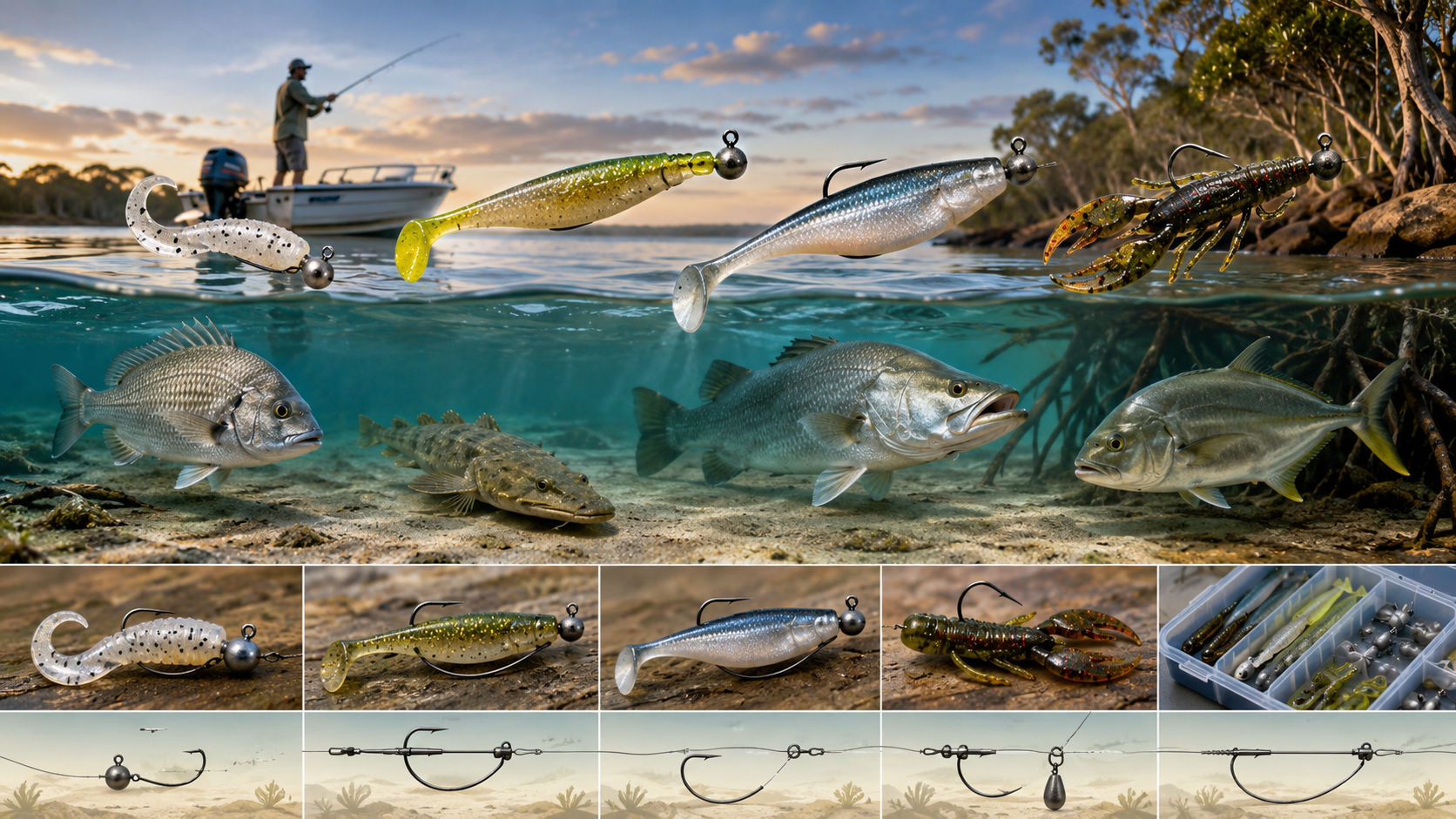
This guide breaks down the four shapes you will see most often in Australian tackle shops: grubs, paddle tails, jerkshads and creature baits. Use it as a practical map for recreational sessions, then fine-tune with local rules, bag limits and seasonal closures for your state waters. For gear care, storage and full loadouts, Aussie Tackle Box keeps the focus on safe, legal angling rather than shortcuts.
Grubs: simple curl tails that still catch
Grubs are short-bodied plastics with a curled or twister tail. In still or gently moving water the tail flutters on the drop and on a slow lift, which is ideal when fish are holding tight to structure. They shine for bream along pontoons, wharf piles and rock bars, and they are a reliable option when tailor or school mulloway are picking at small bait in deeper holes.
When to choose a grub
- Clear to lightly stained water where a subtle kick beats a big thump.
- Vertical presentations around bridge pylons, boat hulls and steep drop-offs.
- Cold snaps in southern winter when fish will not chase a wide-wobbling paddle.
- Light spin outfits with 1–3 kg leaders and compact jigheads in the 1–5 g range for skinny water, stepping heavier only when wind or depth demands it.
Keep the retrieve slow: hop, pause, and let the curl do the work. If you feel a soft tick, wind down rather than striking wildly so the hook can find the corner of the mouth. Grubs also pair well with lightly weighted weedless hooks when you are skipping under mangrove edges for mangrove jack in warmer months further north, or probing weedy margins where murray cod sit in inland systems.
Paddle tails: thump, track and cover water
Paddle tails have a boot-shaped tail that kicks hard and pushes water. That vibration helps fish find the lure in discoloured run-off after summer storms and in wind-chopped harbour bays. They are a first pick for flathead on sand and mud flats, for kingfish when bait schools are dense, and for barra in impoundments when you need a steady swimming profile along weed edges.
Rigging and retrieve tips
- Match body length to the local forage: smaller profiles for estuary bream and flathead; longer, thicker bodies when spanish mackerel or big kingfish are harassing bait on the open side of headlands.
- Use a jighead heavy enough to stay in contact without burying in soft mud—often a few grams more than you think in a strong run-out tide.
- Try a slow roll just above the bottom for flathead, a mid-water swim-pause for barra, and a faster burn-and-kill when tailor are blitzing on the surface.
Paddle tails track straight when the hook sits centred in the body. If the lure rolls or spirals, check that the plastic is not torn and that the jighead weight suits the length. In spring and early summer, when prawns and small baitfish push into shallows, a natural translucent paddle often out-fishes a loud colour until the bite turns aggressive at dusk.
Jerkshads: dart, glide and pause
Jerkshads are slender, baitfish-shaped plastics built for rod work rather than a constant tail thump. A sharp twitch sends them sideways; a pause lets them glide and sink. That stop-start action is deadly on suspended fish and on species that inspect before they eat. Mulloway in deeper channels, kingfish around headlands and bait balls, and barra holding on timber all respond well when the cadence matches the mood of the school.
Fish them on a medium-light spin rod with a crisp tip so each twitch is clean. In Sydney harbour and coastal systems, work the corners of rock walls on the tide change, and do not be afraid of longer pauses—many takes come when the shad is barely moving. For spanish mackerel and tailor on metal-heavy days, a jerkshad still earns a place as a quieter alternative once the surface bust ends and fish drop deeper.
Leader and hook notes
Use abrasion-resistant leader around oyster and rock. Keep hooks sharp and sized so the gape is not smothered by a thick body. If you are losing fish at the boat, check whether the plastic has slid down the shank and blocked the hook point; a drop of lure glue or a jighead with a keeper barb reduces that problem on long sessions.
Creature baits: legs, claws and snag-friendly profiles
Creature baits carry claws, legs, wings or multiple appendages that flare on the fall and breathe on the spot. They imitate yabbies, crabs, prawns and messy bottom life more than slim baitfish. That makes them excellent for murray cod around timber and rock in inland rivers and impoundments, for mangrove jack in tight structure, and for flathead when you want a lure to sit in the strike zone without swimming away.
Rig creatures weedless on suitable worm or wide-gape hooks when cover is thick, or on light jigheads when you need a controlled sink on open sand. Hop them short distances, then leave them. The legs do the advertising. In autumn, as water cools in southern systems, a slow creature presentation can still draw bream and flathead that ignore faster paddle tails.
Jigheads, weights and basic rigging
Shape only works if the weight and hook match the water you are fishing. As a starting point for estuary work near Sydney:
- 1–3 g for skinny flats and surface-oriented bream schools in calm conditions.
- 5–10 g for channels, wind and moderate current when you still want a natural sink.
- Heavier heads only when depth, drift speed or wind force you to stay in touch—overweighting kills the action of fine tails.
Thread the plastic straight so the tail sits true. For soft bottoms, a stand-up style head can keep the hook point clear of weed. For rocky country, consider lighter wire and a readiness to break off rather than risking unsafe boat positioning. Always check state fisheries rules for the waters you fish, including any gear restrictions, protected species and seasonal closures before you launch.
Species-focused starting combos
Use these as session starters, then adjust to what the fish show you:
- Bream: small grub or compact paddle on a light jighead; slow hops along shade lines.
- Flathead: medium paddle tail dragged and paused across sand; add a creature when the bite is lazy.
- Mulloway: larger jerkshad or solid paddle worked deep with long pauses in holes and drain mouths.
- Tailor and kingfish: jerkshad or slim paddle burned through bait schools, then slowed once fish sound.
- Barra and mangrove jack: paddle or creature near structure; accurate casts and patient pauses beat constant winding.
- Murray cod: bulky creature or large paddle around timber; slow presentations and strong, well-maintained tackle.
- Spanish mackerel: longer jerkshad profiles when birds and bait are wide; stay aware of sharp teeth and leader wear.
Care, storage and safety on the water
Rinse salt off hooks and jigheads after coastal trips, dry them, and store plastics out of direct sun so tails do not harden or melt together. Keep soft plastics in labelled packs by shape and size so you can change profile quickly when the bite shifts. On kayaks and small craft, stow loose packs so they cannot slide underfoot while you are fighting a fish or landing in chop.
Wear eye protection when casting weighted plastics, especially in wind. Handle fish with wet hands or appropriate tools, support larger fish horizontally for quick photos if you are practising catch and release, and know your local size and bag limits. If you need shop hours or a direct contact for Aussie Tackle Box, use Mon–Fri: 09:00 – 17:00 (AEST), +61275903570 or [email protected] rather than guessing tide or regulation details from memory alone.
Putting it together on your next session
Start with one shape that matches the main forage and depth, then change only one variable at a time: weight, colour, or retrieve. Grubs buy you subtlety, paddle tails buy you water movement and coverage, jerkshads buy you dart and glide, and creatures buy you linger time in cover. Master those four families and your soft-plastic tray becomes a set of tools instead of a jumble of look-alike packs—ready for estuary evenings, harbour mornings and inland weekends across the Australian calendar.
Navigation
See also
FAQ