Tackle Box vs Tackle Bag vs Backpack: Choosing a Storage System
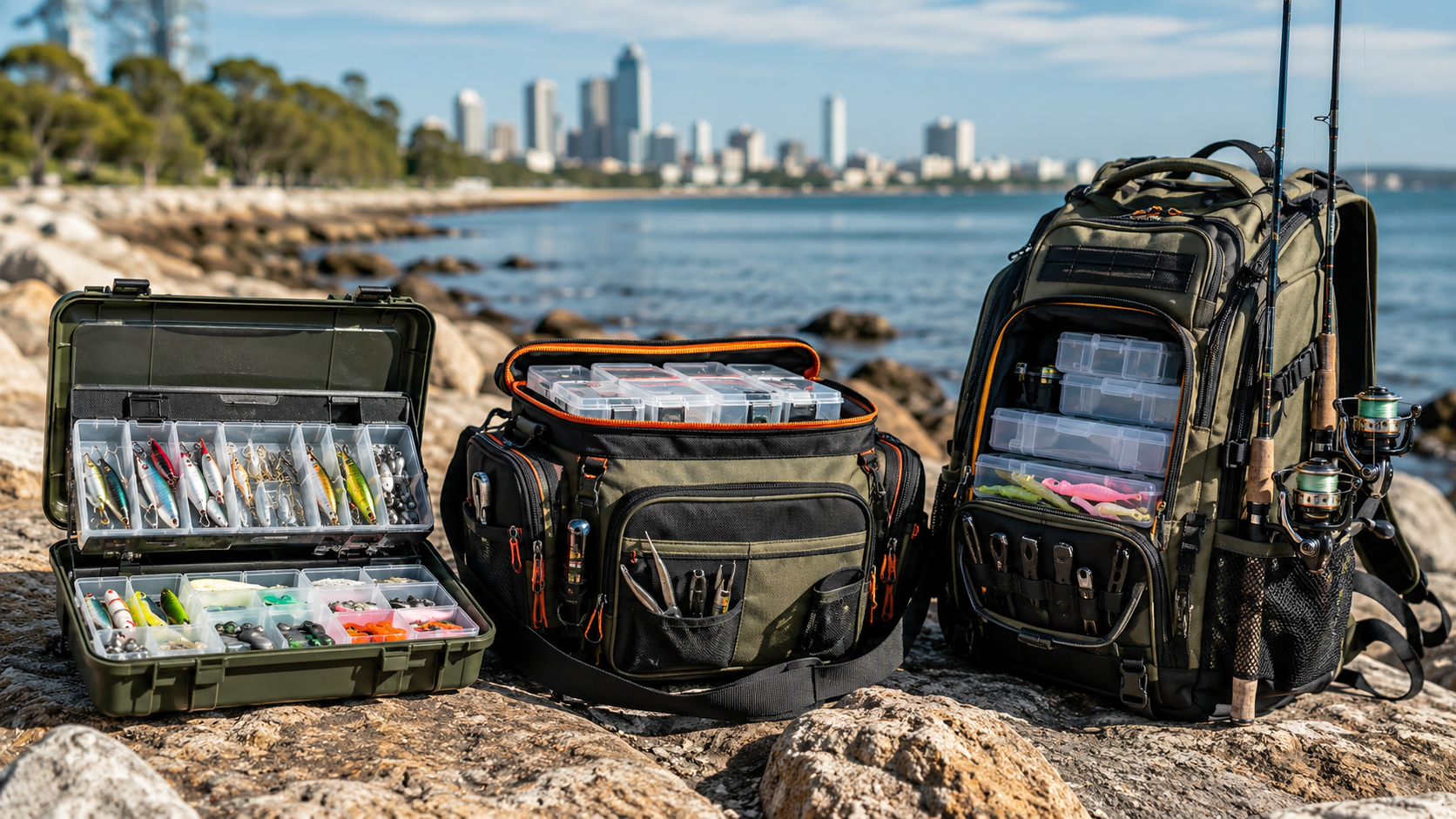
Why storage choice matters on Aussie waters
How you carry lures, soft plastics, hooks and leaders shapes how fast you can change rigs when the bite turns on. Around Sydney, that might mean a dawn session on a rock platform for tailor, a harbour run for bream and flathead, or a longer drive inland for murray cod. Aussie Tackle Box looks at three common systems—hard tackle boxes, soft tackle bags and fishing backpacks—so you can match capacity, weather protection and mobility to the way you actually fish.
There is no single “best” option. A kayak angler chasing mangrove jack needs different access and waterproofing to someone walking a beach for tailor or packing a small tinny for kingfish. Think about distance from the car, how wet the deck gets, and whether you need both hands free on rough ground.
Hard tackle boxes: trays, lids and fixed layout
Traditional tackle boxes use rigid plastic shells with lift-out trays or fixed compartments. They suit anglers who like everything visible at a glance and who mostly fish from a boat, jetty or vehicle base.
Strengths
- Organisation: Dividers keep trebles, sinkers and soft plastics from tangling. Clear lids help you spot a 1/0 jighead without emptying the tray.
- Crush resistance: Hard walls protect terminal tackle if gear shifts in a ute tray or under a seat.
- Stable work surface: On a flat deck you can open the box and tie leaders without chasing rolling packs.
Limitations
- Bulk and weight climb quickly once you fill multiple trays.
- Many lids are splash-resistant rather than fully waterproof; a green-wave dunk can still wet paper packs and rust hooks.
- Awkward to carry far over rocks or through scrub—handles are fine for short walks, less so for long hikes.
Choose deeper boxes if you store larger hard-body lures for barra or spanish mackerel. Shallower tray systems work well for bream and estuary soft plastics where packs are slim and numerous.
Tackle bags: soft sides, modular boxes inside
Soft tackle bags combine a fabric outer shell with removable utility boxes. They are popular with boat and shore anglers who want more volume than a single hard box without committing to a full backpack harness.
When a bag shines
- Flexible packing: Stuff spare leaders, a lightweight rain shell and a drink bottle beside the lure boxes.
- Shoulder carry: A padded strap beats a hard handle when you walk from the car park to a breakwall.
- Modular boxes: Swap estuary plastics for offshore jigs by exchanging one or two internal boxes instead of reloading every compartment.
Watch-outs
- Fabric can hold salt and grit; rinse zips and wipe interiors after saltwater sessions.
- Without internal structure, heavy sinkers can crush soft packs if boxes are overloaded.
- Open-top “tote” styles are fast on a boat but poor in rain or spray—prefer zippered lids for open water.
For Sydney harbour and coastal work, a mid-size bag with two to four utility boxes covers most bream, flathead and mulloway sessions without encouraging you to cart half the shed.
Fishing backpacks: hands-free and hike-ready
Backpacks put weight on both shoulders and free your hands for rods, a landing net or a rough scramble. They suit kayak portages, remote rock ledges and long walks along riverbanks for murray cod or estuary edges for mangrove jack.
Advantages
- Balance and mobility: Even load distribution reduces fatigue on longer approaches.
- Capacity zones: Main compartment for utility boxes, side pockets for drink bottles or pliers, and often a rear rod-tube sleeve.
- Weather options: Many designs include rain covers or water-resistant fabrics useful in a southern-hemisphere summer storm.
Trade-offs
- Access is slower: you usually set the pack down and open panels rather than flipping a lid at your feet.
- Overpacking is easy; a heavy pack on wet rocks is a safety issue, not just an inconvenience.
- Heat build-up on the back in mid-summer—light-coloured packs and mesh panels help.
Keep the heaviest items close to your spine and high enough that the pack does not pull you backward when you lean over a ledge. Separate wet gear (towels, used soft plastics bags) from dry leaders and electronics.
Match the system to how you fish
Use the session type as the decider, not catalogue photos.
- Boat or kayak with limited deck space: Low-profile hard boxes or a compact bag that stows under a seat. Avoid tall backpacks that block casting space.
- Short walk from the car (jetty, ramp, beach access): A tackle bag or single hard box is usually enough.
- Long walk, scramble or multi-spot day: Backpack first; pack only the rigs for the target species—tailor metals and a few plastics, not every tray you own.
- Mixed family or multi-species days: Bag with labelled internal boxes so one person can grab “estuary” while another takes “pelagic” without emptying the lot.
Kayak and small-craft fit-outs benefit from boxes that clip or strap down so a lean does not send trebles across the hull. Check that latches stay shut when sprayed.
Building a practical layout inside any system
Whatever shell you choose, the inside layout decides whether you catch the bite window or fumble packs.
- By species or technique: One box for bream/flathead plastics and light jigheads; another for heavier tailor or kingfish metals; a slim sleeve for leaders and swivels.
- By size, not brand: Group 1–3 inch plastics together and keep larger barra or mulloway profiles separate so hooks do not tear soft bodies.
- Terminal tackle first: Hooks, clips and sinkers in the easiest-reach tray—you change these more often than whole lure collections.
- Consumables pouch: Spare line offcuts, tissues, small tool and a mini first-aid strip in one zip pocket so they never migrate into lure trays.
Measure compartment depth in millimetres against your tallest hard-body before you buy stacks of new boxes. A lure that sits 5 mm too high will wear the lid seal and crush paint.
Weather, salt and gear care
Australian salt air is hard on zips, foam and plain-steel hooks. After saltwater trips, open the system at home, rinse metal tools in fresh water, and let trays dry fully before closing. Silica gel sachets in a closed hard box can reduce condensation if you store gear in a damp garage, but replace them when they saturate.
Inspect stitching on bags and backpacks each season—spring and summer UV around Sydney weakens exposed thread. Replace cracked utility-box latches before a trip; a failed latch on a rocking boat scatters hooks fast.
Safety and rules-minded packing
Storage is also about what you must carry, not only lures. Keep a compact safety kit accessible: whistle, basic first aid, sun protection and a charged phone in a dry pouch. If you fish from rocks or kayaks, buoyancy and communication gear should never be buried under trays of plastics.
State fisheries rules change bag limits, size limits and seasonal closures. A thin waterproof sleeve or phone note with the current rules for your target species beats guessing on the bank. When you travel interstate for barra or spanish mackerel, rebuild the relevant utility box and refresh that rules card rather than relying on last year’s estuary layout.
A simple decision checklist
Before you buy or rebuild:
- How far do I walk from vehicle to water, in metres?
- Is the platform mostly dry (jetty), wet (kayak, open tinny) or mixed (rock platform)?
- Which two or three species drive most of my trips this season?
- Do I need both hands free on the approach?
- Can I empty and dry the system the same day I fish?
If you mostly launch nearby and fish from a stable deck, start with a hard box or compact bag. If you hike, scramble or paddle with frequent landings, favour a backpack and ruthless editing of what goes inside. Many anglers at Aussie Tackle Box’s home waters end up with two systems: a boat box that stays in the vehicle and a lighter pack for shore missions.
For local advice on fitting storage to rods, reels and species rigs, contact Aussie Tackle Box on +61275903570 or [email protected] during Mon–Fri: 09:00 – 17:00 (AEST). Bring a rough list of your usual Sydney sessions and target species—bream through to kingfish—and we can talk through layouts without the sales pressure of a single “must-have” product.
Choose the shell that matches your access and weather, then invest effort in the inside: clear grouping, dry hooks and only the tackle you will actually tie on. That combination beats any oversized box left half-used under the seat.

Navigation
See also
FAQ