Top End Barra Trip Gear List: Wet Season vs Dry Season
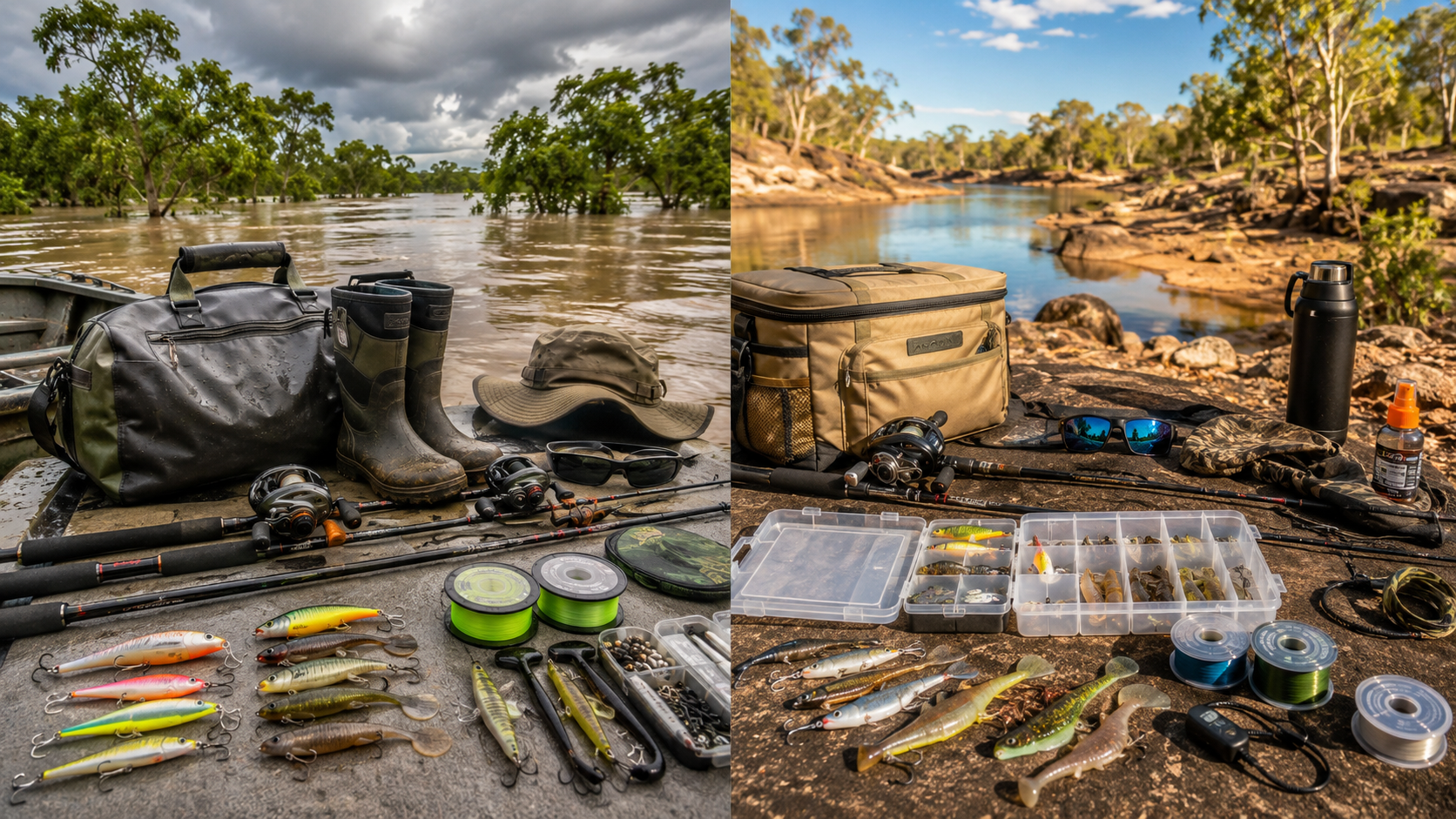
Why season changes your barra kit
A Top End barramundi trip is not one packing list. Wet season floodplains, run-off drains and dirty water call for different rods, leaders, lure profiles and safety kit than the dry season’s clear billabongs, rock bars and tidal creeks. This guide from Aussie Tackle Box is written for recreational anglers planning from Sydney or elsewhere in Australia, using metric sizes and practical, non-branded gear categories. Always check current NT fisheries rules, closed areas and possession limits before you travel.
Southern hemisphere timing matters: the build-up and wet roughly span late spring through autumn (about November to April), while the dry runs through winter and early spring (about May to October). Local storms, road closures and croc risk shift with that calendar, so your tackle box and boat or kayak fit-out should shift too.
Shared core kit for any Top End barra trip
Carry a reliable base layer of tackle, then add season-specific extras. A sensible shared core includes:
- Two baitcaster or spin outfits in the 4–8 kg class, plus one heavier 8–15 kg outfit for snags, trolling or bigger tides
- Reels spooled with 20–40 lb braid; spare spools or bulk braid for respools after coral, rock or mangrove chafe
- Fluorocarbon or hard mono leaders from about 40–80 lb, in a few diameters so you can step up when fish are burying in timber
- Terminal tackle: quality swivels, solid rings, heavy-duty trebles or singles sized to your lures, split rings and a compact crimp kit if you use wire for toothy bycatch
- Soft plastics (paddle-tails, prawns, creatures) in natural baitfish and darker silhouettes, plus a few bright search colours
- Hardbodies and surface lures suited to barra: mid-depth minnows, suspending twitchbaits and walkers or poppers for low-light windows
- Plier set, braid scissors, hook sharpener, headlamp, dry bags, basic first aid and sun protection rated for tropical UV
- Species-aware extras if you mix sessions: light estuary gear can also raise mangrove jack, and coastal hops may see kingfish or spanish mackerel on heavier traces—pack only what your licence and local rules allow
Label spare leaders and hooks in a ventilated tray. Heat and humidity wreck cheap foam and rust hooks fast; rinse metal in fresh water after brackish sessions and dry fully before the lid goes on.
Wet season focus: run-off, colour and heavy cover
Wet season barra fishing often means stained water, floating timber, rapid level changes and access limited by floodways. Prioritise visibility, weedless or snag-tolerant presentations and kit that survives constant wet.
Rods, reels and line for the wet
- Shorter, stronger baitcasters or spin rods (roughly 1.7–2.1 m) for accuracy around drains, culverts and tree lines
- Reels with smooth drags and sealed or well-maintained bodies; pack reel oil and a small brush for daily salt and silt care
- Braid in high-visibility colours helps track line in dirty water and low light; step leaders toward the upper end (60–80 lb) around timber
- Spare guides and tip-tops in a tiny parts tin—wet season knocks are common when boats bump snags
Lures and rigging for floodwater barra
- Larger profile soft plastics and vibrating blades that push water so fish can find them in colour
- Weedless hooks or lightly weighted worm hooks for plastics worked through grass and trash lines
- Noisy surface lures for early and late sessions when barra push bait against banks
- Bright chartreuse, gold and dark silhouette colours; keep a few naturals for clearer pockets after a flush
- Strong split rings and upgraded singles if you prefer easier release and fewer snags than trebles in timber
Wet season boat, kayak and safety add-ons
Carry a reliable sounder if your craft allows it, but do not rely on electronics alone when debris is thick. Pack spare prop protection habits (slow approaches), a throw rope, PLB or sat comms where phone coverage dies, and clear croc-safe shore habits—no cleaning fish at the water’s edge. Lightweight rain shells, quick-dry layers and sealed tubs for spare clothes matter as much as extra packs of soft plastics. For small-craft fit-outs, keep the deck simple: one tackle bag within reach, rod leashes, and dry storage high enough that bilge water cannot soak leaders overnight.
Dry season focus: clear water, structure and finesse windows
Dry season conditions often mean lower, clearer water, concentrated fish in billabongs, rocky runs and tidal systems, and longer sunny days. You can downsize some presentations, lengthen casts and lean on optics and careful leader management.
Rods, reels and line for the dry
- A slightly longer cast-friendly rod (around 2.0–2.3 m) helps cover flats and open rock bars
- Keep the heavy outfit for snaggy corners, but add a lighter 4–6 kg rod for wary fish in clear shallows
- Consider lower-visibility braid or a longer fluorocarbon leader when water clarity spikes
- Check drag washers and bail rollers before multi-day heat; fine sand on escarpment tracks gets into everything
Lures and approach for clear-water barra
- Suspending minnows and soft plastics in mullet, prawn and glassy baitfish tones
- Smaller surface lures for calm mornings on dams and backwaters
- Precise weight selection: light jigheads for slow falls along ledges; heavier heads only when wind or depth demands
- Polarised sunglasses are non-negotiable for spotting fish, crocs and rock
Dry season heat still punishes anglers and gelspun line. Store reels out of direct sun inside the vehicle, and loosen drags overnight so washers are not left compressed in high temperatures.
Season-by-season packing checklist
- Wet season extras: extra 60–80 lb leader, weedless hooks, brighter and larger plastics, rain gear, silt-friendly reel care kit, spare torch batteries, strong insect protection, laminated tide and road notes.
- Dry season extras: longer fluorocarbon leaders, natural-colour hardbodies, light jighead assortment, wide-brim hat and long-sleeve sun shirts, extra water storage, spare polarised lenses if you have them.
- Both seasons: licence and ID copies in a dry pouch, release tools, measuring device marked in centimetres, first aid, comms plan, and a written float plan left with someone onshore.
Gear care between sessions and after the trip
Tropical trips destroy neglected tackle. Rinse rods, reels and trays in fresh water at day’s end; dry bags open overnight when humidity allows. Back home in Sydney or wherever you base, strip wet braid if it reeks of mud, inspect guides for salt crystals, and lightly oil reel handles and seat threads. Soft plastics can leach in heat—bag colours separately. If a drag feels gritty after silt country, service it before the next long drive rather than forcing it on a trophy fish.
For DIY upkeep, replace rusty trebles, retie leaders that show fray within the first metre above the lure, and mark rod butts with season tags so wet-season timber sticks are not confused with clear-water finesse outfits next time you load the ute.
Rules, safety and realistic expectations
Aussie Tackle Box shares general gear guidance only. Fisheries rules, sanctuary zones, vessel requirements and seasonal closures change—confirm official NT sources before you launch. Barramundi are powerful sportfish; match tackle so you can land and release fish cleanly when that is your aim. Croc country demands distance from the waterline when unhooking, no dangling arms over gunwales at night, and sober judgement about wading.
If you are building a broader Australian kit for southern species later—flathead and bream in estuary systems, murray cod in inland rivers, or tailor and mulloway on coastal beaches—keep Top End barra leaders and heavy trebles in a separate labelled tray so light estuary gear is not overloaded by mistake.
Quick planning notes from Sydney-based travellers
Flying from Sydney with limited baggage? Wear your boat shoes, pack reels in carry-on with spools secured, and put liquids such as reel oil in checked bags within airline limits. Ship bulky tackle ahead only through reputable services and still carry one complete outfit on your person. Local tackle shops in the Top End can replace lost lures, but specialised leader strengths and favourite plastics may not be in stock during peak weeks—bring the critical consumables yourself.
For questions about packing approaches or general tackle education, contact Aussie Tackle Box on +61275903570 or [email protected] during Mon–Fri: 09:00 – 17:00 (AEST). Bring curiosity, spare leaders and respect for country, and let the season—not habit—dictate what sits in the top tray of your Aussie tackle box.

Navigation
See also
FAQ