Waterproof vs Water-Resistant Tackle Boxes: Seals, Latches and Salt Spray
Why the difference matters on Australian water
On a Sydney rock ledge, in a kayak on the harbour, or wading a south coast estuary for bream and flathead, your tackle box takes a beating from spray, rain and wet hands. Waterproof and water-resistant are not the same claim. Choosing the wrong level of protection is how soft plastics fuse into a sticky brick, hooks rust solid, and braid spools swell with salt. Aussie Tackle Box puts the focus on seals, latches and real salt-spray behaviour so you can match the box to how you actually fish.
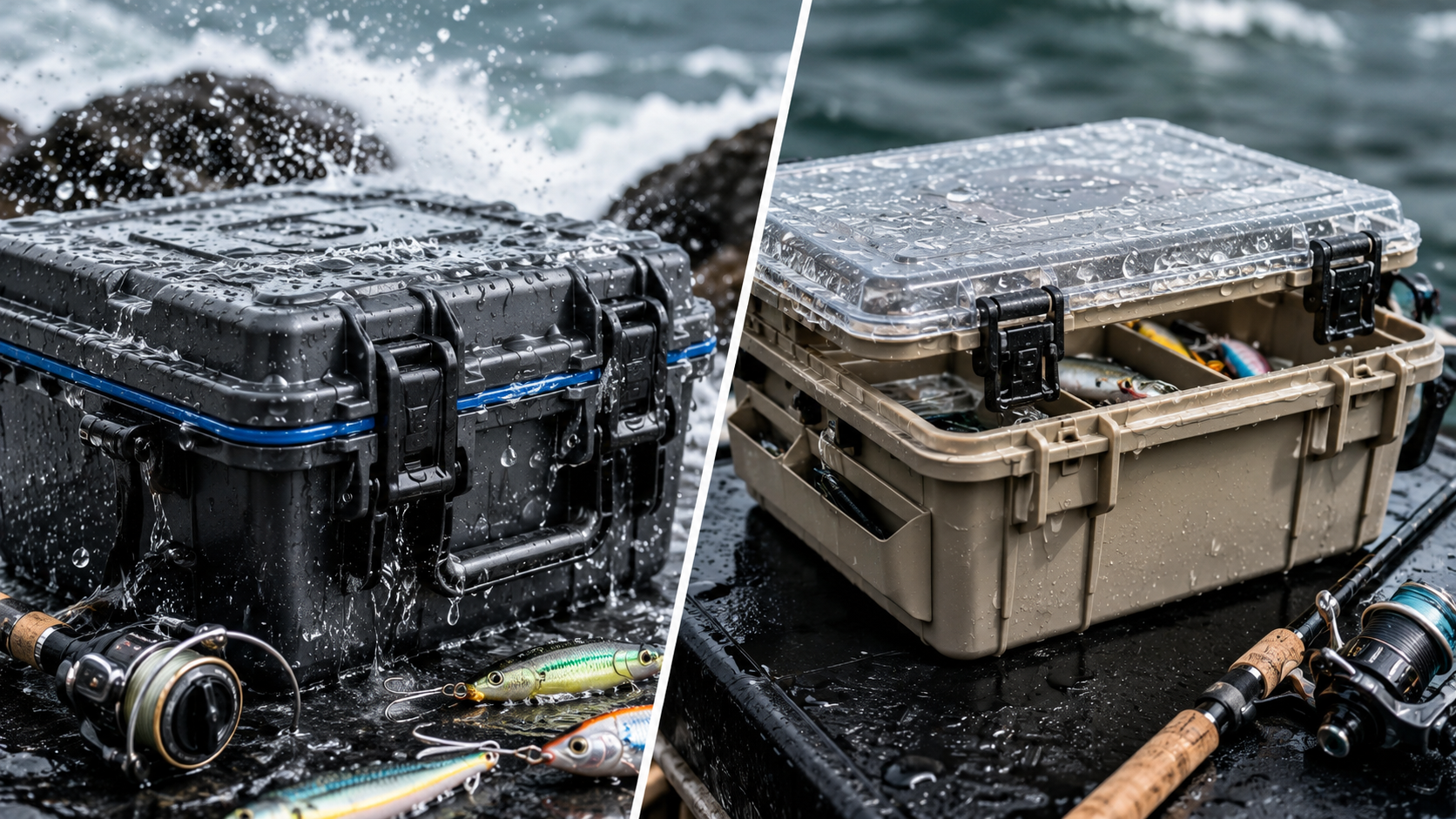
Water-resistant boxes shed light rain and the odd splash. Waterproof designs aim to keep water out when the lid is fully closed and the gasket is clean—useful when a wave comes over the gunwale or you leave gear on an open deck through a summer squall. Neither label replaces common sense: rinse latches, dry trays, and never store wet metal against foam for weeks.
Seals: gaskets, channels and what fails first
Most serious boxes use a continuous elastomer gasket seated in a moulded channel. When the lid compresses that gasket evenly, you get a barrier against spray and short immersion. Failures usually start with:
- Sand or dried salt in the channel that holds the lid slightly open
- Twisted or pinched gaskets after over-packing trays
- UV hardening of cheap rubber after seasons of full sun on the dash
- Warped lids from stacking heavy batteries or tool bags on top
Before a winter session for mulloway or tailor, run a finger around the gasket. If it feels gritty, rinse with fresh water and a soft brush, then let it dry. A thin wipe of silicone-safe protectant on the gasket (not petroleum jelly on every plastic) can slow cracking, but keep residue off lure skirts and soft plastics.
IP-style talk without the marketing fog
Makers sometimes quote splash or immersion ratings. Treat numbers as a guide, not a guarantee you can leave the box underwater while you chase kingfish. For recreational use around Sydney, prioritise a full-perimeter gasket, rigid lid, and latches that pull the lid down evenly on all sides. Spot-check by closing an empty box on a dry paper towel, misting the exterior, waiting, then opening—any damp towel means the seal or latch geometry needs attention.
Latches: even pressure beats one heroic clip
Latches do more than stop the lid popping in the car boot. They set gasket compression. Look for:
- Two or more latches on medium boxes so the seal is not biased to one edge
- Positive “click” engagement you can feel with cold or wet hands
- Corrosion-resistant pins and springs—salt spray eats cheap steel fast
- Recessed or shielded designs that are harder to snag on kayak webbing
Single centre latches can work on small utility boxes for hooks and swivels, but larger tray systems for mixed estuary and offshore loads need balanced closure. If one latch is bent, replace it; forcing a crooked latch twists the lid and opens a spray path on the opposite corner.
Salt spray, storage layout and species rigs
Salt does not need full immersion to ruin gear. Fine spray finds thread on jigheads, split rings and the feet of soft-plastic hooks. Separate wet terminal tackle from dry spares:
- Keep a small sealed utility box for “used today” hooks, swivels and sinkers.
- Store unused soft plastics in original bags or ventilated compartments away from hot sealed air.
- Park metal leaders and heavy jig heads in trays with drainage ribs, not flat puddle floors.
- After barra, mangrove jack or spanish mackerel sessions in warmer months, rinse exterior latches and wipe gasket faces before the drive home.
For murray cod trips inland, dust and fine grit are the enemy as much as water—same rule: clean the channel before you seal the lid. Kingfish and tailor days on the coast mean more spray; favour true gasketed boxes for electronics spares, spare braid and any items you cannot replace mid-trip.
Kayak and small-craft fit-outs
In a kayak or tinny, boxes live lower and wetter. Strap gasketed boxes where they cannot become projectiles, and avoid blocking scuppers. Water-resistant open-tray caddies are fine for lures you are cycling every few casts, but put back-up reels, spare line and multi-tools in a sealed box. Deck wash and rain in autumn southerlies will find every open seam.
If you run marine electronics, keep spare transducers mounts, cards and dry cloths in a fully sealed container—not loose under a seat. Moisture plus vibration is how contacts corrode between spring launches and late summer.
Gear care after the session
A simple routine beats expensive replacements:
- Freshwater rinse of exterior latches and hinge pins
- Open the lid at home so interior condensation can escape
- Remove sodden packet cards and paper that hold moisture against hooks
- Check tray dividers for cracked tabs that let hooks migrate and pierce gaskets
- Store boxes out of direct summer sun so lids do not warp
Do not trap a soaking wet towel inside a “waterproof” box overnight; you have simply built a humid chamber. Dry cloths belong in the car kit, not sealed against steel.
Matching box type to how you fish
Water-resistant suits shore-based bream and flathead days when the box stays in a backpack or under a shelter and only sees light rain. Waterproof gasketed suits kayak anglers, boat decks, rock platforms and anyone who keeps spare reels, cameras or first-aid items with the tackle. Many anglers run both: an openable lure tray at hand, and one sealed mother box for reserves and terminal bulk.
State rules and bag limits change; your loadout should leave room for a printed or offline rules note and a small safety kit, not only another row of soft plastics. When in doubt about local fisheries requirements around Sydney, check official sources before you launch.
Practical buying checklist
When you compare boxes in-store or online, ignore vague adventure slogans and inspect:
- Continuous gasket and clean moulding channel
- Latch count and even lid pull-down
- Hinge robustness and pin material
- Drain features in trays versus fully sealed dry cavities
- Size that fits your kayak well, hatch or vehicle crate without crushing the lid
For more storage planning ideas and how trays fit broader bank and boat set-ups, explore the wider tackle organisation guidance on Aussie Tackle Box. If you need help matching seals and box sizes to harbour, estuary or offshore days, call +61275903570 during Mon–Fri: 09:00 – 17:00 (AEST) or write to [email protected].
Get the seal clean, the latches true and the wet gear separated from the dry spares—and salt spray becomes a nuisance you manage, not a season-ending rust event.

Navigation
See also
FAQ