What to Pack for a NSW South Coast Estuary Weekend
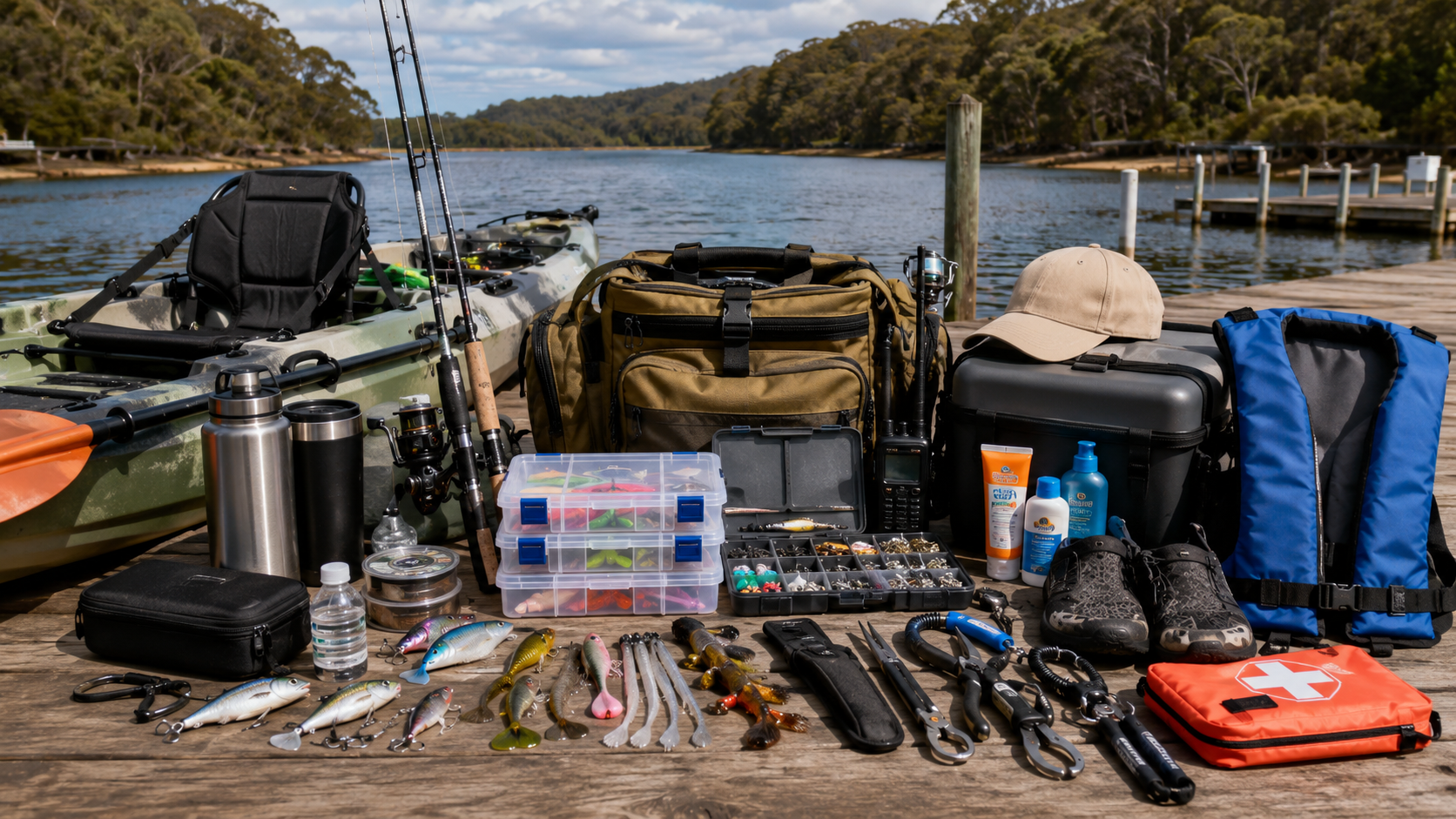
Plan the weekend around the estuary, not the boot
A NSW South Coast estuary weekend from Sydney is one of the most rewarding trips an Aussie angler can take: calm water at dawn, flathead along the drop-offs, bream working the oyster racks, and the odd mulloway after dark. The difference between a tidy session and a frustrating one is almost always what you packed—and what you left at home. This guide from Aussie Tackle Box walks through a realistic loadout for two to three days on systems such as the Shoalhaven, Clyde, Tuross and Wagonga, with gear chosen for light-to-medium estuary work rather than heavy ocean casting.
Think in layers: rods and reels that cover the main techniques, a compact lure and soft-plastic kit, reliable terminal tackle, storage that survives wet decks, and a short safety and rules checklist. Metric lengths and weights are used throughout so you can match line, leader and sinker sizes without guesswork. Prices, where mentioned, are rough AUD ballparks only—shop around and match what is in stock locally.
Rods and reels that earn their place
For South Coast estuaries you rarely need a long surf stick. Two outfits cover most situations:
- Light spin: a 2.0–2.2 m graphite rod rated roughly 1–5 kg, paired with a 1000–2500 size spin reel. Ideal for bream, small flathead and surface work around structure.
- Light–medium spin or baitcast: a 2.1–2.4 m rod in the 2–6 kg or 3–8 kg class with a 2500–4000 reel. This handles larger soft plastics, lightly weighted hardbodies and the chance of a solid mulloway or tailor school.
Spool both reels with quality braid in the 4–10 lb (about 2–5 kg) breaking-strain range and carry fluorocarbon leaders from about 4 lb through to 15 lb so you can step up around oyster and rock. Check drag washers, bail springs and line lay before you leave Sydney; a sticky drag on Saturday morning is hard to fix on a boat ramp. If you are still refining rod length, power and action for estuary work, keep notes on how each blank feels with 70–120 mm plastics and 3–10 g jigheads—those notes matter more than brochure claims.
Lures, soft plastics and a tight hardbody tray
Estuary fish on the South Coast respond well to a disciplined, not oversized, lure box. Prioritise:
- Soft plastics in 70–100 mm paddle-tails and curl-tails for flathead on sand and mud edges.
- Prawn and minnow profiles in natural greys, pumpkinseed and dark motor-oil colours for stained water after rain.
- Surface walkers and poppers in the 50–80 mm range for warm-season bream and tailor along rock walls at first light.
- Suspending or slow-sinking hardbodies around 50–90 mm for deeper channels and bridge pylons.
- A few vibes or blades in the 5–15 g range when fish are holding deeper in cooler months.
Match jigheads to depth and current: 1/12–1/6 oz (roughly 2–5 g) for skinny flats, stepping to 1/4 oz (about 7 g) when the tide runs hard. Hook sizes from about 1/0 to 3/0 cover most plastics in this length range. Keep colours simple—two natural, one dark, one bright—so you spend time fishing instead of sorting.
Line, leaders and terminal tackle
Terminal gear fails more weekends than rods do. Pack a small waterproof box with:
- Fluorocarbon leader spools in several breaking strains, plus a short coil of slightly heavier mono for rough structure.
- Quality swivels, split rings and snaps rated for light estuary loads—not heavy game gear.
- Ball-sinker and bean-sinker assortments from a few grams up to around 30 g for bait rigs when the bite turns off lures.
- Long-shank and octopus-style hooks in common estuary sizes, plus a few circle hooks if you prefer bait for flathead and bream.
- Spare braid in the same class as your main spools, scissors or braid cutters, and a small pack of soft plastic attractant if you use it.
Pre-tie a handful of leaders at home with neat FG or improved albright connections if you are comfortable with them; otherwise use quality small swivels and keep joins short. Label bags by breaking strain in kilograms so anyone in the group can restock quickly in low light.
Species focus for South Coast estuaries
Your packing list should reflect the fish you are most likely to meet. Bream patrol racks, rock walls and mangrove edges—light leaders, small plastics and careful boat positioning matter more than lure count. Flathead sit on sand tongues and drain mouths; longer casts with paddle-tails and a slow hop retrieve cover water efficiently. Mulloway are the night and low-light prize in deeper holes and bridge shadow lines—step leader strength up and keep at least one outfit ready with a larger plastic or soft-vibe. Tailor can blitz whitebait along entrance walls; metal slugs and small surface lures earn a corner of the tray, and a wire trace is worth having if tailor are chewing through light fluoro.
Further north you might plan around barra or mangrove jack, and inland rivers around Murray cod, but for a classic South Coast estuary weekend those species are outside the brief. Kingfish and Spanish mackerel belong more to ocean reefs and warmer northern runs—leave the heavy jigs at home unless you are adding a separate bluewater day.
Kayak and small-craft fit-out
Many South Coast lagoons and rivers fish brilliantly from a kayak or tinnie. If you are paddling or running a small craft, add:
- Rod leashes and horizontal rod holders so blanks are not lost overboard when a flathead surges.
- A low-profile tackle crate or sealed boxes that fit your hatch or under-seat space.
- Anchor or stake-out pole suited to sand and mud, plus a short length of rope with clear markings in metres.
- Dry bag for phone, keys and a light jumper—southerlies can turn a mild afternoon cool fast.
- Simple marine electronics if you run them: a compact sounder with a transducer mount you already trust, and spare batteries charged before departure.
Keep the deck clear. One well-organised crate beats three half-open trays sliding underfoot. Test any new mount or crate in the driveway at Sydney so you are not drilling or cable-tying in the car park at first light.
Storage, gear care and wet-weather reality
Estuary weekends mean spray, rain and sandy floors. Use labelled thin trays for plastics and a deeper box for tools and leaders. Rinse reels and guides with fresh water at the end of each day, back off drags, and let soft plastics air so packets do not stew in the heat. A small bottle of reel oil, a cloth and zip-lock bags for wet clothes prevent most common failures. In summer (December to February) pack sun sleeves, a broad-brim hat and extra water; in winter (June to August) add thermals and gloves for dawn sessions when mulloway and big bream still feed but fingers cramp on the cast.
Safety, licences and state-aware habits
Recreational fishing in NSW requires the appropriate licence unless you are exempt, and estuary systems carry bag and size limits that change by species. Check current NSW fisheries rules before you leave, including any sanctuary zones or oyster-lease courtesy expectations. Carry a personal flotation device for each person on small craft, a charged phone in a dry case, basic first aid, and a torch for night packs when you are chasing mulloway. Tell someone your ramp and return window. Aussie Tackle Box is a tackle and planning guide—not a substitute for official regulations—so confirm limits and closures on government sources for the waters you will fish.
A simple weekend packing checklist
- Two matched rod–reel outfits (light and light–medium), spooled and drag-checked.
- Braid mainline with fluorocarbon leaders in several kg ratings.
- Soft plastics, jigheads, a small hardbody and surface selection, plus one metal or vibe option.
- Terminal box: hooks, sinkers, swivels, spare braid, tools.
- Kayak or tinnie safety kit, dry bag, anchor or stake-out, and any sounder batteries.
- Clothing for southern-hemisphere season, sun or cold protection, food and water.
- Licence proof, measuring device, and a quick read of current NSW size and bag limits.
Pack light enough that you can walk a bank or launch a kayak without a second trip to the car, but complete enough that a change of tide or a surprise tailor school does not send you home early. For more gear-selection detail and comparisons across estuary outfits, explore the wider guides on Aussie Tackle Box, and ring +61275903570 or email [email protected] during Mon–Fri: 09:00 – 17:00 (AEST) if you need help matching a loadout to your boat or kayak setup in the Sydney region.
Fish clean, respect leases and other users, and keep only what you will use. A well-packed South Coast estuary weekend is less about owning every lure colour and more about reliable rods, sensible leaders, and a kit you can run in the dark without thinking.
Navigation
See also
FAQ